



Following more than a month of military escalation, the United States and Iran have reached an agreement on a temporary two-week ceasefire. US President Trump announced the agreement just hours before the deadline of yet another ultimatum, marking a turning point in a conflict that has triggered one of the most serious global energy crises in recent years. In addition, there are an unknown number of casualties and displaced civilians across Iran and Lebanon.
The ceasefire is conditional upon the immediate reopening of the Strait of Hormuz, a strategic choke-point that handles around 20% of the world’s oil supply – and more besides – and, indeed, the announcement of the agreement had an immediate positive impact on the markets. Even if the truce holds, however, the effects of the crisis will be felt for months to come, while the situation continues to be precarious.
Israel's attacks on Lebanon persist, despite Pakistan confirming that the agreement also covers Beirut. This truce, moreover, appeared more necessary for the United States than for Iran, considering the difficulties Washington had faced in the preceding days (particularly with the costly operation to recover the pilot shot down by Tehran) and the growing protests at home against Donald Trump, even from within the Republican Party.
Geopolitics and energy
On the diplomatic front, the ceasefire represents only a brief respite in anticipation of broader negotiations. The talks, scheduled to take place in Islamabad under Pakistan’s mediation, will be centred on two negotiation frameworks: a 10-point plan proposed by Iran and a 15-point plan drawn up by the United States.
Among the main issues are Iran's nuclear programme, the management of Tehran's military capabilities, the role of regional armed groups and the lifting of international sanctions. Iran is also seeking economic compensation for damages suffered and the withdrawal of US forces from the region, as well as recognition of its right to enrich uranium.
For its part, the United States is seeking to limit Iran’s nuclear ambitions and reduce Tehran’s geopolitical influence in West Asia. The gap between the parties remains significant, with both claiming the truce as a strategic victory. There is still a high risk of hostilities resuming, especially in light of the statements made by Iran's Supreme National Security Council, which has threatened a severe response in the event of any violations.
The agreement’s effects on energy and markets
The response of the energy markets to the ceasefire was immediate but not decisive. The price of Brent fell by 13%, settling at $94.80 per barrel, while US WTI crude declined by more than 15% to $95.75. However, these figures still exceed the pre-conflict level of around $70, highlighting how geopolitical risk continues to be factored into prices. Gas prices in Amsterdam also fell significantly by 16.66%, dropping below €45 per megawatt hour (€44.37).
The crisis has, however, exposed the structural fragility of the global energy system, heavily dependent on a few key logistics hubs and unstable geopolitical balances. Attacks on infrastructure have exacerbated the situation: the Ras Laffan industrial complex in Qatar, which accounts for around 20% of global liquefied natural gas production, has suffered damage severe enough to reduce its export capacity by 17%. According to estimates by Rystad Energy, the total costs of rebuilding energy infrastructure in the region could exceed $25 billion, taking up to five years to recover.
This scenario suggests that, even with a ceasefire in place, the transition back to full operational capacity will be slow and gradual, taking months, if not years. Industry operators remain cautious, conscious that the stability of energy flows depends on a political balance that is still far from being achieved.
Also read: Epic Gamble: The Renewed Israel-US Attack on Iran and Its Wider Impacts
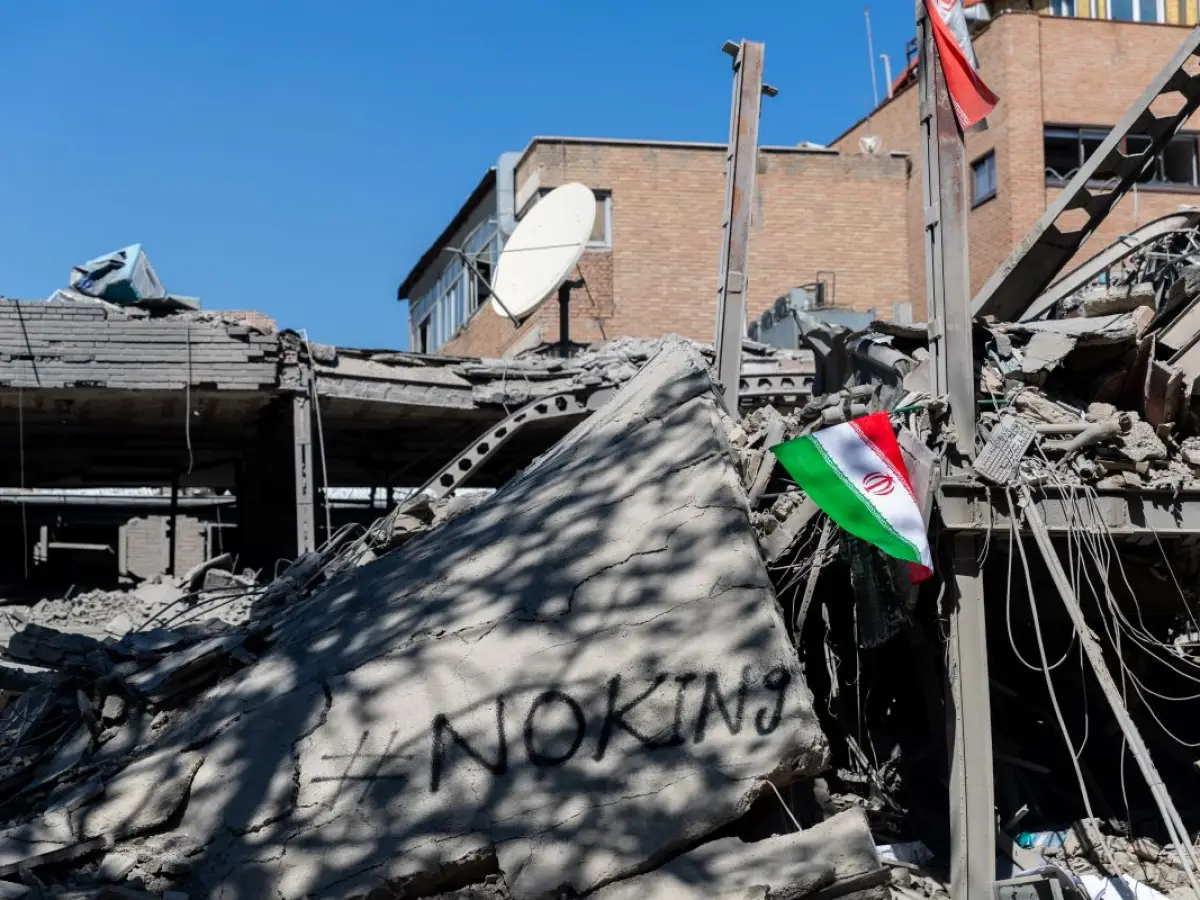
Cover: the Sharif University of Technology in Tehran hit by a US-Israeli air strike, photo by Sobhan Farajvan/Pacific Press/Sipa USA, IPA Agency