



This article is part of the thematic channel The Carbon Observer: subscribe to the newsletter
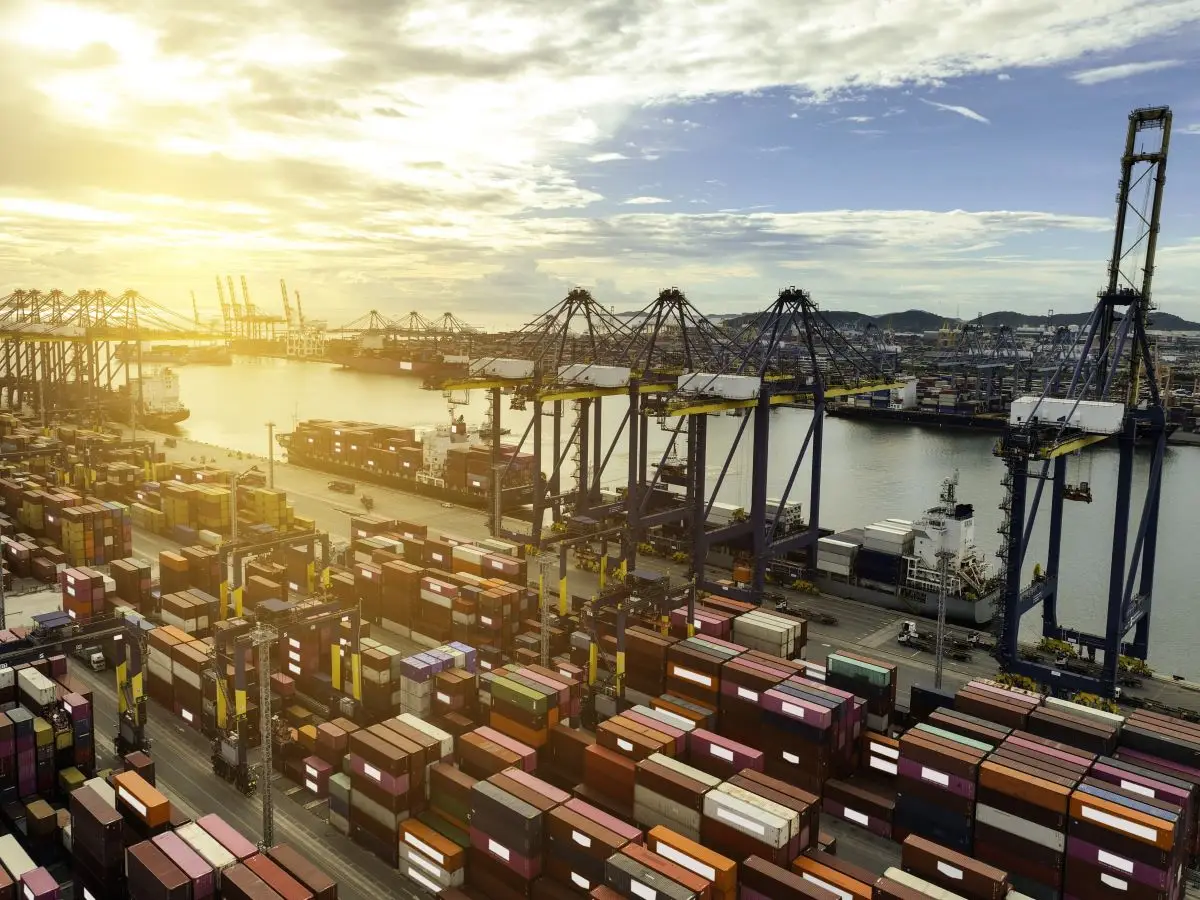
The EU’s Carbon Border Adjustment Mechanism (CBAM) reached a significant milestone in 2026. Following a transitional reporting period, CBAM certificates have now tangible financial value, linking the carbon expense of imported steel, cement, aluminium, fertilisers, hydrogen, and electricity directly to EU ETS auction prices. For exporters from nations lacking comparable carbon pricing, the costs are now real and – at this point – unavoidable.
The mechanism’s internal logic is straightforward: if a carbon price is already paid in the country of origin, it can be deducted from CBAM liability, incentivising trading partners to introduce their own pricing systems. A question reignited by decisions taken on Article 6 starting from COP29 and that remains technically unresolved – and politically urgent – is whether credits issued under the now-almost-working Article 6 of the Paris Agreement can serve as a substitute where domestic carbon pricing does not exist or where the carbon price is simply too low compared to the one paid in the EU. Indeed, the current CBAM structure and regulations were established when the global framework for credits under the Paris Agreement was still largely incomplete.
The case for recognition has recently been raised by many in the EU and partner countries: developing countries often lack the institutional capacity to establish large-scale carbon pricing systems such as an ETS, and Article 6 credits could offer an alternative para-compliance pathway. The modality could be price-based or volume-based. For instance, in theory, a CBAM liability of €100 could be reduced to €50 if €50 worth of Article 6 credits have been purchased – but which credits, how, when, and accounted against which NDC? Indirect forms of recognition of this kind already exist, such as the Singaporean carbon tax, which allows companies to deduct up to 5% of their tax through international carbon credits. In the case of the EU CBAM, however, the price of credits will play a key role in the discussion, and much will depend on the quality and value of the selected credits.
“In theory, this could create an indirect pathway for Article 6 credit use if a third-world country’s ETS allows part of a compliance shortfall to be met using Article 6 credits,” comments Dan Maleski, CBAM Lead at Redshaw Advisors. “Currently, some ETSs allow a limited share of a compliance obligation to be covered with VCM credits that meet defined criteria. However, this would first require the EU to formally recognise the developing country’s carbon pricing system, with any adjustment calculated net of free allocation or other subsidies.”
The EU Commission has opened this door. The December 2025 CBAM expansion proposal states that the forthcoming implementing regulation on carbon price deduction “may consider carbon credits under Article 6 of the Paris Agreement”. The language is tentative, but its inclusion is significant. It coincides with the EU’s decision that up to 5% of its 2040 climate target emissions reductions may be met through high-quality foreign carbon credits.
This starting point also comes with counterarguments. Some market observers noted that Article 6 credits are, as of today, not automatically eligible in the EU ETS, which serves as the reference instrument for CBAM pricing. Accepting credits as a CBAM offset while excluding them from ETS compliance would, technically speaking, create a structural asymmetry. There are also legitimate doubts about equivalence: the deep industrial decarbonisation required of European producers – like electrification and process redesign – might be categorically different from purchasing whatever type of carbon credit. Without strong oversight and adequate guardrails, integrity risks remain real, particularly if this conversation takes a parallel, facilitated track from the one on integrity for the 5% flexibilities under the EU’s 2040 goal (where Article 6.4, the Paris Agreement Crediting Mechanism, is now seen as the quality benchmark to be complemented by additional European standards). “Further clarity on this issue is expected in the upcoming implementing act on carbon prices paid in the country of origin, anticipated by the end of Q1 or early Q2,” adds Maleski.
Another concern is how recognition of Article 6 credits might affect the incentives for third-world countries to adopt carbon pricing systems. “A domestic carbon price tends to impose costs on all emissions from the sectors it covers, no matter where the products are ultimately consumed,” says Michael Mehling, Deputy Director of the MIT Center for Energy and Environmental Policy Research. “That makes it unpopular with emitters. If they can instead choose to purchase credits for the subset of emissions associated with exports to the EU, they will favour that. As a result, their governments may no longer be incentivised to adopt a broader carbon price. Yet, convergence of carbon prices is the only lasting solution to Europe’s leakage problem: the CBAM is only a stopgap solution.” A workable framework would need to resolve these tensions through design rather than exclusion, with clear rules on how to interact with Article 6 rules and related issues, such as double-counting and the correct use and interaction of registries.
The stakes go beyond EU borders. The UK CBAM comes into force in January 2027. Australia and Canada are developing their own border adjustment systems. If these jurisdictions adopt different methods for Article 6 credit recognition, exporters will face conflicting compliance requirements, further exacerbating fragmentation in the global carbon credit market.
Fragmentation is being addressed through several multi-stakeholder initiatives. The Open Coalition on Compliance Carbon Markets, launched at COP30, includes the EU, China, Brazil, the UK, Canada, Singapore, and Norway among its 18 members and is working toward credit interoperability. However, the institutional work has just begun, while carbon border measures by key jurisdictions are already in place or about to be implemented.
The EU, therefore, has both an opportunity and a responsibility. Publishing a clear, principled implementation of a regulation on carbon price deduction – one that establishes credible eligibility criteria for Article 6 recognition or not, rather than deferring the question – could reduce uncertainty for developing-country exporters, channel private capital toward high-integrity decarbonisation projects, and position the EU as the standard-setter in an evolving and increasingly populated field, filling what is becoming an evident policy vacuum.
Cover: Envato image