


This article is part of the thematic channel The Carbon Observer. Subscribe to the newsletter or update your preferences.
Singapore has emerged as a leader in recent carbon diplomacy efforts under Article 6 of the Paris Agreement, signing the most bilateral cooperation agreements in recent years and even surpassing Switzerland, historically the top player in this area. Currently, the city-state has fostered and concluded 28 bilateral agreements under Article 6.2 with governments across Asia, Africa, and South America. Recent agreements were signed with Malawi, Ethiopia, and Brazil in late 2025. This active international involvement is closely tied to national policies, particularly as the country's carbon tax is gradually increased through consistent increases in the carbon price.
Launched in January 2019 at S$5 per ton of CO2, Singapore's carbon tax covers about 70% of the country's emissions. It primarily targets about 50 industrial facilities that emit at least 25,000 tCO2e of greenhouse gases annually. The tax increased to S$25 per ton in 2024 and to S$45 per ton for 2026 and 2027. The government aims to raise it to S$50–S$80 per ton by 2030, aligning it with levels in the European Emissions Trading System – which, in turn, would result in a very ambitious carbon pricing policy for the region, as carbon prices in neighbouring countries rarely exceed $3-5 per ton. International carbon credits and Article 6 are then integrated with the national carbon tax, allowing industries to offset up to 5% of their tax obligation with international credits, thereby creating a consistent, stable source of demand.
Singaporean companies, however, cannot buy any credit they find on the market (the easiest to purchase or the cheapest) – and this is where the government's role in shaping international partnerships links those flexibilities to Article 6 diplomacy. The government regularly updates a national list of eligible activities. Credits sourced internationally as part of bilateral agreements are also eligible – or, at least, official documents hint at this possibility as automatic, as far as activities are recognised by each bilateral agreement's joint governmental committee.
Singapore’s emerging role under Article 6.2 is therefore the result of several factors combined. First, the small island-state needs to outsource part of its ambitious net-zero plans for 2050, as geography doesn’t provide enough land to invest in domestic renewable energy projects at the scale required to meet national energy demand. Second, as said, companies subject to the carbon tax (and its 5% flexibility option) need to look to international carbon credits because that same geography doesn’t allow Singapore to experiment with projects such as reforestation, afforestation, or other mitigation techniques at the scale necessary to fulfil companies’ credit obligations under the increasing national carbon tax or the country’s net-zero goals. This creates a need for active carbon diplomacy, both to provide companies with options for diversifying their credit portfolios and, not just in a collateral sense, to build new international relations with countries that are usually outside the city-state’s diplomatic radar.
The Coalition to Grow Carbon Markets and carbon diplomacy
Unlike the approach of some European capitals, however, Singapore does not seem to view carbon diplomacy as a tool for exporting or diffusing carbon pricing tools in other jurisdictions. Its activism under Article 6.2 is aimed at both building a reliable, government-approved credit portfolio for its national companies and investing in new strategic partnerships. Singaporean authorities are extremely aware of the current state of what used to be the global voluntary carbon market (VCM), which has not recovered in size or prices since the press scandals of 2023, and of the correlated global focus on credit integrity.
What does carbon credit integrity mean in their case? Beyond-NDC approaches, such as those proposed by the Swiss-led Article 6 Ambition Alliance (AAA6), or strict quality guardrails, such as those set by the Oxford Principles for Responsible Engagement with Article 6, might not entirely align with Singapore's pragmatic, cost-effectiveness-focused approach, and the government is instead investing political capital in another initiative, the Coalition to Grow Carbon Markets.
Jointly developed by the UK, France, Singapore, Kenya, and Panama, in partnership with the World Bank, IETA, the ICVCM and other bodies, the Coalition aims at providing a framework for credit integrity while investing in a sufficiently solid and institutionalised intergovernmental platform as a place to have these discussions (as, in our reading, multi-stakeholder initiatives alone might not represent an optimal option anymore). In terms of credit integrity, the Coalition differentiates itself from other initiatives for its portfolio approach, also in methodological terms. The Coalition’s “Shared Principles” launched at COP30, indeed, do not opt for a single methodology or platform, but highlight the possibility for countries and investors to adhere to a minimum quality set by the requirements of Article 6.4 “and/or” the Core Carbon Principles, “and/or” CORSIA eligibility, “and/or” national requirements. This more relaxed approach to integrity (especially compared to other existing initiatives) leaves the door open to experimentation and, some might argue, also to a non-negligible level of over-crediting risk for some project types.
Several sources, however, report that the Singaporean government is now working to fortify these minimum guardrails at the individual and national levels, particularly by involving rating agencies in developing fine-tuned methodologies and quality thresholds beyond the current policy, based on the national eligibility list. “Singapore has also advanced novel approaches to support its integrity assessment of international carbon credits at the project level, creating a framework for private sector firms to support their decision making,” says Joel Gould, Markets and Policy Lead at Be Zero Carbon. Notably, the Singaporean National Environment Agency has appointed BeZero Carbon, Calyx Global, and Sylvera, three of the leading carbon credit rating agencies, to provide independent assessments of carbon credit methodologies and projects. In addition, in 2025, the government also worked together with Verra and Gold Standard to launch the Article 6.2 Crediting Protocol, a guide for countries and investors to prepare to participate in Article 6.2 bilateral agreements.
While innovative, the country’s approach to credits and Article 6 comes with both opportunities and challenges. “Singapore’s approach to carbon diplomacy creates early demand and has the potential to mobilise supply, including in nature-based solutions, where it is among the first bilateral buyers. As an early mover, it also has the opportunity to secure access to the most transformative mitigation sectors and high-quality credits early on, including through forward or optional contracts for future NDC implementation periods, while other actors such as the EU remain comparatively late in operationalising their Article 6 diplomacy,” explains Simon Pfluger, Analyst at the Berlin-based think tank Climate and Company. However, the carbon price differential between Europe and Singapore on the global market “may translate into lower international credit procurement prices compared to frontrunners such as Switzerland or Sweden, limiting the ability to finance higher-ambition mitigation in partner countries, with buyers being incentivised to prioritise cost-efficiency over transformational mitigation outcomes”.
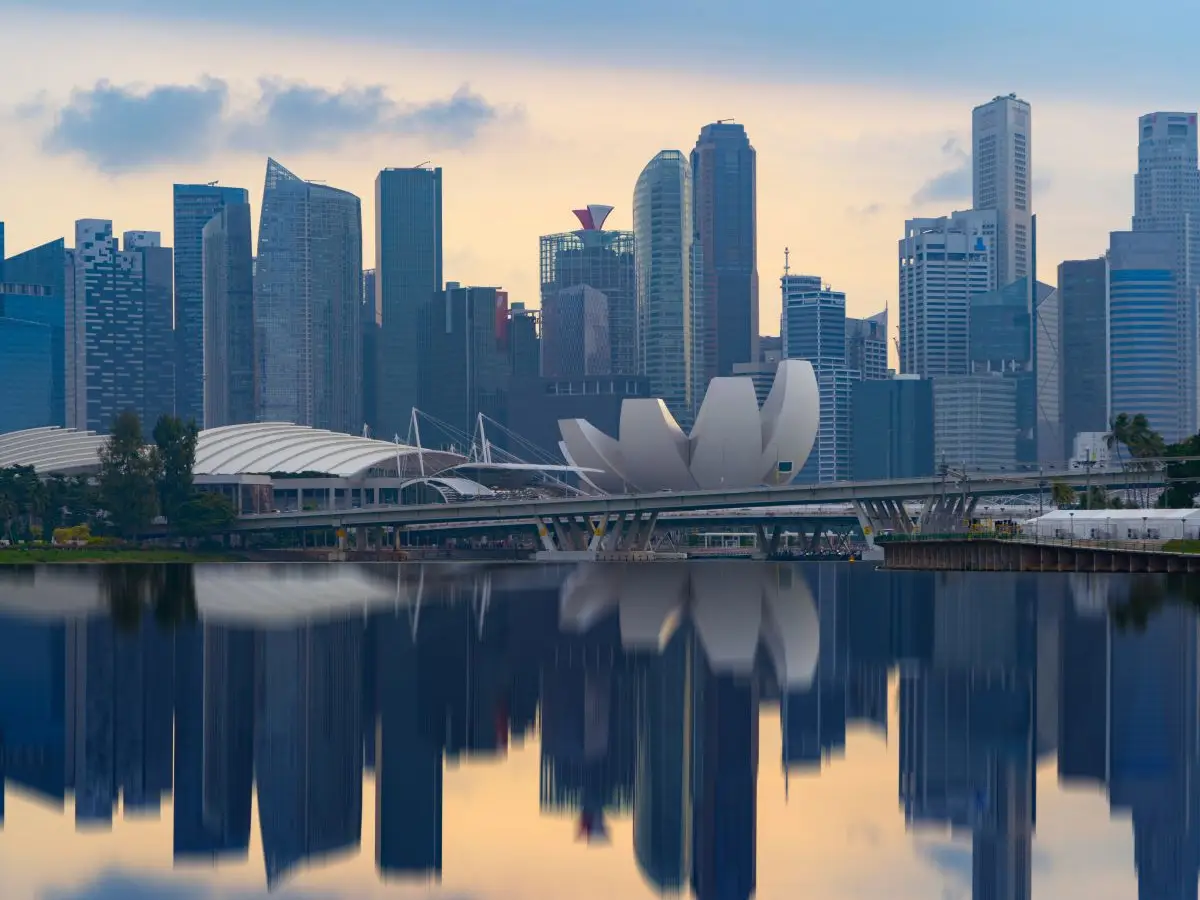
Cover: Singapore skyline, Envato