


“The central finding of this inaugural Scorecard is that none of the 18 companies assessed is currently ‘transition ready’, though two are emerging from the pack.” The new report by SteelWatch, an international organisation that monitors and promotes the decarbonisation of the global steel industry, sums it up like this. Published today, 31 March, the report evaluates 18 major steel companies with production facilities across 29 countries, chosen among the world's leading steel producers. The companies analysed are based in various geographical regions (Europe, Asia, North America and South America) and offer a representative overview of the global steel industry.
Out of a total of 100 points, no company manages to achieve a passing mark: scores range from 8.3 for China’s HBIS to 46.2 for Sweden’s SSAB. “We knew that the transition was off track, and we knew it was hard to work out what companies were really doing from the data, because we just see this flurry of constant announcements, backtracking, or sort of uncritical coverage. One of the reasons we wanted to do this was to find out what was actually happening. We also wanted to define what good looks like,” Caroline Ashley, executive director of SteelWatch, tells Renewable Matter. “The scorecard is meant to set the bar, and obviously we're going to set a bar that is years ahead, because it's a long-term transition. I think we are still surprised, having looked at the real data, at how little difference there is between companies.”
A world of steel
Behind the “hard-to-abate” tag lies one of the world’s most carbon-intensive sectors: iron and steel production is responsible for around a tenth of global carbon emissions. A material that permeates every corner of the modern economy, from the construction of homes, hospitals and schools to transport – including railways and cars – to industrial machinery, household appliances and all the infrastructure needed to generate energy, even that required for the transition itself. “There are 18 really major companies from across all the different countries. All of these companies really matter. And the fact that none of them score over 50 is quite a depressing message, showing the transition readiness gap across them all,” continues Ashley.
“The other main message is that we were really looking for structural change: companies shifting their investment, their operations, and their business case. And that's been an important guiding star for us. It's really informed our thinking on our methodology.”
The assessment is based on publicly available data, obtained mainly from company reports up to the 2024 financial year. Companies were assessed on five key areas for the sector’s transition: phasing out coal, developing green solutions, climate performance, targets and transparency, and social and environmental responsibility. These areas were then broken down into 21 overall indicators, ranging from operational questions – for example, “Is the company building new blast furnace capacity?” – to quantitative measurements, such as the volume of green iron consumed in millions of tonnes. Completing the picture, the so-called transition readiness gap measures the disparity between the level of commitment required to credibly achieve a pathway to near-zero emissions and the actions companies are actually implementing.
SSAB and Thyssenkrupp top the rankings, but with reservations
As highlighted several times in the report, reaching climate targets requires far-reaching structural changes, which remain largely insufficient in the vast majority of the companies analysed. The exceptions are the top two in the rankings, Sweden’s SSAB and Germany’s Thyssenkrupp, both of which have already begun implementing practical changes.
“Companies have obtained different scores in the different evaluation areas. We're not really seeing that structural change, except possibly in the two companies emerging at the top. There are signs of structural change there; however, they are not that far ahead in terms of points. But how they are ahead is significant,” points out Ashley. Both have verified climate targets aligned with the 1.5°C goal, ongoing plans to phase out their blast furnaces, and no planned or recent investments in coal-fired production capacity.
“Interestingly, they both have very ambitious plans for green iron. But because they're not in implementation yet, they didn't actually score that many points for it. If their green iron plans go ahead, they will move up the scorecard quite quickly,” continues Ashley. In Duisburg, a German industrial city situated at the confluence of the Rhine and the Ruhr, Thyssenkrupp is building a new DRI (Direct Reduced Iron) plant, the company’s very first facility capable of producing iron with virtually zero emissions.
First step: quitting coal
Coal-fired blast furnaces produce around 70% of the world’s crude steel and account for 90% of the sector’s direct emissions. The 18 companies analysed manage a total of 175 such furnaces, and every refurbishment project means prolonging emissions for decades. As the report highlights, decarbonising the sector will require an “accelerated, irreversible and well-planned phase-out of blast furnaces”.
The problem is not limited to companies actively expanding their production capacity, such as Baosteel, HBIS and JSW Steel, whose coal consumption and number of operational blast furnaces have both increased. It also concerns companies that are simply not planning to decommission their facilities. The majority of the companies analysed fall into what the report defines as a “status quo” category: while they are not building new blast furnaces, they have not announced when they will decommission existing ones either. This situation is more common in countries that have no policy on green iron production and in those where steel demand is growing. At the bottom of the ranking, there are companies that combine a structural dependence on coal, active expansion of blast furnaces and a lack of transparency regarding data. Yet, even from this position, some have announced green iron projects, which will be monitored by SteelWatch over the coming years to see if they materialise.
Shifting the focus from the global scope of the report to the European region, Ashley believes that “every company in Europe should already have a transition plan and a decommissioning plan for every blast furnace. By 2035, blast furnaces should simply be out of operation.” A deadline intertwined with the gradual phasing out of free emission allowances under the European Union Emissions Trading Scheme (EU ETS), a mechanism that has once again taken centre stage in recent weeks after Italy called for a review aimed at reducing energy costs.
The green steel gamble
If phasing out coal is the first step, the next one is using green iron, defined by SteelWatch as the production of iron with a maximum level of greenhouse gas emissions of 350 kgCO₂e per tonne. “What’s fundamental is that we’re not going to decarbonise steelmaking if we don’t get on with green iron, as most of the emissions come from the ironmaking stage,” says the expert. Almost all of the 18 companies analysed score zero or close to zero in this category. The highest score achieved is 3.1 out of 25, obtained by Luxembourg-based Ternium. According to the report, many companies set long-term climate targets, but very few have translated these into the production or procurement of the green iron needed to achieve them.
Industrial development and the interest of Beijing – which produces around half of the world’s steel – in green energy could, however, be a driver for accelerating the use of this material. “Companies in China and across Asia have, in the last year, really started focusing on scaling up green iron and green steel production. That's becoming a competitive threat for the EU,” highlights Ashley. “When I started this work three years ago, that wasn't the case. Europe and the US were ahead. Now I'm hearing more and more companies say: if we're not careful, what happened with photovoltaics is going to happen to us in steel. So Europe needs to move.”
There is also one element that could revolutionise the entire production chain. Iron produced using green hydrogen, unlike the pig iron produced in coal-fired blast furnaces, is solid rather than molten: it can therefore be produced where renewable energy is abundant and low-cost, and then shipped to steelworks. In short, iron can be produced in one place and steel in another. This represents a potential paradigm shift in the supply chain that the scorecard has already anticipated: points are also awarded to companies that purchase green iron and not just those that produce it. Because, ultimately, what matters is that this low-emission material enters the production chain, one way or another.
Among the other indicators assessed, the report also highlights the often underestimated importance of transparency: without data collection and disclosure by industry players, it is almost impossible to hold companies accountable for their actions. For the final assessment, climate performance and social and environmental factors were also measured. It is, in fact, not possible to bring about a credible and lasting transition in the sector without properly managing the impacts on communities and the environment, reason why this remains an essential component of the assessment.
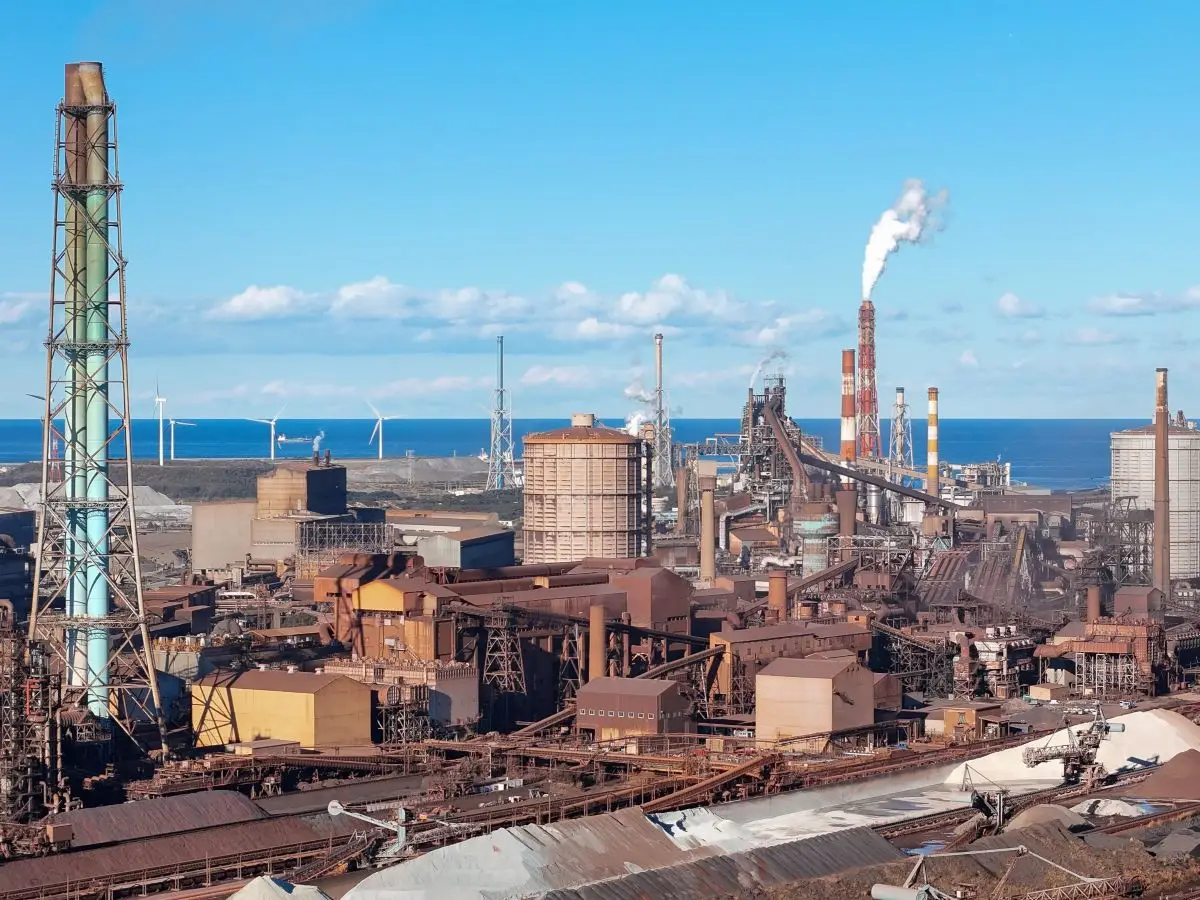
Cover: Nippon Steel plant in Kashima, Japan © SteelWatch