


Brussels – The European bioeconomy already accounts for around 5% of the EU’s GDP, supports over 17 million jobs and plays an increasingly vital role in competitive and sustainable growth. On the occasion of the CBE JU Stakeholder Forum on 24 March 2026 in Brussels, we met Nicoló Giacomuzzi-Moore, Executive Director of the Circular Bio-based Europe Joint Undertaking (CBE JU), the European Union’s public-private partnership which, alongside the Bio-based Industries Consortium (BIC), supports and represents the industrial development of the bio-based sector.
Since the first European strategy fourteen years ago, the bioeconomy has made a significant leap: from a fragmented sector to a fully-fledged industrial platform capable of connecting agriculture, research and industry, creating new supply chains that convert waste and biomass into advanced materials. This journey is now intertwined with an evolving European policy framework, geared towards simplifying regulations and strengthening the markets for bio-based products. Nevertheless, key challenges remain: overcoming the “valleys of death” that lie between research and the market, and developing financial instruments capable of retaining investment in Europe.
The topic of competitiveness has been a talking point in Brussels for some time. And yet, the link between the bioeconomy and biotechnology has much deeper roots. Could you describe how this relationship has evolved in recent years?
The European Union’s first strategy dates back fourteen years. At the time, a small group of companies was keen to develop technologies as alternatives to those based on oil and traditional chemicals. The sector was extremely fragmented. Member states and the Commission agreed to draw up an EU strategy based on three pillars: the first is environmental, focusing on green technologies that emit less CO₂, have a lower environmental impact and can help mitigate our effects on the climate; the second is economic and industrial, focusing on the development of industrial technologies capable of reaching the market. The third pillar is social, namely the involvement of the primary sector – the so-called primary producers – which includes not only farmers but also, for example, fishermen or aquaculture operators, and those responsible for the maintenance and growth of forests as a natural resource. Within this strategy, an innovative tool, called CBE Joint Undertaking, has been created. It was originally named Bio-based Industries Joint Undertaking (BBI JU), but it is essentially the same entity: a partnership between the European public and private sectors, designed specifically to align the strategic vision and forge links within the sector between industry, research centres, universities and the primary sector, fostering the growth of the bioeconomy as a cross-cutting industrial sector. The scope of this initiative is vast: from materials to cosmetics, from alternative proteins to construction materials and chemicals.
We understand that this is both its strength and its challenge, as it is not as clearly defined a sector as, for example, the automotive industry.
The bioeconomy is a truly cross-cutting sector, encompassing a wide range of tools, technologies and products. Over the past ten years, our public-private partnership has channelled over €1 billion in European funding into 220 projects, ranging from laboratory-scale initiatives to pilot projects – and therefore to more significant production volumes, so to speak – right through to the construction of first-of-their-kind facilities. All these plants are different from one another: we have already funded 19 of them in Europe.
How does this type of partnership ecosystem help speed up and drive innovation? In which areas does the EU still need to catch up, instead?
The level of private-sector investment stands at three euros of private investment for every euro of public investment; consequently, the multiplication factor of this approach to establishing a public-private partnership has been significant and has generated a powerful leverage effect. We began with thirty companies in the partnership; now there are four hundred. The sector is flourishing. The interesting aspect is not just research and innovation, however, but the fact that, particularly over the last two to three years, several global players have come to view the bioeconomy as a strategic opportunity. Up until three years ago, the Green Deal – and the bioeconomy as its instrument – was the concept that permeated all European policies. But today, China, India, Japan and the United States – which, although Trump does not officially state it, are very active – are making moves, and Latin America is a very important player. The bioeconomy exploits local resources and generates significant local and regional benefits. In an increasingly chaotic and fast-paced world, the bioeconomy is becoming a strategic asset.
Can you give us an example?
Unfortunately, the current Iran war. Not only are oil shipments blocked, but so are millions of tonnes of fertilisers destined for Europe, right as the planting season begins. Fertilisers are derived from oil: typically urea and other products such as pesticides that are imported from these countries, as we no longer wish to purchase them from Russia, our main supplier prior to the war in Ukraine. Now these products are at a standstill. This, therefore, poses a huge problem for preparing crops for next year’s harvest, while our projects are working on bio-based fertilisers which not only offer equivalent performance but also do not degrade our continent’s soils, half of which are already compromised. This is an example of how these products also have commercial value, as fertiliser prices have skyrocketed as soon as the Strait of Hormuz was blocked.
The challenge is, however, to put them on the market.
These technologies work. Research and innovation have shown – not least thanks to the support we have provided – what is possible. We must now create the conditions to establish a European market, help European industries to remain in Europe and invest not only in the first plant but also in the construction of several plants across the continent. The alternative is that someone else outside Europe will do it, and that is the key dilemma we face at the moment.
In addition to this dilemma, there is another – one that poses not only a strategic but also an operational challenge – known as the “two valleys of death”.
That’s true. If anything, the first “valley of death” – common to all innovative companies developing new technologies and start-ups – is the technological one: the transition from an idea that seems to work in the lab to a scale that can be industrialised. This is where CBE JU comes in: there are still two calls to be launched, totalling around €300 million; so there is still plenty of funding available.
And what about the second “valley”, the one concerning the transition of these products – already existing and operational – from the industrial stage to the market?
Various obstacles come into play here. The first is regulatory, at both European and national level. As explained by one of the companies we work with, the moment you declare to the authorities that a certain substance is derived from waste, the response is: “It is waste and must be treated as such”. In reality, we convert that waste into compounds, into chemical elements, to produce, for example, biodegradable plastics. A different level of understanding is therefore needed. At the European level, there are regulations such as REACH, and we are now also awaiting the new Biotechnology Act, expected to focus specifically on bio-manufacturing. There is also the issue of market creation. I expect proposals to be put forward this year to enable bio-based products to have a price advantage over petroleum-based ones. Measures such as quotas in public procurement or VAT reductions are being considered; the Commission has put various ideas on the table.
And what about finance?
The financial sector, and private finance in particular, still regards this industry as risky – not so much from a technological perspective but in terms of market entry. Banks want low-risk projects that can repay loans and cover guarantees.
Not just investment funds, then, but the banks themselves.
Investment funds certainly play a part too: some are more proactive and willing to take greater risks. But, let’s be clear, in my view the most important player in the European financial sector when it comes to this priority is the European Investment Bank, represented at our Forum. We are working together to create an investment catalyst that will allow us to reach industrial scale. The biorefineries we typically finance cost between €100 and €150 million each, and we cover around 10% of that requirement; a minimum share needed to build a full-scale industrial plant and achieve a competitive price based on volume, with all the benefits that entails.
In your new work programme for 2026, your plan is to invest 170 million in 13 projects. I would first like to ask what the priorities are behind these calls for proposals and, in particular, in which areas you expect the greatest impact, even though I have noticed a fairly balanced distribution across the various sectors.
We are working with the European Commission and industry to define the priorities for research topics. There are many different areas; I could mention several, but the aim of the last two CBE calls has been to focus on technologies that are nearing market readiness: in the chemical, materials and cosmetics sectors – the latter of which has enormous potential in this field – and, for next year, also in the textile and food sectors, for which we have received a very large number of proposals for demonstration projects. There is consequently a strong demand for funding.
Could you give us a rough idea of the scale?
Last year, we had a call worth around €160 million, roughly the same as this year’s, and the total demand for funding was €1.4 billion – almost ten times as much. We would like to have more resources. On the one hand, this is a negative development, but on the other, it shows that the sector is really taking off and that there is a strong desire to invest in Europe in an area that could become strategic. Finally, another aspect I would like to highlight is the diversity of the companies associated with the Bio-based Industries Consortium. 85% are SMEs, which are often the source of innovation, and the remaining 15% are large companies. We are seeing these large firms collaborate with SMEs more and more frequently. In Italy, we can mention Novamont; in Germany, BASF, Europe’s largest chemical company; in Scandinavia, groups such as Metsä, major investors; and finally, in France, L’Oréal and Michelin. Some of these large companies, initially somewhat hesitant about bio-based solutions, are now moving in with determination. Despite the fact that there is perhaps slightly less talk of the Green Deal in the EU than a few years ago, companies see the bioeconomy as a path towards the sustainability and resilience of the EU economy and continue to invest in these technologies with an eye to the future.
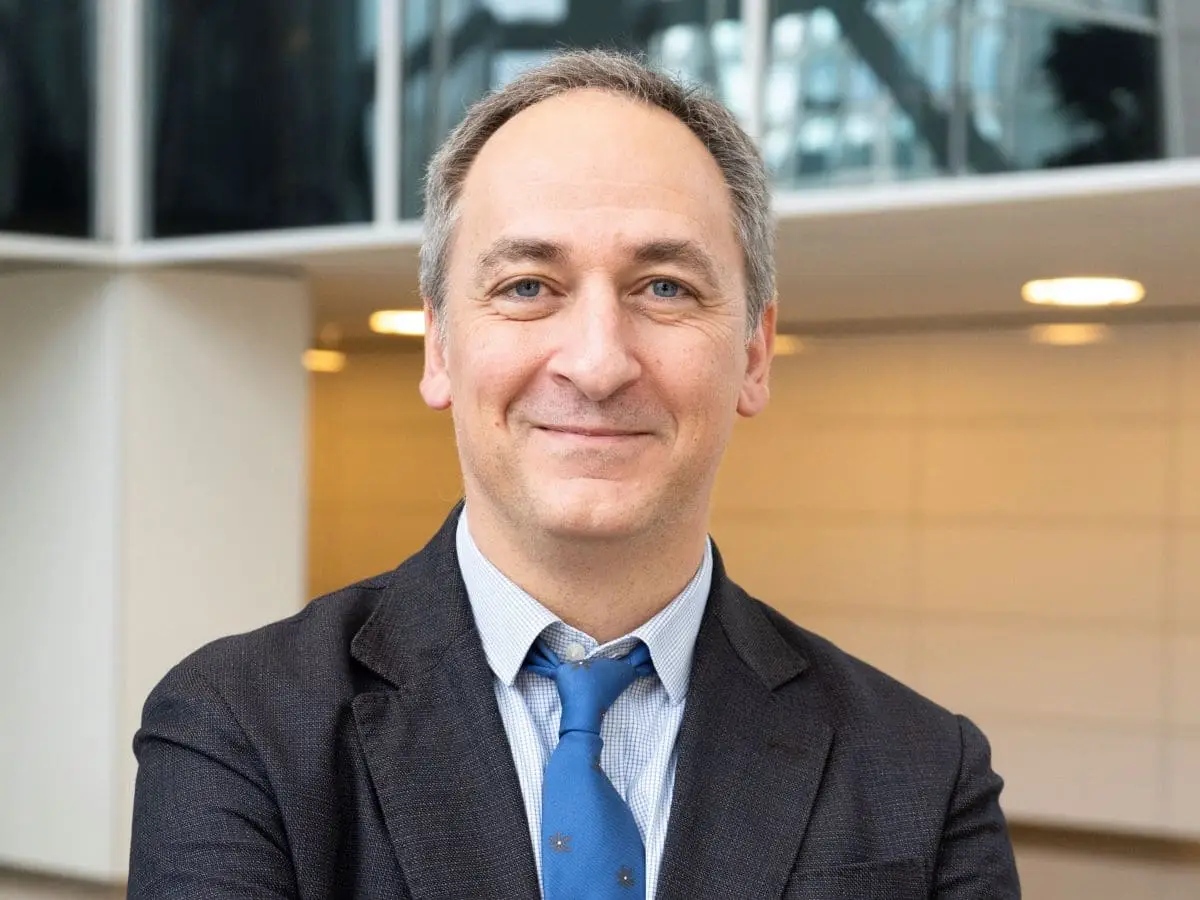
Cover: Nicoló Giacomuzzi-Moore