


From Brussels – On 26 March, the European Parliament endorsed its position on two legislative proposals giving effect to the tariff aspects of the EU-US agreement signed in July 2025. The texts, once agreed with EU governments, should result in the elimination of most tariffs on US industrial goods and preferential access to the European market for numerous fishery and agricultural products.
The “framework” political agreement, reached in Turnberry, Scotland, between Donald Trump and Ursula von der Leyen, has been presented as a framework for “mutual, fair and balanced trade”. However, it also includes a far more significant commitment: the EU’s intention to purchase energy supplies – specifically LNG, as well as oil and nuclear power – worth $750 billion by 2028.
While this figure does not appear in the texts voted on by MEPs, it represents their most significant political corollary. In essence, approval of the trade agreement amounts to endorsing the energy commitment as well, without any real parliamentary debate on the matter at present. According to several experts consulted by Politico Europe, the target is unrealistic: to achieve it, the EU would have to triple its energy imports from the United States within a few years. All this while the Union continues to reduce its dependence on Russia. The share of Russian gas via pipeline has in fact fallen from around 40% in 2021 to around 6% in 2025; considering gas and LNG together, Moscow currently accounts for around 13% of the EU’s total gas imports. The aim remains to completely phase out these supplies by 2027, as decided by the Council in January 2026.
“Sunrise” and “sunset” suspension clauses and safeguards
Mindful of the risks, MEPs have strengthened the rules implementing the Turnberry Agreement, which will now serve as the basis for negotiations with national governments. The suspension clause allows the Commission to propose a total or partial suspension of trade preferences if the United States imposes additional tariffs exceeding the 15% limit or introduces new charges on European goods, or if it compromises the objectives of the agreement, discriminates against EU operators, threatens the territorial integrity of Member States or resorts to economic coercion.
The new “sunrise clause” (entry-into-force clause) stipulates that tariff concessions will only take effect if the US honours its commitments, including reducing tariffs on European products containing less than 50% steel and aluminium to a maximum of 15%. For products with a content exceeding 50%, unless tariffs fall to that threshold, European preferences on US exports of steel, aluminium and derivatives will no longer apply six months after the regulation enters into force. A “sunset clause” also sets the measure’s expiry date at 31 March 2028, which can only be extended by means of a new legislative proposal supported by a thorough impact assessment.
Dependence on US LNG and pressure on Brussels
In the new energy balance between Brussels and Washington, the $750 billion worth of US fossil fuel supplies pledged by 2028 carries as much weight – and perhaps more – than the reduction in tariffs. The Turnberry agreement opens up the European market to a wide range of US products while consolidating a dependence on US LNG, which is ever more intertwined with EU climate rules, starting with the methane regulation. On the energy front, Europe is focusing on US liquefied natural gas: in 2025, 58% of the LNG arriving in the EU came from the US, a share that could rise further given the disruptions in the Strait of Hormuz related to the Iran war, where 20% of global supplies pass through and energy infrastructure has been damaged.
In this context, political pressure is mounting. In recent weeks, the US government and the fossil fuel industry have pushed Brussels to relax the European methane regulation, claiming that overly strict standards would make LNG exports less competitive. Among the priorities of one of the major oil lobbies for 2026 is the aim to “oppose the methane regulation”, while Washington has also requested “equivalence” exemptions for its gas. These allow for deviations from EU standards, which normally require environmental and safety rules comparable to those in Europe. Additionally, at least two closed-door meetings with EU officials were reportedly not adequately made public, as reported by Euronews.
“A supplier that cannot meet EU methane standards faces restricted access to the world’s largest integrated gas market,” stated Seb Kennedy, gas market expert and editor-in-chief of Energy Flux. “That is a meaningful constraint — and it applies equally to Russian LNG producers, whose MRV data is sparse, unverified, and largely unfit for purpose under any equivalent standard.”
The remarks by the U.S. Ambassador to the EU, Andrew Puzder, on the eve of the vote clarify the U.S. strategy: “If Europe wants to have affordable energy, it’s going to need to reduce the regulatory requirements and restrictions that it has in place.” And more: “It could be a very severe energy crisis if Europe doesn’t act,” especially in light of the conflicts in West Asia.
The central role of methane makes this comparison particularly significant: this gas accounts for around a third of global warming, and rapid reduction of its emissions is considered one of the most effective tools available to governments for combating climate change.
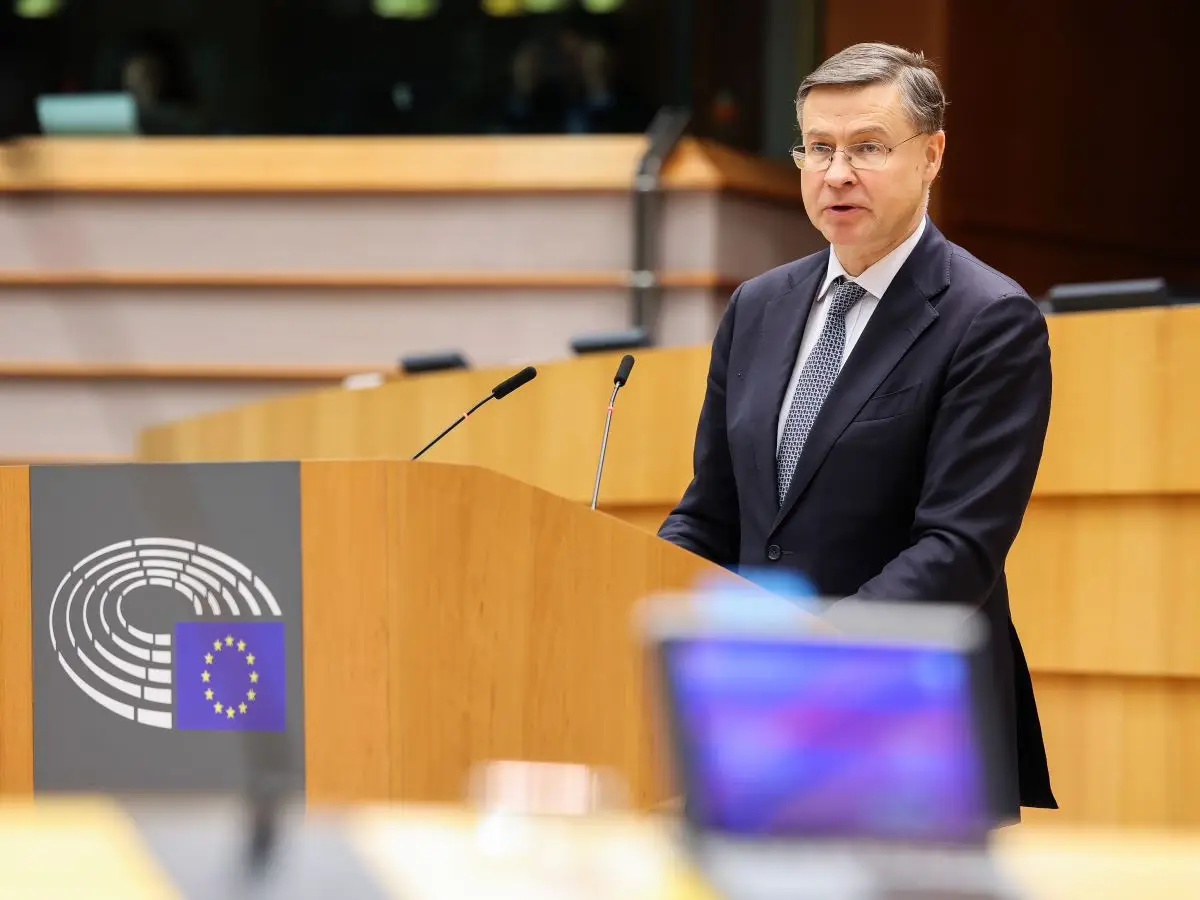
Cover: Alain Rolland photographed by Valdis Dombrovskis © European Union 2026