


This article is part of the thematic channel The Carbon Observer. Subscribe to the newsletter or update your preferences.
Over the past year, two political developments have profoundly affected the carbon credit market. On the one hand, COP29 adopted the minimum operating rules for Article 6 of the Paris Agreement, which regulates both bilateral agreements between countries and the new Paris Agreement Crediting Mechanism (PACM), the centralised system for credit trading under UN supervision. On the other hand, the European Commission has since signalled openness to introducing flexibility based on carbon credits into the Union's climate targets – in particular, a maximum flexibility of 5% compared to 1990 emissions, applicable between 2036 and 2040, through Article 6, with high-quality credits following a test period that will start in 2031. These two developments – the existence of a UN reference system after years of trading in almost complete anarchy and the sudden arrival of a strong signal of demand in terms of quantity and quality – have revitalised not only the sector, now developing strategies to produce and market credits of sufficiently high quality to be tradable both at the UN level and toward EU flexibility, but also the world of carbon diplomacy.
If we wanted to define the term, we could say that carbon diplomacy in its broadest sense encompasses both the efforts of certain actors to promote emissions trading systems in other countries, as in the case of the European and Chinese ETS, and the establishment of mechanisms for carbon border adjustment (carbon pricing diplomacy) and a new subcategory in international relations, in which relations between states are also based on environmental and social projects built and financed through carbon credits (carbon credit diplomacy). Both paths are now of extreme strategic, environmental, and relational interest to certain capitals and, in particular, to the European Union, which would like to use this flexibility to build new emission-mitigation projects and, through them, new partnerships or to strengthen existing ones by adding new pieces to existing packages.
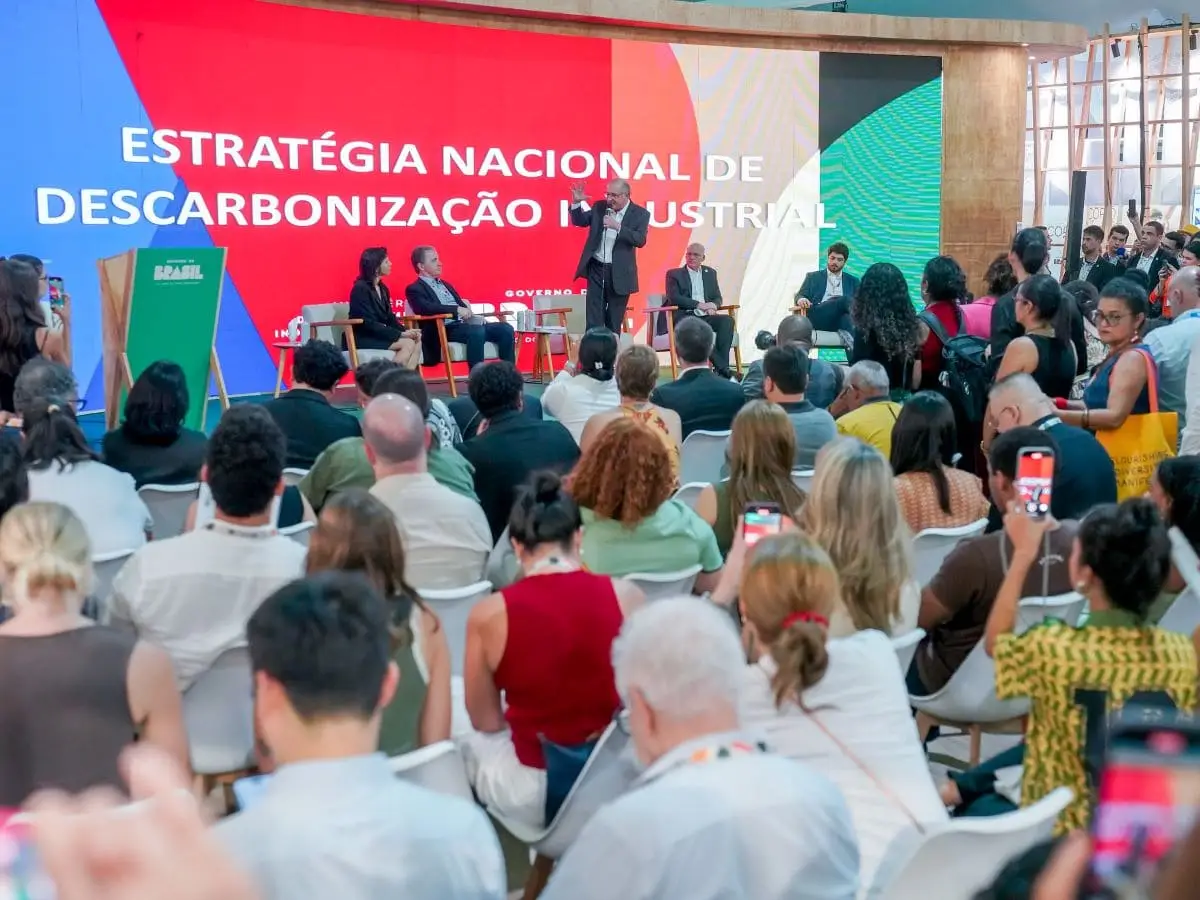
This is not merely an exercise in style. The number of initiatives, coalitions, and alliances on carbon pricing and carbon credits launched at COP30 in Brazil signals renewed interest in the sector, particularly among certain governments. The Open Coalition for Compliance Carbon Markets, launched on 17 November 2025 in Belém by the COP presidency, aims to create a platform for dialogue and exchange to promote the greater dissemination of ETS systems around the world. Notably, it has brought together the European Union and China in a joint initiative, the only two major players remaining in the UNFCCC arena following the gradual but disorderly exit of the United States. It appears that the European Commission now wants to invest significantly in the Open Coalition, precisely because of the need to combine its environmental and climate action with the resetting of its international relations in a dramatically different scenario from that observed during the first von der Leyen Commission.
Another significant initiative launched at COP30 is AAA6, the Article 6 Ambition Alliance, led by Switzerland and including Norway and others. These three players are very active in the use of Article 6.2 of the Paris Agreement, which governs bilateral cooperation between countries through carbon credit projects authorised by the host country. The AAA6 proposes a quantum leap in project quality and integrity by applying the rules for projects registered under Article 6.4 (the PACM) to bilateral projects under Article 6.2 as well, while retaining the mitigation result in the project host country and, thus, going beyond the buyer-seller logic, according to a renewed principle of domestic ambition combined with greater international climate cooperation.
Both initiatives, the Open Coalition and AAA6, demonstrate a clear commitment by some of the major state players in the carbon market sector to the sector's rapid expansion, which must therefore be carefully managed amid potentially skyrocketing demand for quality in the coming years. Not only that, but it is also a matter of carbon credit diplomacy: environmental projects capable of producing credits that can be sold on the international market or through bilateral agreements are once again part of broader cooperation packages between governments, as was the case with the Clean Development Mechanism under Kyoto, but today with a better-developed private sector and new, more stringent UN rules.
Risks are not negligible, however. “The increasing reliance of developed countries on Article 6 raises the risk of mitigation deterrence – that is, the temptation to substitute domestic emission reductions with imported credits, ultimately weakening overall climate ambition,” comments Juliette de Grandpré from the NewClimate Institute. This could be particularly true for low-quality credits, for which key integrity features such as additionality, permanence, and robust baselines can be difficult to certify. Recent academic studies have noted that, for the new UN system and global carbon markets to be credible in terms of their mitigation contribution to the Paris Agreement, stricter rules should be put in place, while removal credits and a limited number of other credit types could best meet the new call for quality, reducing the likelihood of risk compared to past CDM experiences and practices still observed in the voluntary space.
Moreover, an aspect to be further explored is how these jurisdictions will combine their nationally determined climate plans (NDCs) with their renewed interest in and engagement with Article 6 for carbon diplomacy goals. Countries should clearly indicate how they intend to use Article 6 in their NDCs, but key recent policy novelties emerged while most climate plans were already drafted or politically agreed upon in many capitals ahead of COP30. “It is remarkable how little attention is paid to the fact that, for developing countries, generating Article 6 credits is in direct competition with the fulfillment of their own climate strategy, as set out in the Nationally Determined Contributions (NDCs),” adds Juliette de Grandpré. This linkage between Article 6 engagement and current plans is still in the making and will likely lead to a limbo situation in which countries enter into Article 6 agreements before the next round of NDC updates, scheduled for 2030, thus outside the perimeter of their own climate plans.
While understanding how to overcome these paralegal and policy issues, however, key economies are likely to be proactive in the next few months in drafting their own carbon diplomacy strategies, drawing on ETS diffusion and CBAMs (for those who are actively promoting them), carbon crediting projects, and interactions under Article 6, whether or not they are envisaged by their current NDCs. The recent surge in the number of multi-country initiatives signals clear interest in this direction and indicates that carbon projects are likely to become a common feature of broader international deals, particularly the Chinese Belt and Road Initiative and European efforts to rebuild a network of friendly partners across Africa, Asia, and the Pacific. Project developers, rating agencies, and market stakeholders should now view these developments from a governance perspective, as convergence across project types will emerge from the renewed push for high quality.

Cover: Rafa Neddermeyer/COP30 Brasil Amazônia/PR via Flickr