


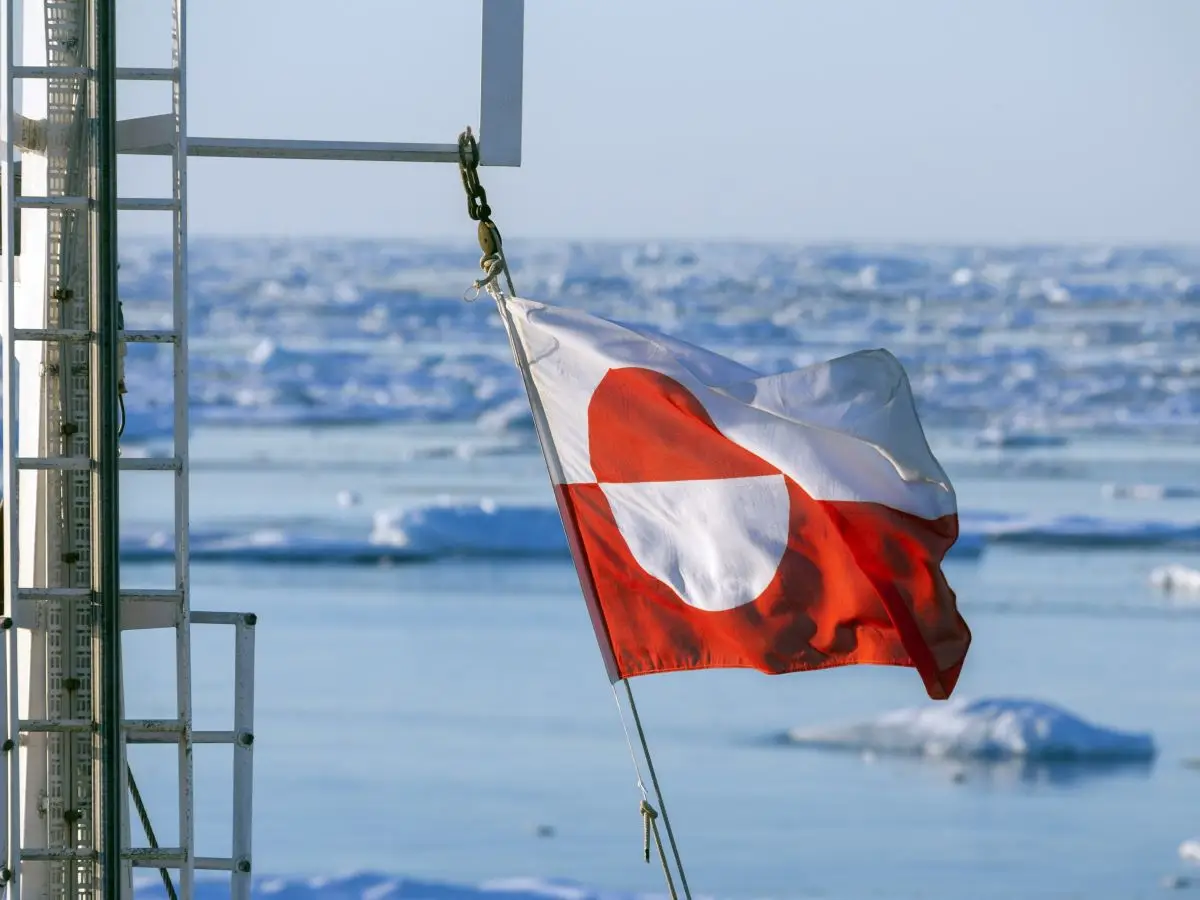

The United States has set its sights on Greenland, and the matter can no longer be dismissed as a far-fetched provocation, especially by the European Union. As White House spokeswoman Karoline Leavitt stated on 6 January, Donald Trump and his team are considering a “range of options” to gain control of the island, an autonomous territory under the Danish crown. Speculation ranges from purchase, as confirmed by Secretary of State Marco Rubio, to the direct use of military force.
“Utilising the US military is always an option at the Commander-in-Chief’s disposal,” Leavitt stated. After all, Trump himself has publicly reiterated that the United States “needs Greenland” for security reasons. This objective, however, is not explicitly mentioned in the National Security Strategy, a document that in December 2025 overturned US foreign policy by invoking the Monroe Doctrine, announcing the “Trump corollary” and dominance over the Western Hemisphere, thereby giving the green light to deny “non-Hemispheric competitors” bases, forces, vital resources or new strategic trade routes across the ice.
In this perspective, the Arctic island and its 57,000 inhabitants appear to be more of a prelude to a larger plan, and the announcement of its imminent annexation is a smokescreen for former European allies, more concerned with territorial sovereignty than with their own cohesion, which is Washington's real objective. Continuously dictating the international agenda unilaterally, Trump is in fact postponing the issue with a “Let's talk about Greenland in 20 days”, buying time for EU countries to move in a disorderly fashion and to test the limits of the Old Continent's flexibility on the hottest issues, from the peace plan for Ukraine to the seizure of Venezuelan dictator Nicolás Maduro and the dispute over Greenland and its resources.
Europe reacts without Brussels. Will NATO confront itself?
The European reaction to Trump's increasingly clear ambitions regarding Greenland was swift but fragmented. On 6 January, France, Germany, Italy, Poland, Spain and the United Kingdom, together with Denmark, signed a joint declaration stating that “Greenland belongs to its people. It is for Denmark and Greenland, and them only, to decide on matters concerning Denmark and Greenland.” The statement, later joined by the Netherlands, also emphasises the need to “uphold the principles of the UN Charter, including sovereignty, territorial integrity and the inviolability of borders”, and that Arctic security must be guaranteed “collectively” by NATO allies.
Two questions arise. The first: the European Commission and High Representative Kaja Kallas do not appear in the statement and have not expressed any reaction, unlike what happened with the US seizure of Maduro, a blatant violation of international law labelled by the EU executive as “an opportunity for a democratic transition in the country.” A Commission spokesperson also avoided any direct comments on the Arctic case, simply reiterating the Union's commitment to the integrity of Greenland and cooperation with the United States. Reading between the lines, while Putin's Russia gloats, we can see Brussels' difficulty in responding with a united front to a strategic ally that threatens another NATO member, despite the existing and viable framework for mutual defence provided for in Article 42, paragraph 7, of the Treaty on European Union.
In the second place, the Atlantic Alliance itself, designed for collective defence through the well-known Article 5, is facing an unprecedented scenario: one member state and major contributor, the US, is considering the use of force against another, Denmark. Does the risk of conflict really exist? As reported by The Telegraph, the Danish Ministry of Defence has confirmed a 1952 directive requiring soldiers to immediately counterattack any force invading its territory, including Greenland, without waiting for orders. Danish Prime Minister Mette Frederiksen has warned that a US attack would mark “the end of NATO” and the post-World War II security order, with potentially destabilising effects for Europe as well. And yet, Denmark is among the partners that have paid the highest price for Atlantic solidarity: 44 soldiers killed in Afghanistan and another eight in Iraq, one of the highest per capita casualty rates in the entire coalition, according to the BBC.
In all this, NATO Secretary General Mark Rutte refrained from commenting on the Greenland dossier, merely meeting with Alliance leaders on the sidelines of a Coalition of the Willing summit in Paris, which saw France and the United Kingdom declare their readiness to send troops to Ukraine once the war is over. It may be that a few days earlier, on the BBC, Rutte had claimed that “I believe fundamentally that thanks to Donald J. Trump, NATO is stronger than it ever was” and that “NATO has never been as strong as it is now since the fall of the Berlin Wall”. A paradox, however, emerges: while plans are being made to deploy forces in defence of a country that is not yet part of the European Union, hesitation prevails in the face of threats to a territory that is already European and to a historic ally such as Denmark, which, at the time of writing, is still awaiting military support from other European powers. Only France, reports Reuters, is working with its partners, notably Germany and Poland, to draw up a response plan in case the United States carries out its threat to annex Greenland, Foreign Minister Jean-Noel Barrot said on Wednesday 7.
Industrial interests in the Arctic
Military geography is not the only issue at stake. Greenland is home to resources considered crucial in global competition: rare earths and other critical minerals, hydroelectric potential and, at least in perspective, offshore hydrocarbons. During a hearing in the US Congress in 2025, the focus was precisely on the strategic value of these resources, while failing to address the environmental context in which they are located. The Arctic is the fastest warming region in the world, and climate change amplifies the risks associated with any exploitation. In 2021, the Greenlandic government banned oil and gas drilling for environmental reasons. A decision that contrasts with the Trump administration's interest in reopening exploration, despite the high costs, the disappointing results so far and the operational dangers linked to extreme environmental conditions.
Finally, it should be noted that Greenland has enjoyed extensive self-government since 1979, while maintaining defence and foreign policy in the hands of Denmark. Most of the population is in favour of independence from Denmark but opposed to becoming part of the United States, which already has a military base on the island. In 2023, Denmark granted Greenland a transfer of 4.14 billion kroner (approximately €550-560 million), equivalent to about half of the local government's revenue and about one-fifth of GDP, a pillar of Danish welfare that remains a central element of stability often ignored by those who reduce the island to a mere military platform.
Support for annexation in the United States, however, is low: an August 2025 YouGov poll indicates that only 7% of Americans would approve of a military takeover. Nevertheless, Trump has appointed Louisiana Governor Jeff Landry, a public supporter of annexation, as special envoy, and Katie Miller has posted an image of Greenland with the American flag and the word “SOON”. Greenland's Prime Minister Jens-Frederik Nielsen has responded to these actions by saying, “That's enough now. No more pressure. No more insinuations. No more fantasies of annexation. We are open to dialogue. We are open to discussions. But this must happen through the proper channels and with respect for international law.” We can only hope so.
Cover: photo by Envato