


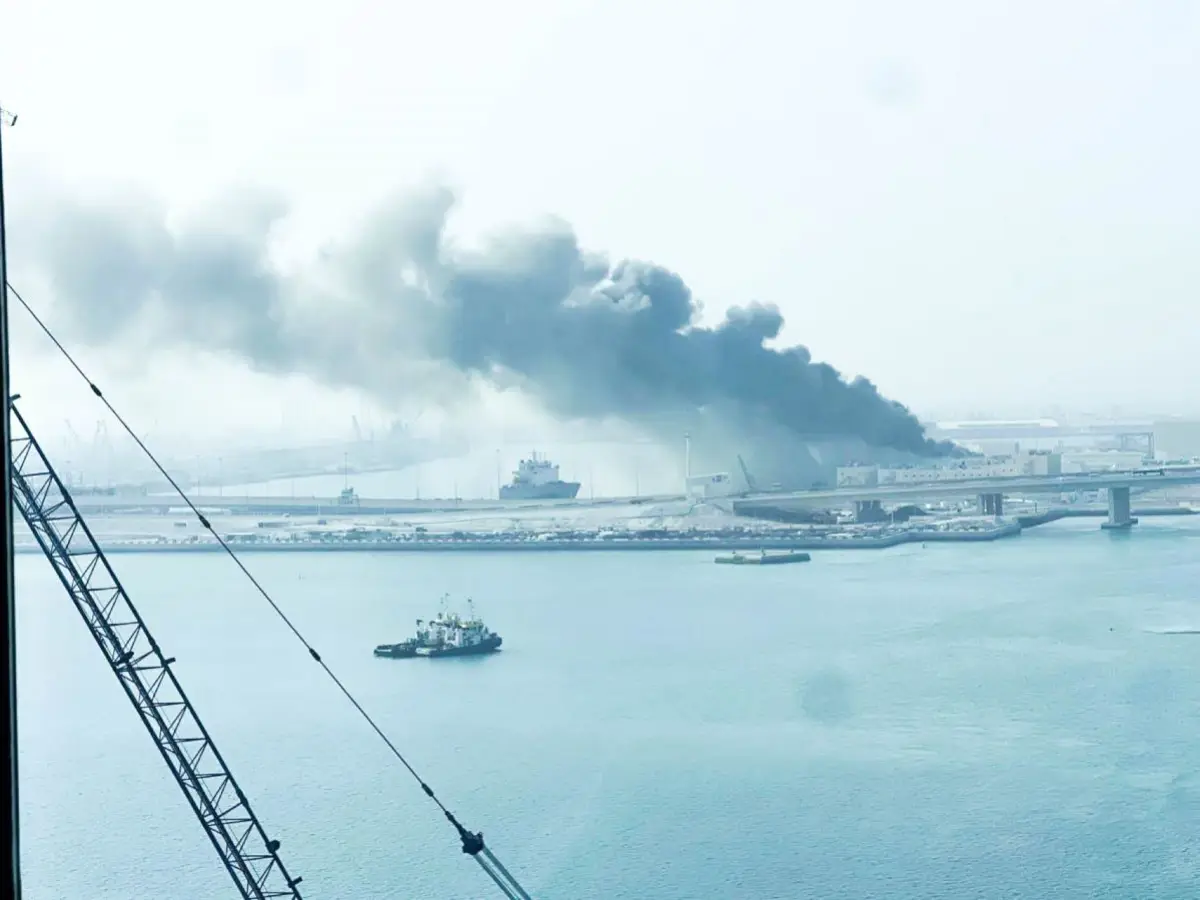

Since Saturday, 28 February, three oil tankers have been bombed, a crew member aboard a Marshall Islands–flagged cargo vessel has been killed, and around two hundred merchant ships have been left stranded. In response to missile strikes launched by Israel and the United States, Iran, as repeatedly threatened, has turned the Strait of Hormuz into an instrument of military and commercial retaliation, shutting it down to maritime traffic. According to Iranian media reports, a senior official of the Revolutionary Guards stated on Monday, 2 March, that the army would open fire on any vessel attempting to pass through.
This narrow maritime corridor, separating Iran from Oman’s Musandam Peninsula, carries not only around a fifth of global oil and gas exports, but also millions of tonnes of nitrogen-based fertilisers, including ammonia and urea (the latter accounting for 45% of global supply). Should the blockade endure, Brazil and India would be the most exposed on the agricultural front, though the rise in fertiliser prices could also impact Europe.
Urea exports from Gulf countries
Roughly half of global food production depends on fertilisers. Without them, crop yields would fall sharply, placing the delicate balance of global food security at risk. Their industrial production rests largely on the Haber–Bosch process, devised by Fritz Haber and subsequently industrialised by Carl Bosch, which combines nitrogen drawn from the air with hydrogen (today sourced mainly from natural gas) to synthesise ammonia.
Ammonia is the indispensable feedstock for a wide range of nitrogen-based fertilisers, including urea, the most widely used chemical fertiliser in the world. According to an analysis by Rabobank, a significant share of the urea passing through the Strait of Hormuz comes from Qatar and Iran, accounting for an estimated 5 million tonnes annually, while the United Arab Emirates and Saudi Arabia contribute a further 2 million tonnes each year.
Any closure of the strait would have an immediate impact on global fertiliser prices, though the repercussions for agriculture would vary from region to region. Much would depend on seasonal demand patterns and farming cycles, which would shape both the timing and the severity of the effects.
Rabobank’s analysts suggest that the most vulnerable countries would be those with the largest structural deficits in urea production, namely Brazil and India. Brazil imports between 7.5 and 8.5 million tonnes of urea each year, meeting more than 90% of its needs through imports. Meanwhile, New Delhi’s demand fluctuates between 7 and 11 million tonnes annually, depending on subsidy policies and government support schemes for agriculture.
In a climate of logistical or geopolitical tensions, an increase in international fertiliser prices would translate into higher costs for the local agricultural sector and, more generally, for food supply chains that purchase products from these countries.
The European Union faces the tariff test
In June, the European Union imposed fresh duties on fertiliser imports from Russia and Belarus, leaving it to source roughly one million tonnes elsewhere. North Africa, from which Europe already imports substantial volumes of urea, and the Middle East would be the most obvious alternatives. Yet both regions carry geopolitical risks. Last June, for instance, the suspension of Israeli gas supplies to Egypt brought part of the country’s urea production to a halt, driving up prices across Europe.
European producers may attempt to raise domestic production, though almost certainly at higher energy costs, particularly at a time when conflicts are also affecting gas and oil markets. Added to these uncertainties are the costs associated with the introduction of the Carbon Border Adjustment Mechanism (CBAM), in force since the beginning of the year. Last week, following strong pressure from the agri-food industry, particularly in Italy, Brussels opened up to the possibility of temporarily suspending duties on imports of ammonia and urea. “The proposal is intended to lower costs for farmers and the fertiliser industry by around 60 million euros,” the Commission said in a statement.
On the cover: Fire at the Bin Zayed Port, in Abu Dhabi, 1 March 2026, photo by Noor Pictures/Shutterstock (16718730a), IPA Agency