

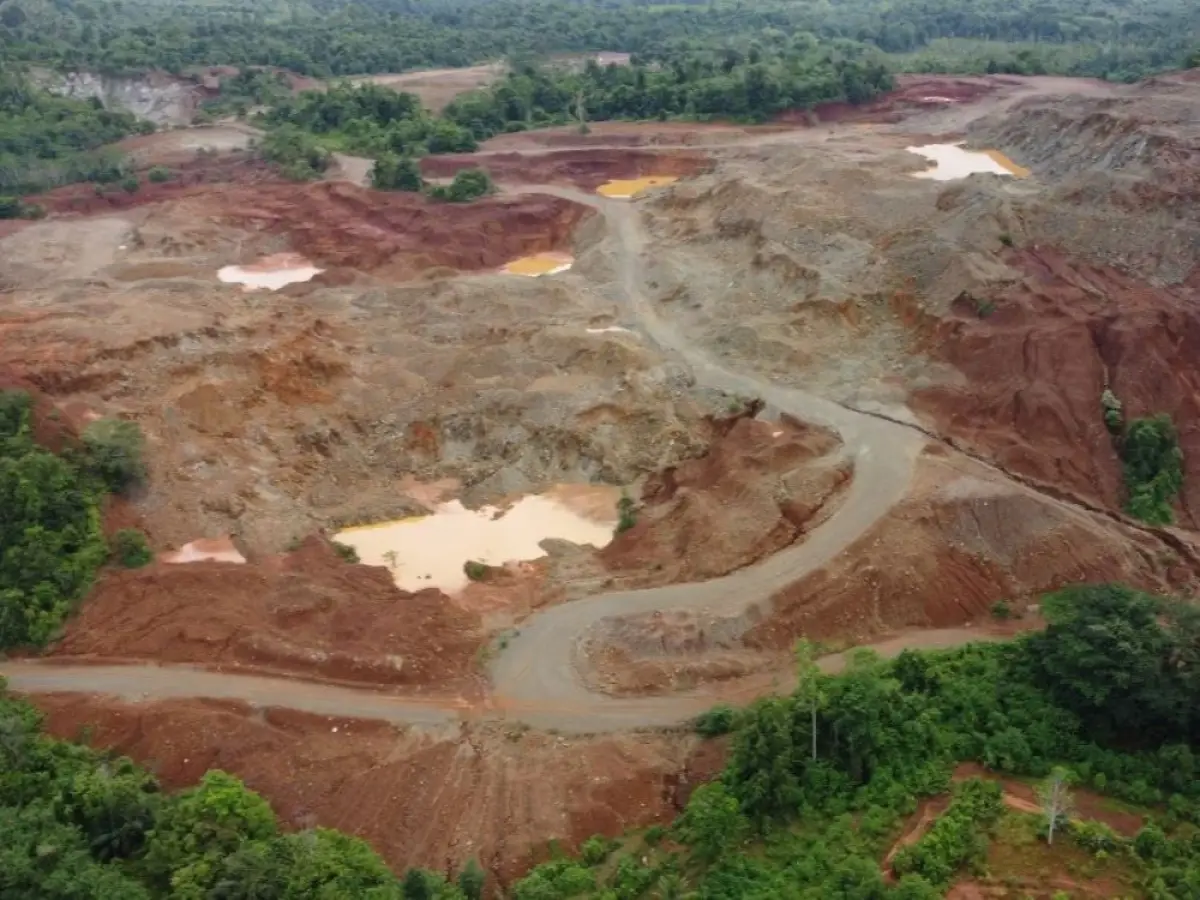

On 18 February 2026, a landslide occurred inside the Morowali Industrial Park (IMIP) in Indonesia, one of the world’s major nickel mining hubs. One employee was killed by the collapse in a tailings storage area, and operations were suspended. But this is just the latest in a series of major accidents at the site: in March 2025, three of the four workers buried under another landslide died. In 2023, a furnace explosion claimed the lives of 21 employees.
Nickel is a strategic raw material for the energy transition, essential in the production of batteries for electric vehicles, solar panels and wind turbines. Behind its extraction, however, lie controversial issues related to the enormous environmental damage, the impact on communities and the poor safety conditions in mines and refineries.
Who controls Indonesia’s nickel?
Indonesia is the world’s leading producer of nickel, with around 21% of global reserves, and covered 51% of global demand in 2023. According to the International Energy Agency (IEA), the country’s revenues from nickel, copper and tin could reach $40 billion by 2050.
Nickel mining is at the core of the Indonesian government’s industrial policy, albeit with some changes compared to a few years ago. In 2020, the export of raw materials was prohibited in order to oblige companies to build refining plants and develop a domestic industrial supply chain, thus retaining added value within the country. The policy attracted major foreign investment, particularly from China, which contributed to the creation of large industrial parks. According to a report by the French Institute of International Relations (IFRI), between 2013 and 2022, China invested $50 billion in Indonesia, notably in the mining sector. Currently, at least one Chinese company operates in each of the country’s three main nickel production hubs.
In Morowali, the Chinese company Tsingshan, a leading global producer of stainless steel and processed nickel, has been promoting the development of the Indonesia Morowali Industrial Park (IMIP) since the early 2010s through a joint venture with the Indonesian conglomerate Bintang Delapan Group. The Indonesia Weda Bay Industrial Park (IWIP) on the island of Halmahera is managed by a joint venture between the Chinese groups Tsingshan Holding Group, Huayou Cobalt and Zhenshi Group, together with French multinational Eramet, which co-owns the Weda Bay mine through PT Weda Bay Nickel alongside Tsingshan and the Indonesian state-owned company Antam. On Obi Island, the Indonesian group Harita is operating through its subsidiary PT Trimegah Bangun Persada and the joint venture PT Halmahera Persada Lygend (HPL), set up in collaboration with the Chinese company Lygend Resources & Technology.
The paradoxes of extraction
“Nickel is not clean energy just because it is used for electric vehicles. Only 5% of Indonesia's nickel production goes into electric vehicle batteries, with the rest used in the stainless steel industry and its derivative products,” explains Imam Shofwan, Head of Community Network at JATAM, an Indonesian network of mining advocacy, to Renewable Matter. “The most obvious damage caused by mining activities is the worsening of environmental quality, visible in the enormous deforestation and pollution of air, water and soil. This has resulted in a sharp deterioration in the health of residents, with a drastic increase in acute respiratory diseases and a high incidence of diarrhoea among young children.”
Nickel is often described as a key resource for the global energy transition, however “The slogan of the green energy transition, which promotes electric vehicles, represents an anomaly for us,” states Moh Taufik, coordinator at the same NGO in Central Sulawesi. “To produce a single battery for electric vehicles, tens of thousands of hectares of forest in Central Sulawesi must be destroyed. Additionally, coal-fired power plants are used to power factories that produce battery components.”
Indonesian nickel is of the lateritic type: it is found close to the surface and relatively easy to extract, but it requires highly energy-intensive and polluting refining processes. Processing is carried out in large industrial complexes powered by coal-fired power stations built specifically to support nickel production. This contributes to a significant increase in greenhouse gas emissions, rendering Indonesian nickel one of the most carbon-intensive in the world. Data from the Institute for Energy Economics and Financial Analysis (IEEFA) show that without a transition to renewable sources, the sector could account for 5% of national emissions by 2028.
“For example, in the village of Fatufia, Morowali, waste from a coal plant dumped into the sea has heated the water and damaged the coast, reducing the catch,” tells us Taufik. “In Ganda-Ganda village, Morowali Utara, sediment from mining has destroyed coastal ecosystems and coral reefs, making fishing more difficult and increasing fuel costs.”
According to a report by the Indonesian organisation Action for Ecology and People’s Emancipation (AEER), each tonne of metallic nickel produced via the HPAL (High-Pressure Acid Leaching) process – a method used to obtain nickel suitable for batteries – generates around 100 tonnes of waste. This waste, known as tailings, consists of sludge contaminated with heavy metals and chemicals resulting from treatment with sulphuric acid. Indonesian legislation classifies these as toxic and hazardous materials, with potential adverse effects on human health and ecosystems. For this reason, they should be managed as hazardous waste, with specific procedures for storage, monitoring and disposal.
Nevertheless, nickel production in Indonesia has risen rapidly in recent years, and the management of these residues remains one of the sector's key environmental challenges, particularly in major industrial hubs where large-scale HPAL plants operate.
Impact on local communities
The widespread development of nickel mining and refining facilities has had a profound impact on the social fabric of local communities, disrupting economic balances and forms of democratic participation. Shofwan explains to Renewable Matter that mining activities have caused deep divisions within society: “The community has split into two opposing groups: those who support the mine and those who reject it.” Often, tensions are exacerbated by the role of local authorities and security forces, which tend to side with the companies. “The conflict has become even more bitter because village authorities, security forces, the district administration and the local government usually side with the companies and often criminalise citizens.”
Indonesian legislation generally favours industrial development at the expense of public participation: although there are laws protecting the rights of local communities, in practice these rights are often ignored. The most recent regulations facilitate the granting of mining permits and reduce the role of communities in decision-making processes. “The participation of indigenous communities is limited,” explains Shofwan. “There is a law on the protection of coastal areas and small islands that prohibits mining in coastal areas and on small islands, but many small islands are still exploited for mining”.
Moh Taufik also describes a similar process. Mining operations tend to deliberately create conflicts, dividing communities between those who accept promises of jobs and prosperity and others who fear losing their livelihoods. These divisions weaken communities’ ability to resist and make it easier for companies to operate. “It is not easy to oppose mining activities. Opposing communities are often intimidated by individuals linked to mining companies. Furthermore, companies file complaints with the authorities against community members on unfounded charges, to discourage further protests.”
Mining operations in Indonesia often receive protection from law enforcement agencies, as they are governed by specific regulations that impose severe penalties and prison sentences on those who advocate for environmental safety against the impacts of mining.
One of the main problems, explain JATAM activists, is the lack of meaningful consultation prior to the start of projects. Residents often only find out about the opening of a mine once work has already begun. “What rarely appears in the media is that when nickel mining began operating in Central Sulawesi, communities lost their sources of livelihood, from access to clean water to agricultural land and plantations,” Taufik continues. “Mining activity has also destroyed coastal and marine areas, used as waste disposal sites.”
While the nickel industry is often presented as a source of employment, the benefits for the local population remain limited. “The opening of mines is always associated with the creation of jobs and this is assumed to reduce poverty, but this is only an assumption,” the activist explains. Facts show that nickel mining in Central Sulawesi has eliminated sources of employment such as agriculture and fishing. Mining actually creates jobs. However, at the same time, it destroys other livelihoods. This is the dilemma of mining: it creates jobs, but at the same time destroys other livelihoods,” Shofwan adds.
The result is a profound transformation of the communities, which now have to live with pollution and loss of natural resources and get increasingly deprived of their own rights.
Traceability and accountability in the nickel rush
Given the global rise in demand for nickel, a key issue revolves around the responsibility of overseas companies using this mineral in their supply chains. According to Vuyisile Ncube, Lead Corporate Campaigner at Earthworks, a US-based NGO that monitors the impact of extractive industries on people’s lives, European companies’ heightened focus on traceability has not yet translated into a substantial change in sourcing practices.
“While we’ve seen more and more European auto-makers mapping their supply chains and highlighting geographies where more risks of environmental and human rights violations occur,” explains Ncube. For this reason, he adds, “the majority still source from places connected to high environmental and social costs. European companies must take responsibility for the environmental and social impacts of their supply chains and take proactive steps to address and remedy the harms caused by their business activities.”
The issue also concerns the overall climate impact of the nickel boom. “Nickel’s ability to assist in the transition to a low-carbon economy is currently undermined by the sheer amount of carbon generated by the Industrial parks where most of the world’s nickel is processed,” Ncube points out. “Most of these Industrial Parks still rely on captive coal-fired power plants, so our global climate goals will only be achieved if renewable energy replaces this carbon-intensive method of processing”.
One possible solution, according to Ncube, is to ease the pressure on demand for new extraction by taking a broader view of transport and production systems. “There are a number of strategies that are key to reducing the need for new nickel, the first being demand reduction,” he explains. “Developing and promoting mass transit that is powered by renewable energy, or walkable cities particularly in European and other Western countries would reduce the impacts of mining on communities in the Global South.”
Design also plays a key role: “Where nickel is used for batteries, these need to be designed for circularity, durability and repairability to extend their lifespan and promote multiple uses. Once a battery has reached the end of its lifespan, recycling must take place in facilities with high environmental and safety safeguards”.
Ncube emphasises that, at the regulatory level, more binding measures are required to ensure that human and environmental rights are respected throughout the entire supply chain.“A framework for mandatory human rights and environmental due diligence is key, so the EU’s battery passport is a great first step,” he affirms. The problem, however, requires a global solution. “Globally, though, the UN Binding Treaty on Business and Human Rights could potentially ensure the respect for rights along the minerals value chain, but the negotiations have been ongoing since 2014, and we are seeing a lack of leadership from Global North countries where a lot of these multi-national corporations are headquartered.”
Another key issue relates to the management of mining waste, which continues to pose a major risk to communities and ecosystems. “Given the severe impacts of mine waste on communities, worker safety and ecosystems, significant changes are needed to improve waste management,” Ncube concludes. “Safety First: Guidelines for Responsible Mine Tailings Management, endorsed by 165 mining affected communities, Tribal governments, environmental and human rights organisations, and academics, establishes global best practices to the people and the places downstream from mines.”
Cover: photo by © Jatam Sulteng