

Strategic critical raw materials are the Achilles heel of European industrial recovery. Commonly known by the acronym CRM, they are essential for the EU's competitiveness, as well as for clean energy, digital and defence sectors.
In an effort to reduce dependence on imports, often times from a single supplier (China), the European Commission has accelerated the launch of RESourceEU, an action plan based on the Critical Raw Material Act, to provide structural funding, conduct in-depth market monitoring, strengthen the circular economy of CRMs and develop risk mitigation tools, such as bolstering strategic reserves. The objectives are clear: at least 10% of annual consumption of strategic raw materials must be extracted in the EU, 40% processed within its borders, 25% must come from recycling, and no more than 65% of these materials may come from a single country.
In order to achieve these objectives, RESourceEU will leverage at least €3 billion through EU funds and the European Investment Bank, as well as additional resources from the InvestEU Fund, Innovation Fund, Battery Booster, the European Defence Industry Programme and the Horizon Europe research programme.
To gain a better understanding of what goes on behind the scenes, Renewable Matter has conducted interviews with people from the EU Commission directly involved in the operational processes of RESourceEU, granting them anonymity upon request due to the sensitive nature of the topics discussed.
RESourceEU’s objectives and priorities
The list of priorities is clear to insiders: materials for batteries, that is, rare earths, cobalt, nickel, manganese, and lithium; and for defence, meaning gallium and germanium. Various project funded by RESourceEU will have to focus on these materials as a matter of priority.
The aim of RESourceEU goes beyond containing China, which boasts over thirty years of expansion in the critical minerals sector, particularly rare earths, both in terms of extraction and refining. According to our source at the EU Commission, “Today, the Trump administration is also a cause for concern, as it has significantly accelerated the race for supplies, supporting financing through the Export-Import Bank of the United States (EXIM Bank) and the U.S. International Development Finance Corporation (DFC), as well as substantial private capital.”
EXIM Bank alone announced at the end of November 2025 that it intends to invest $100 billion (€85 billion) in CRM and energy. This eclipses the €3 billion recently allocated to RESourceEU. According to our source, “this demonstrates a clear inability on the part of Europe to mobilise sufficient resources”.
The atmosphere in Brussels is not the best. “The President of the Commission, with the announcement of RESourceEU on 3 December, took many insiders and businesses by surprise. There is too much administrative bureaucracy. Nobody knows for sure when the investments will be allocated. And work on governance is only just beginning,” the source continues.
The European Centre for Critical Raw Materials
In order to begin addressing the issue, efforts to establish the European Centre for Critical Raw Materials will be pursued, with the aim of providing intelligence on CRM availability and jointly purchasing and stockpiling raw materials on behalf of Member States, according to our source.
For Executive Vice-President for Industrial Strategy Stéphane Séjourné, numerous examples of successful market centralisation exist: “As we did with Russian gas and REPowerEU, or with Covid vaccines, we must also do this for essential raw materials,” he commented.
But for now, this is just an idea. According to our source, “There are many Directorates-General (DGs) within the Commission involved in the CRM issue, and bringing them together will not be easy, as some work on internal policies, others on foreign policies, and others by thematic or geographical area. One solution could be to transform the European Centre for Critical Raw Materials, set up as a light-touch structure, into an agency or even a dedicated DG.”
More clarity is needed on stockpiling, i.e. the strategic storage of critical raw materials, a matter currently being discussed behind closed doors, which will have to define which minerals are best to set aside. We must also bear in mind that there are companies, such as Umicore, that already have almost exclusive control over germanium and effectively play a strategic role in controlling reserves. Several sources indicate that stockpiling priorities will be defined by national observers on critical raw materials, such as those established in Italy, France and the Netherlands.
International collaborations
On the international cooperation front, initiatives within the Global Gateway will continue. “One of the most recent saw the EU and South Africa sign a historic partnership agreement on trade and investment in clean tech, together with a new cooperation agreement on mineral and metal value chains,” explains our source. The collaboration was announced by President Ursula von der Leyen and President António Costa together with South African President Cyril Ramaphosa on 21 November, ahead of the G20 summit in Johannesburg. Further details are yet to be revealed, but there is a lot of interest surrounding the agreement.
Another partnership initiative was due to start with Brazil, increasingly becoming the new Eldorado for rare earths, with some very mature projects. “There is established expertise in the EU for processing rare earths, and securing the supply of virgin feedstock is a priority,” the source continues. “This is why Brazil could be an important new partner,” especially at a time when the Lula government is distancing itself from the United States.
A three-year EU-Brazil support project on critical raw materials was signed at the end of October, with the support of the consulting firm NTU. But at the moment, the new mining frontier, Minaçu – 382 km from the capital, Brasilia, already known for asbestos mining – which began extracting rare earths in 2024, has been completely acquired by Denham Capital, a US fund. Furthermore, the entire production is destined for China, given that the US will only have rare earth processing plants from 2028 and the EU has been unable to find common ground with the US, increasingly interested in putting Europeans in difficulty.
Circular economy, import and export
In the opinion of those interviewed, the circular economy is a priority issue, but one still in the process of being defined. “It is essential to keep metal stocks within the Union, preventing the export of scrap or end-of-life metals,” explains one source. “This should not be a problem. It is more complicated to encourage imports from non-EU countries, given that the Waste Shipment Regulation, based on the Basel Convention, complicates the transit of these materials from an administrative standpoint. For example, scrap metal from Pakistan travelling through, say, seven countries requires authorisation from each of them. The approach is to focus on European stocks, but we will soon have to address the issue of imports as well.”
Therefore, in the coming months, the Commission will propose introducing restrictions on the export of permanent magnet scrap and waste based on a thorough assessment and targeted measures on aluminium scrap. Similar measures will be considered for copper scrap. These efforts include the creation of an EU-level sub-code within the Combined Nomenclature and the European Waste Catalogue to identify and track permanent magnets and end-of-life products containing them. Member States will also need to strengthen enforcement at external borders to prevent illegal flows.
Recycling of critical raw materials
Accompanying today's action plan is a targeted amendment to the Critical Raw Materials Act to promote the recycling of permanent magnets in the EU. First, the European Commission suggests extending labelling requirements to other products to facilitate their recycling, including hard drives, transducers, loudspeakers, civil drones, and motorised toys. In addition, to ensure that secondary raw materials are actually used in new products, the Commission requires that magnets in products contain a share of recycled critical raw materials, to be sourced from pre- and post-consumer waste recycled within the EU.
“The lion's share of resources for the circular economy of Critical Raw Materials will come from Horizon, where €593 million will be allocated under the 2026-2027 work programme to support the optimisation of resource use in a circular economy and in new production processes,” concludes the Brussels source. “This is a clear signal of how much the EU wants to continue innovating and how it will be a fundamental basis for future partnerships to try to preserve a European role in the processing, technology and infrastructure sectors.”
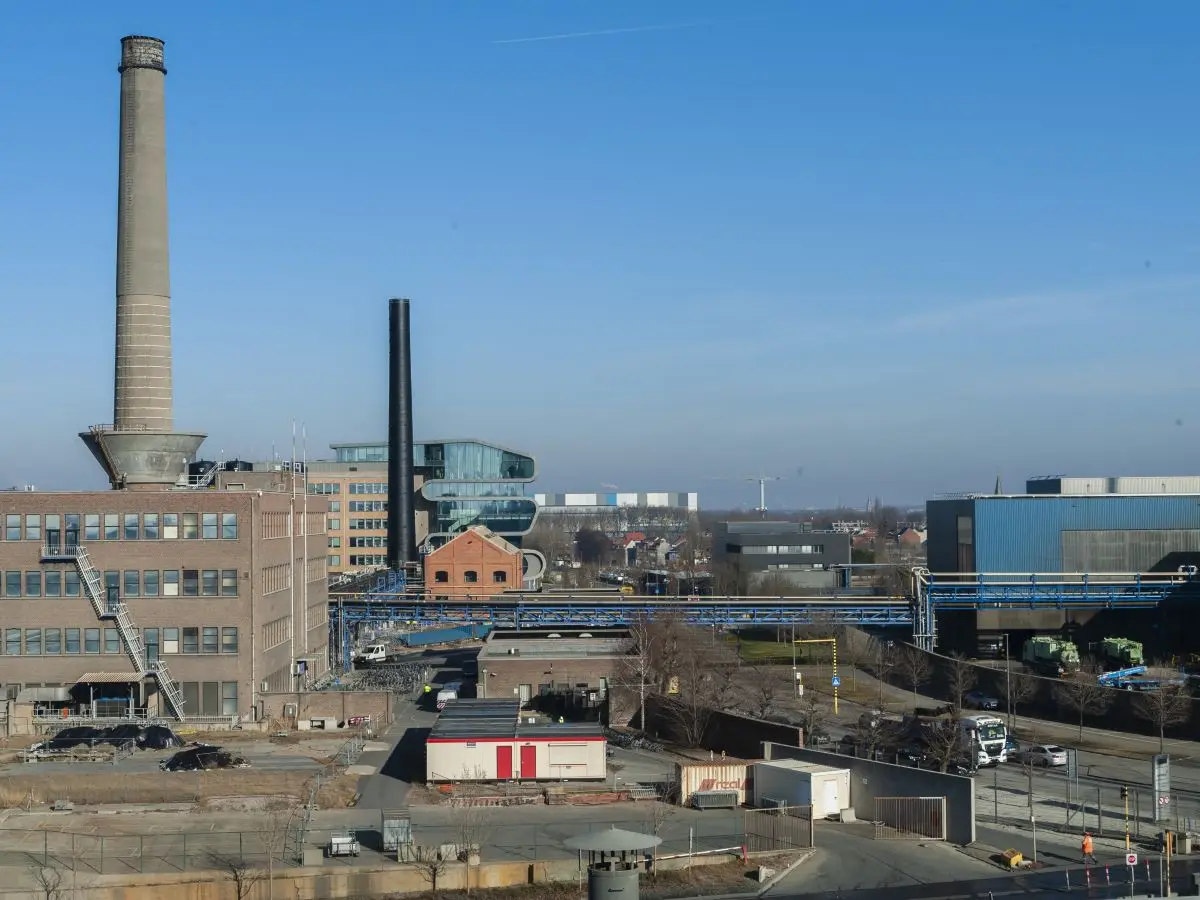
Cover: Outside view of the Umicore recycling plant in Belgium © European Union, 2025