


Geopolitical tensions have once again brought energy to the forefront of global debate. The escalation in the Middle East, with the conflict between the United States, Israel and Iran and the involvement of other Gulf countries, has reawakened questions about the security of supplies and the volatility of fossil fuel prices. Against this backdrop, there is growing attention on the role that renewable energy can play in building more resilient energy systems, less exposed to international shocks. How might the new geopolitical tensions affect the energy transition and the industrial choices of individual countries? Renewable Matter discussed this with Francesco La Camera, Director-General of the International Renewable Energy Agency (IRENA).
In an ever more unstable international scenario, what does the current crisis tell us about the structure of global energy systems?
One thing is very clear: a market dominated by fossil fuels is inevitably influenced by geopolitics. The result is extremely volatile prices, uncertainty and, ultimately, risks to countries' energy security. Even a single political or military event is enough to cause significant fluctuations in both price and supply availability. Therefore, a more decentralised energy system, with a growing share of renewables and more players in the market, is structurally more resilient. Paradoxically, events such as these – sometimes interpreted as hindering the transition – end up having the opposite effect in the medium term, as they drive new investment. Recent crises demonstrate this: after Covid and the war in Ukraine, we have seen an acceleration towards more distributed energy systems based on renewable sources.
Is global data really showing such a significant acceleration in renewables?
The numbers support this view. Looking ahead to 2025, while the data is not yet final, global installed renewable capacity is expected to reach nearly 700 gigawatts. This once again represents over 90% of the new electricity capacity added globally. It is a very clear sign of how the market is also reacting to international shocks. Events such as the pandemic, the war in Ukraine and the most recent geopolitical tensions have ultimately accelerated the transition to a more decentralised, renewable-based energy system. After all, it is no longer simply a question of access to the sun or wind: we are talking about mature technologies that can be integrated with storage systems and sources such as hydroelectricity and geothermal energy. This all contributes to more stable energy systems that are less exposed to geopolitical tensions.
In the United States, energy policy seems to be shifting direction, and Washington has decided to withdraw from IRENA. What impact did this decision have?
I find this decision very regrettable. The United States was a major contributor to the agency, accounting for a significant share of its budget, and participated with highly qualified delegations that made important technical contributions. Therefore, its withdrawal has both financial and political implications. That said, we must distinguish between federal dynamics and market dynamics. In the United States, the electricity system is largely in the hands of individual states, and most of them continue to invest in renewables and set ambitious targets. In other words, the withdrawal from IRENA is a negative signal at the multilateral level, but it does not mean that the American market is coming to a halt. Industry and cost dynamics continue to drive the development of renewables.
Another much-discussed topic concerns critical raw materials. Is there really a risk of choke points for the energy transition?
In my opinion, the problem should be put into perspective. It is true that demand for minerals and certain raw materials will grow, and significantly so, as the transition requires materials. However, I do not believe that there is a real structural limit. More modern mining policies can speed up authorisation processes and better manage social and environmental aspects. Furthermore, technology is evolving rapidly, and, depending on prices and the availability of materials, innovations allow different solutions to achieve the most efficient result. Then there is the issue of circularity. Once these technologies are introduced into the energy system, a cycle begins in which the recovery and recycling of materials become increasingly important. In the long term, this reduces pressure on primary demand.
If China continues to lead the energy transition, which other countries do you see emerging in the renewable energy industry chain?
The industrial landscape is gradually expanding. In addition to China, I see Gulf countries, particularly Saudi Arabia, making decisive moves to invest in building their own industrial capacity. Australia is also beginning to develop strategies in this direction. There are also several countries in Latin America and Africa that have mineral resources and are evaluating how to develop local value chains, not limiting themselves to extraction but also focusing on manufacturing and technology production. In general, competition is not only about wind and solar power, but also about networks, the digitalisation of energy systems and storage technologies.
In Italy, there's a heated debate about nuclear power again. What role do you see for this technology in the energy system?
I believe we need to look at the numbers and, above all, at the timescales involved. Renewables are currently growing at a completely different rate to nuclear power. Last year, around 700 gigawatts of new renewable capacity was installed worldwide, an enormous amount when compared to what nuclear power has added in decades. To put this into perspective, China is currently installing a quantity of renewables every week comparable to several small nuclear reactors. The point is that building a nuclear power plant takes a very long time. It can take many years just to obtain the necessary authorisations, and then there is the construction phase. In Italy, realistically, it could take 12 to 15 years before we have a plant up and running. That is why I find it difficult to consider it a quick fix to the energy security and competitiveness issues we face today. There is also an economic issue, as even the so-called small modular reactors, often presented as a simpler solution, are not actually that small or that cheap. They are still hundreds of megawatt plants with very high costs. It does not mean that nuclear power cannot play a limited role in some countries, but today the technologies growing most rapidly and proving most competitive are renewables.
In an increasingly renewable energy system, the problem of flexibility remains. What is your view on the role of fossil fuels at this stage?
A pragmatic approach is needed. An electricity system with a high share of renewables requires flexibility and backup capacity, at least until storage technologies and networks are fully developed. For example, gas currently provides this flexibility because it can be switched on and off quickly and allows for the management of variations in renewable production. This does not mean that it must remain central in the long term. But during the transition phase, it can play a supporting role in the system. Over time, part of this flexibility can also be progressively decarbonised, for example, through the use of biomethane or the development of storage technologies.
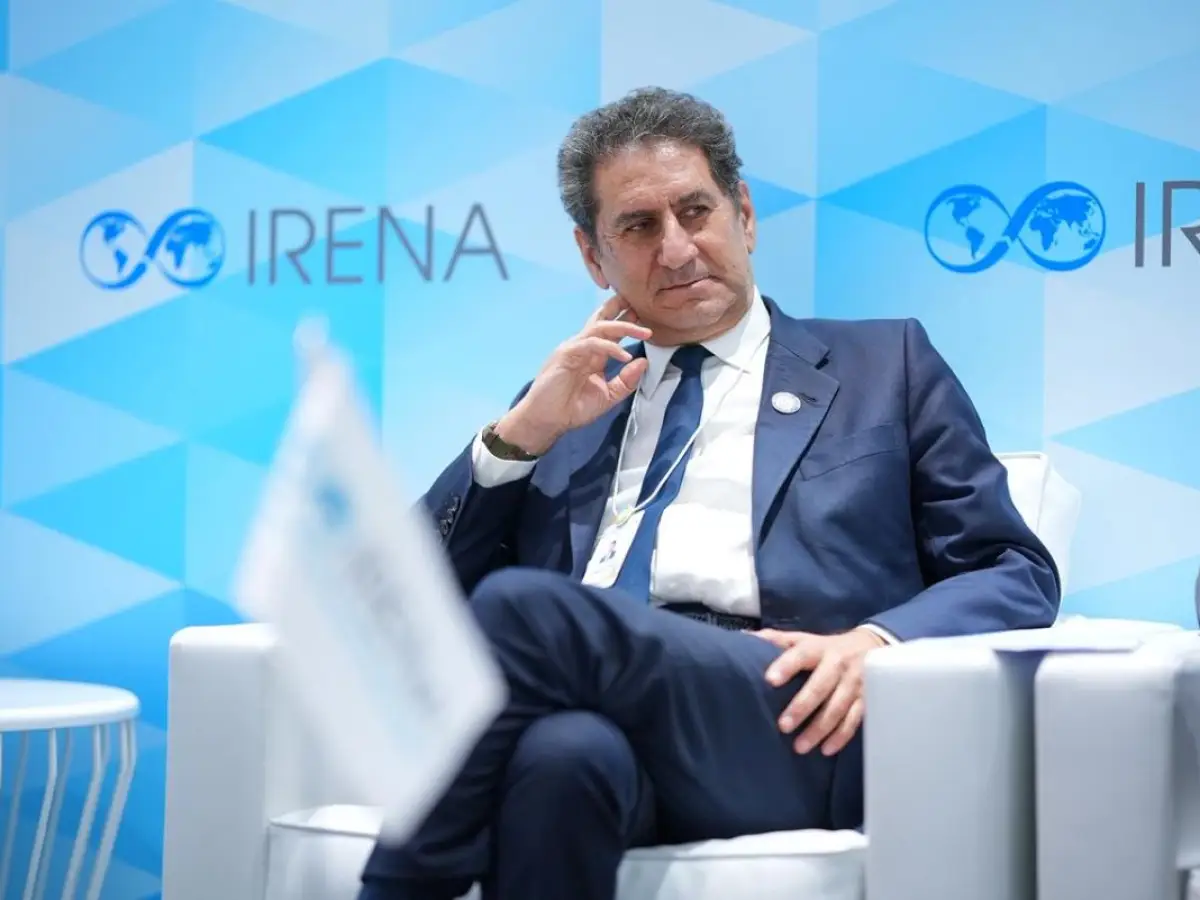
Cover: Francesco La Camera, photo IRENA via Flickr