


“Those who sow utopia reap reality”: this is the phrase that Carlo Petrini often repeated, and it perhaps sums up his life spent turning ideas once considered on the fringes into global cultural infrastructure. His life came to an end on the evening of 21 May 2026, when Petrini passed away in his home in Bra, in the province of Cuneo, aged 76. The news came from Slow Food, the movement he founded in 1986 and which today represents one of the most influential international networks working on issues of biodiversity, food sovereignty and ecological justice, alongside Terra Madre and the University of Gastronomic Sciences in Pollenzo, both established in 2004 thanks to his efforts.
Petrini firmly believed “that dreams and visions, when they are just, capable of inspiring collective participation, and pursued with conviction, are not impossible to achieve,” writes Slow Food, and, indeed, “he combined the ability to dream with a deep sense of joy and collective purpose, paving concrete paths toward social change. His work was always rooted in collaboration with others, especially younger generations, and guided by passion, empathy, and fraternity.”
More than just a food expert, Petrini was a radical advocate of the relationship between the economy, the environment and culture. He had understood decades in advance that food was not merely a commodity but the point of connection between the climate, work, health, the landscape, social relations and democracy. This is why his ideas resonated across environmental movements, international institutions, farming communities and universities, always maintaining a remarkable ability to speak to both global leaders and local communities.
In an interview with Renewable Matter, he offered one of his most striking insights into the crisis facing the contemporary food system: “Our current food production is certainly neither democratic nor sustainable. Increasingly longer, more complex and standardised globalised food chains have severed the connections between the ecological units that made food production the result of a healthy relationship with nature.”
This was the core of his philosophy: rebuilding connections. Between people and the environment, between production and consumption, between the economy and planetary boundaries. “Enough with naivety and poetry, going back to the soil is a political issue,” he further explained to Renewable Matter, identifying ecological transition as a process that could not be confined to technological innovation but had to transform the economic and cultural model. “Starting from food, developing an economic paradigm shift towards circularity means refocusing on communities, quality of connections and substance of behaviours.”
Born in Bra, a town in the Italian region of Piedmont, in 1949, coming from a humble background, with a technical diploma and a university degree in sociology that he abandoned just a few credits short of graduation, Petrini has succeeded in turning food into an international political issue. Through Terra Madre, he has built a network capable of bringing together small-scale farmers, fishermen, chefs, young people and academics in over 160 countries. Together with the University of Gastronomic Sciences in Pollenzo, he has given academic recognition to a discipline that intertwines ecology, anthropology, economics and agronomy. And with the Laudato Si' Communities, founded together with Monsignor Domenico Pompili, he has sought to translate integral ecology into everyday social practice.
In recent years, his focus had centred primarily on the loss of biodiversity, which he considered not only an environmental crisis but also a cultural one. On the occasion of World Biodiversity Day, he wrote: “The more we defend the health of the environment by preserving biodiversity, the more we defend our own. It is time to adopt a holistic and humanist ecological approach.”
And this is what makes his legacy more relevant than merely celebratory: in an age marked by climate crises, food inequalities and standardised production, Petrini leaves behind an alternative lexicon built on conviviality, slowness, relationships and community. Words that, for him, served as practical tools for economic transformation. And this may well be his longest-lasting legacy: having demonstrated that even a utopia, if cultivated collectively, can become public policy, shared culture and even an economic system.
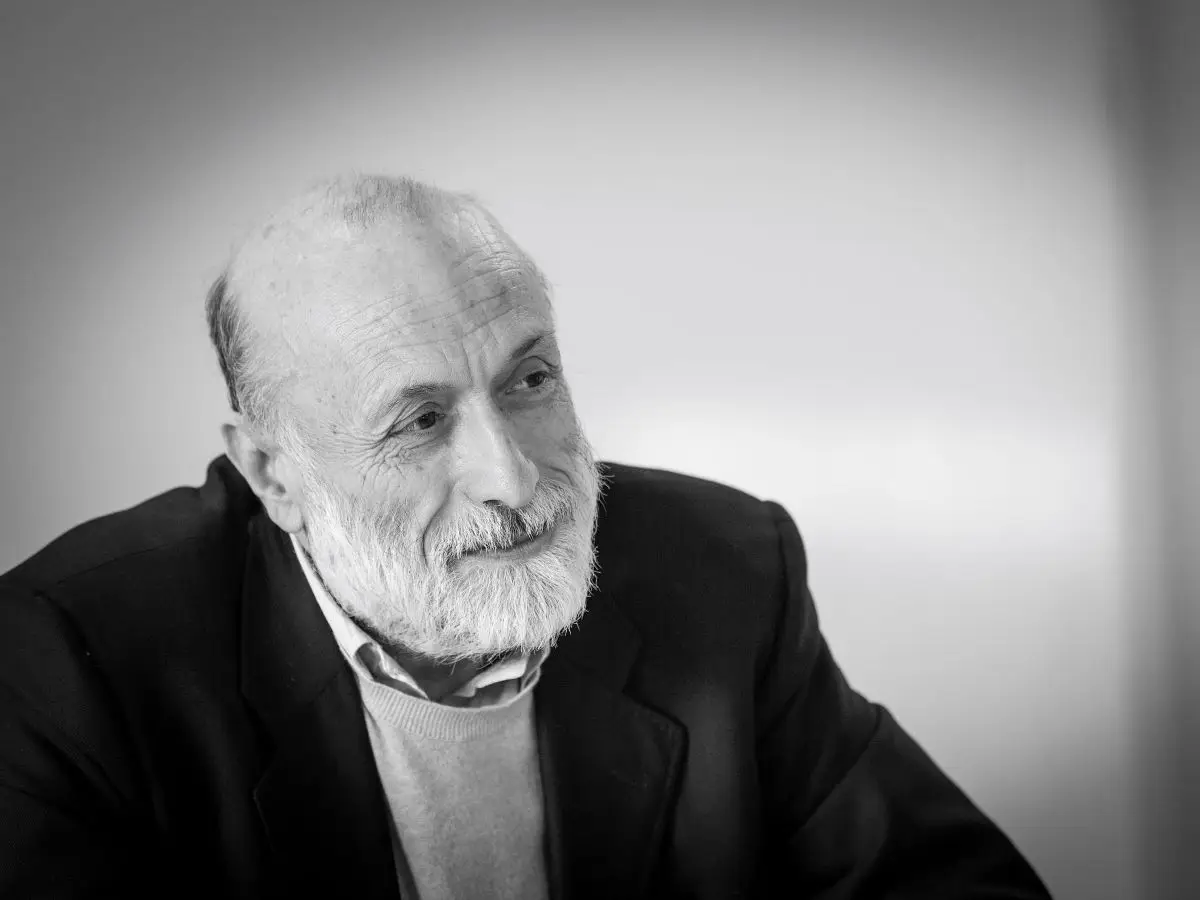
Cover: Carlo Petrini photographed by Marcello Marengo © Slow Food