


Maybe it was the visit to the Temple of Heaven in Beijing, a symbol of good harvest and prosperity in the Chinese imperial tradition. Or perhaps it was simply the international situation and economic hardship on both sides of the Pacific. In the end, Trump’s trip to China, from May 13 to May 15 – the first by a U.S. president since 2017 – yield fruits: “substantial orders from Boeing”, Beijing’s willingness to renew licenses for the import of US beef and to purchase soybeans, as well as larger quantities of oil and liquefied natural gas (LNG). Or at least that is what US officials announced at the conclusion of talks with Chinese leader Xi Jinping and his team, which began with a lavish ceremony in Tiananmen Square and two hours of talks in the Great Hall of the People.
These fruits are bound to ripen (or rot) in the coming months, while waiting for the Chinese president to accept Trump’s invitation to visit the US on September 24. Beijing and Washington “must be partners, not adversaries; support one another; prosper together; and chart a path toward harmonious coexistence between great powers”, Xi said. However, he highlighted a red line that must not be crossed: the Chinese president warned that the Taiwan issue, “if handled poorly,” could lead the two nations to “collide or even clash, putting the entire US-China relationship in an extremely dangerous situation”.
One Summit, Two Interpretations
Beyond pleasantries, the split between the two countries remains significant. This is apparent from the respective interpretations of the summit, marked by omissions that signal differing priorities. Yet, these omissions allow each to present the meeting as a success both to the Chinese and American publics.
“The summit established a framework, although there will hardly be consensus in the short term” explains to Renewable Matter Fred Gao, a journalist for CGTN and editor of the influential newsletter Inside China. This is especially true regarding Taiwan, not even mentioned by the US readout. According to Gao, the key aspect is that Beijing has proposed a new vision of bilateral relations based on the concept of “constructive strategic stability” across four levels: “positive stability with cooperation as the mainstay, healthy stability with competition within proper limits, constant stability with manageable differences, and lasting stability with expectable peace”. Gao further clarifies that “this approach implicitly suggests a model of two equal major powers rather than a hierarchical order led by Washington, and the deliberate addition of «constructive» signals that Beijing is not settling for passive crisis management but wants active cooperation where possible”.
Trade issues at the top of the agenda
As expected, trade dominated the agenda. Even before the summit, the intention was clear, given the invitation extended to a large group of American CEOs, including Elon Musk of Tesla and Tim Cook of Apple. Despite the truce on tariffs agreed upon in South Korea last November, trade between the United States and China fell by 29% last year, dropping to $415 billion from $582 billion in 2024. A trend that, according to Treasury Secretary Scott Bessent, the two sides will seek to reverse by creating a new joint trade body to manage trade in “non-critical and non-strategic areas”.
“There are sectors where commercial and strategic interests collide,” explains Gao. He cites “biotech, financial services market access, and supply-chain dependencies in aerospace and EVs. These are areas where the technical details matter.”
Technological competition remains the most sensitive issue. The presence of Nvidia CEO Jensen Huang – who boarded last minute the Air Force One – “suggests appetite for dialogue, but the structural contest over semiconductors, AI, and export controls is not going away,” Gao says. According to Reuters, Washington has already authorized the sale of Nvidia’s H200 AI chips to several major Chinese tech companies. The approval of Beijing, however, is still pending, since it is now committed to achieving self-sufficiency in sectors deemed strategic, from high technology to food security. This conviction could slow the implementation of the agreements on soybeans, gas, and aircraft proclaimed yesterday by Trump – just as Covid-19 gave China the excuse not to purchase the $250 billion in US goods and services stipulated in the “Phase One agreement,” signed during Trump’s first term.
Taiwan, Iran, and other military issues
Moreover, there are military tensions. Both in the Taiwan Strait, where Washington counts Taiwan among its key Asian allies, and in the South China Sea, that hosts some of the world’s major trade routes and which Beijing claims almost entirely for itself. Gao mentions that “Xi explicitly called for better use of political-diplomatic and military communication channels”, as well as expanded cooperation in sectors such as trade, healthcare, agriculture, tourism, people-to-people exchanges, and law enforcement. “Rebuilding these mechanisms requires patience”, he emphasizes.
The inclusion in the delegation of Pete Hegseth, the first U.S. Secretary of Defense to participate in a state visit to China since 1972, suggests the willingness to stabilize military relations. Perhaps, this is also due to Washington’s return to the use of force: the capture of Venezuelan President Nicolas Maduro and the attack in Iran called for new assurances from the United States to rule out another regime change. Next time in Beijing.
The conflict in the Middle East is the other major silenced issue. This time, it is the Chinese statement that avoids mentioning it. Trump, who postponed his visit in March precisely because of the conflict, claims that Xi promised not to arm Iran and to contribute keeping the Strait of Hormuz open. “In China, many people think it's our legitimate interests to sustain economic ties with Iran”, explains to Renewable Matter Zhao Minghao, professor of international relations at Fudan University in Shanghai and former deputy director of the Research Center at the International Department of the Central Committee of the Chinese Communist Party. Iran is not only an important energy partner for China but also a country with a high volume of bilateral trade. Many Chinese companies are in fact involved in infrastructure projects there as part of the Belt and Road Initiative.
As the expert notes, “U.S. actions against Caracas and Tehran are particularly significant because they serve as crucial suppliers in China’s long-term energy security strategy. Both nations provide China with diversified access to oil and gas resources, helping reduce its dependence on more volatile or strategically constrained supply routes.”
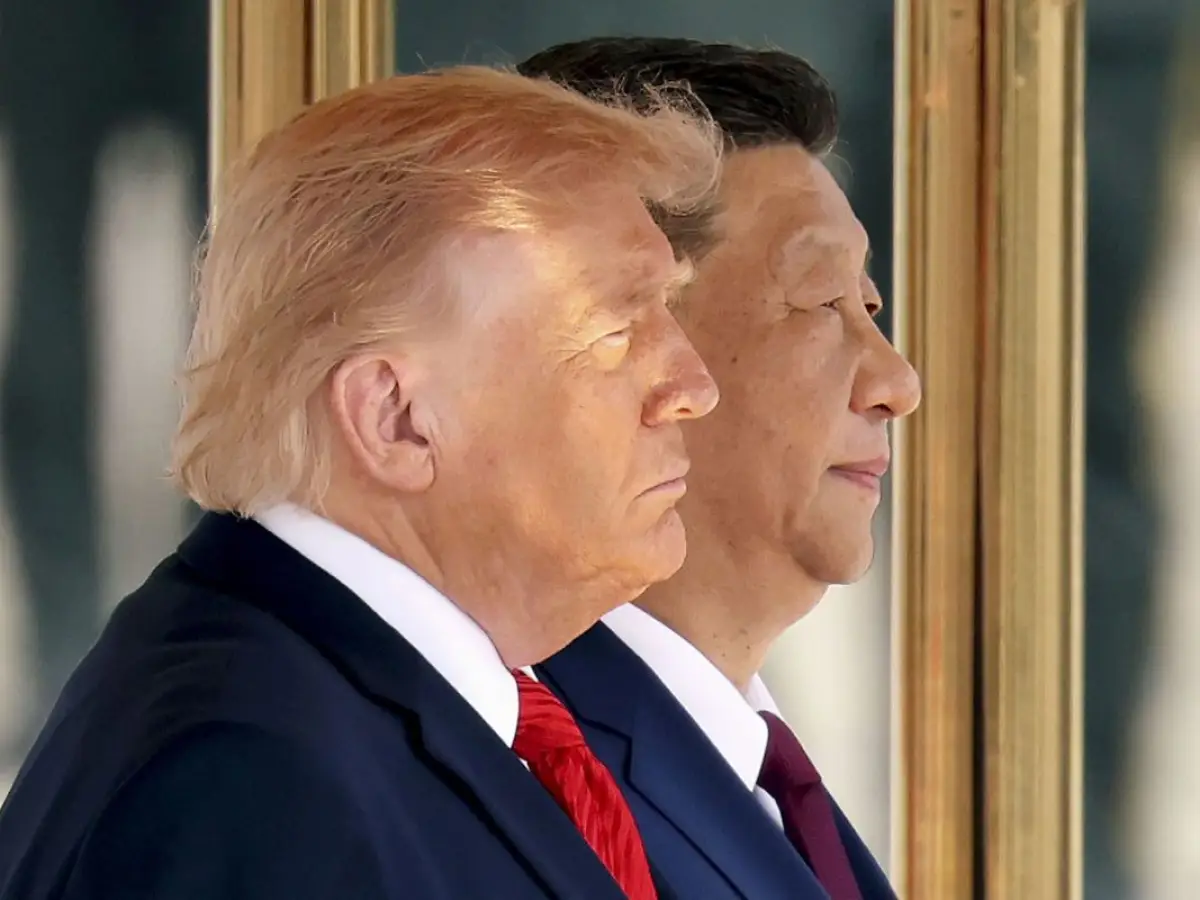
Cover: Donald Trump and Xi Jinping, ©Kyodo/MAXPPP, IPA Agency