


COP30 in Brazil is done and dusted. As always, the outcome was mixed with many crying “too little, too slow”, while others pointed to potentially significant progress woven into the final text. Certainly, we were hoping for a clear roadmap towards phasing out fossil fuels in the final agreement and more concrete commitments on nature-based solutions to the climate crisis.
But the greatest takeaway from my 10 days in Belém is that the political manoeuvring is just one side of the COP. And on the other side – packed with thousands of people, panel discussions, publications, and protests – there was a lot for those of us working on wetlands and climate to be positive about.
The huge value of healthy wetlands
Hosted at the entrance to Amazonia, the nature side of COP30 was always going to be focused on forests. But wetlands were far from forgotten. Brazil, after all, is home to not only the Amazon, the world’s greatest river system, but also the Pantanal, the world’s largest tropical wetland, as well as a wealth of mangroves and other freshwater and coastal ecosystems. And, critically, the world is finally waking up to wetlands – our climate superheroes.
While wetlands have long been overlooked at COPs and the global climate debate, the narrative is changing. Rapidly. Across the globe, governments, companies and investors are starting to grasp the huge value of healthy wetlands. Amid alarm over rising temperatures and emissions as well as intensifying floods, droughts, and heatwaves, healthy wetlands stand out as one of our most effective natural allies for tackling the climate crisis. From rivers and lakes to peatlands and mangroves, the truth is flooding out – investing in protecting and restoring these ecosystems and their irreplaceable benefits is central to achieving global goals for climate mitigation, adaptation, and resilience.
The Freshwater Challenge
I certainly witnessed this growing realisation in Belém. During a High-Level Ministerial on Water (itself a sign of real progress as water has long been neglected at COPs), I was invited to discuss the Freshwater Challenge. Speaking on behalf of all the Core and Supporting partners of this ambitious country-led initiative, I highlighted the central role of freshwater ecosystems in enhancing water and food security as well as tackling the climate crisis.
For example, functioning floodplains, swamps and marshes act as natural sponges, reducing the impact of increasingly extreme floods by absorbing excess water and then releasing it in drier times, helping to alleviate droughts. Recent research also shows that lakes, rivers and their floodplains are significant carbon stores with one study concluding that Amazonian water bodies capture 39% more carbon per unit area than the rainforest. It was a message I heard echoed by Ministers at the same event – including from Brazil, Zimbabwe and Peru – and by speakers at many other events across the Blue and Green zones.
The importance of peatlands
Peatlands, too, stepped into the spotlight. Amongst our overlooked wetlands, peatlands might be the most undervalued of the lot. But not anymore. Firstly, they are huge carbon stores. Despite only covering around 3-4% of the planet’s land surface, peatlands contain one-third of the world’s soil carbon, twice the amount of carbon as in all the world’s forests. But we are continuing to dry, drain and degrade them – turning them into net greenhouse gas emitters. Indeed, estimates suggest that drained peatlands now account for a whopping 5% of all global greenhouse gas emissions – more than aviation and shipping put together.
COP30 was a milestone for peatlands with a number of events digging into the importance of these ecosystems. Critically, it boosted support for the voluntary Peatland Breakthrough – an ambitious collaborative effort to mobilize action and funding to safeguard, rewet and restore the world’s peatlands to support climate goals, water security, biodiversity, and people’s livelihoods.
Not only did a High-Level event on Unlocking the Power of Peatlands publicise the science-based targets underpinning the Breakthrough (halting further degradation, and rewetting and restoring 30 million hectares by 2030) but it also provided the platform for Germany to officially sign up as a Champion Country – joining Peru and Uganda. The Peatland Breakthrough – along with the Freshwater Challenge – was also highlighted in final Outcomes Report of the Global Climate Action Agenda for COP30.
Coastal wetlands
Coastal wetlands also made some waves during the COP, particularly mangroves and their own voluntary global initiative, the Mangrove Breakthrough. Long regarded as a key nature-based solution for adaptation as they can help buffer coastal communities and cities from storm surges and sea level rise, mangroves are also mitigation solutions as they sequester large amounts of carbon. In fact, mangroves store up to 5 times more carbon per area than tropical forests and absorb it from the atmosphere about 3 times as quickly, too. Meanwhile, they sustain biodiversity and nurseries of fish and other seafood that are the basis of food security and livelihoods for many communities.
Needless to say, we wish there had been even greater progress: we always do. We wish that our call for a Wetland Ministerial (supported by over 100 organisations) had been heeded.
We also wish that there had been wetland targets in more countries’ Nationally Determined Contributions (NDCs) and National Adaptation Plans (NAPs), and more concrete commitments to accelerate investment in wetland action. But we were heartened to see over USD 5.5 billion pledged for the Tropical Forest Forever Facility and US$2.5 billion to protect Congo basin forests - a region rich in rivers and peatlands. A tripling of adaptation finance is also a welcome step forward since significant chunks of this will hopefully flow into wetlands.
There is still a huge amount of work to do
So did I leave COP30 with my glass half full or half empty? To be honest, it was probably only a third full but that’s more than previous COPs. Water and wetlands are now part and parcel of COP politics and programming. But there is still a huge amount of work to do to convince governments, businesses and funders to accelerate investment in our rivers, lakes, peatlands, seagrass beds and mangroves.
But that’s what we and our numerous partners will be doing throughout 2026. We will continue to showcase effective solutions from wetlands around the globe and shout about the importance of healthy wetlands – using next year’s unprecedented series of COPs on nature, desertification, migratory species and climate as well as other major events on oceans and the UN Water Conference as a platform to raise awareness, inspire greater action from governments and the private sector, and leverage more funds for wetlands – the world’s climate champions.
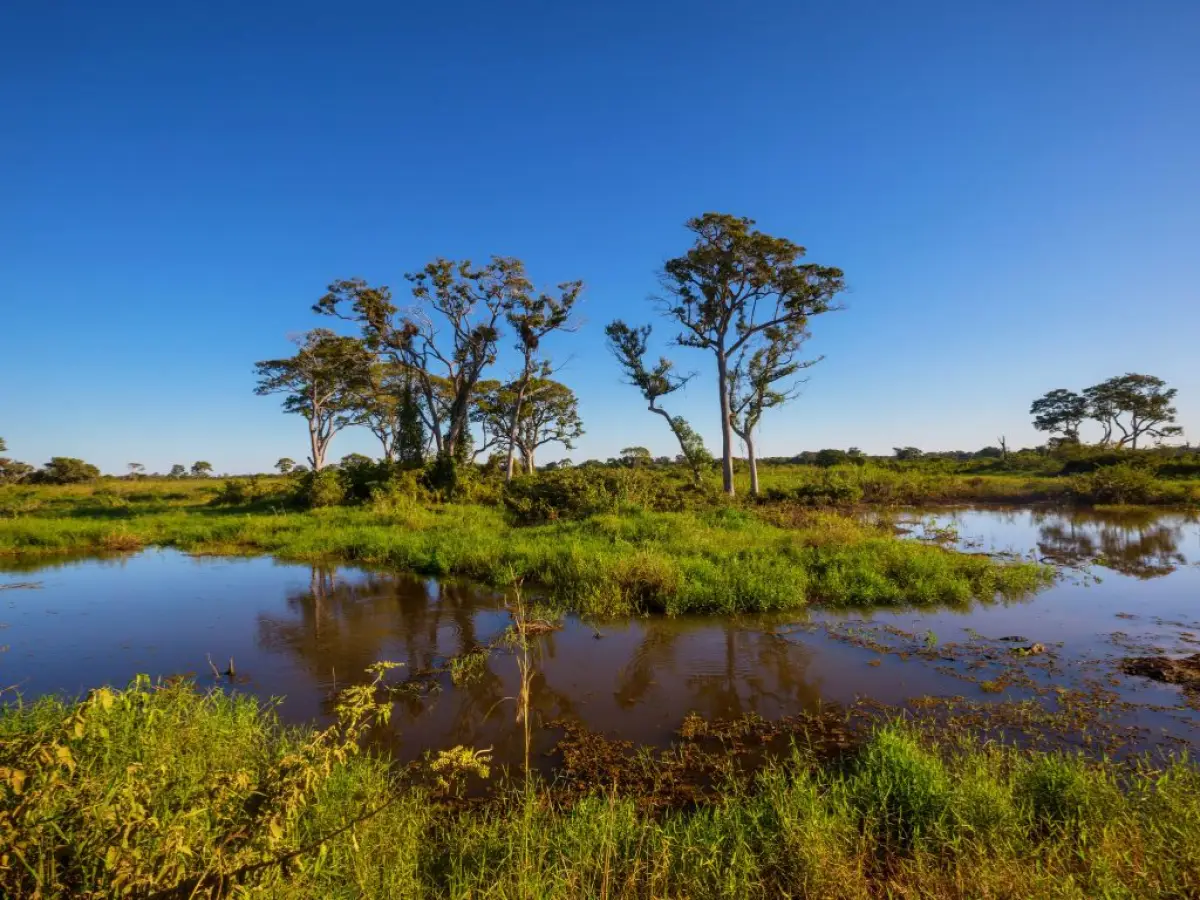
Cover: Pantanal, Envato