



When we speak of carbon farming, the collective imagination instinctively conjures up images of agricultural expanses, farmland and pastures. Yet there is a less explored – and in some ways more urgent – aspect that concerns precisely the places where most people live today: urban centres. Around this insight, the Italian Composting Consortium (CIC) has, in recent years, developed the proposal for urban carbon farming, an idea first presented at a hearing in the Chamber of Deputies in September 2023 and which remains at the core of the debate, particularly in conjunction with the Carbon Farming Summit 2026, which concludes on 19 March in Padova.
While the challenge is still in its infancy, the starting point is a supply chain that Italy has managed to develop better than almost any other European country: separate collection of organic waste covers over 90% of the population, a result that puts the country in a privileged position to transform organic waste into an active resource for the climate. The compost produced from the treatment of separately collected organic waste is a soil improver able to restore fertility to the land, enhance its structure and increase its water retention. Why, then, limit this resource to agricultural soils alone?
Emissions averted, but there's more
To better understand the scope and development of urban carbon farming, Renewable Matter interviewed Alberto Confalonieri, coordinator of the CIC technical committee. By combining active carbon sequestration in the soil with emissions averted through proper management of organic waste, the volumes achievable with current flows of high-quality compost are in the range of “hundreds of thousands of tonnes of carbon equivalent”. A figure which, although not insignificant, appears objectively modest in relation to the approximately 400 million tonnes of CO₂ that Italy must offset to achieve climate neutrality by 2050. “We are a long way from the idea of managing the climate crisis through carbon farming and urban carbon farming,” explains Confalonieri.
Nevertheless, the picture becomes more complex – in a positive sense – when we look at it on a smaller scale. For smaller municipalities with already low emissions, “proper green space management could significantly offset their emissions, thereby moving towards carbon neutrality, also thanks to these activities.” This is where urban carbon farming reveals an initial purpose that goes beyond carbon accounting: it is a practical tool for municipalities that would otherwise struggle to see their contribution to the climate transition.
Another factor often overlooked in emissions calculations is the emissions prevented precisely thanks to separate waste collection. “Behind composting there are also all those emissions that have been averted, which make up the bulk of the total,” points out Confalonieri. That same organic waste “not collected separately, but left in the general waste as it is and disposed of in landfill” would have a “devastating” impact in terms of volume, too. A figure that risks being erased from the collective memory precisely because Italy has come so far: “We are beginning to forget because we are in a country that has now evolved in terms of separate waste collection.”
More than just compost: a systemic approach to urban greening
In short, compost is worth far more than just the carbon that ends up in the soil. Likewise, as Confalonieri explains, urban carbon farming “doesn’t just mean putting compost in parks and gardens but involves a whole range of initiatives to reduce the environmental impact of managing green spaces.” It is necessary to consider all agronomic practices, which not only increase the area of public green space but, above all, keep the urban ecosystem more vibrant, rendering the city more permeable, less susceptible to temperature spikes, and capable of capturing carbon dioxide and sequestering carbon in the soil. This systemic vision is what sets it apart from a simple campaign to improve public parks.
If soils, and in particular urban soils, often degraded and sealed, are unable to absorb and retain new organic carbon, Confalonieri overturns the perspective. Degradation, far from being an obstacle, is almost a starting advantage: “Precisely because so much soil is degraded and depleted of organic matter, it is in those lands that the potential for success in carbon farming is greatest.”
De-sealing the city: the most ambitious move
Urban soils sealed by asphalt, in this sense, are compromised soils waiting to be brought back into use. Precisely for this reason, the most transformative action in this direction may be the de-sealing of urban soils. Italian cities, like those throughout Europe, have progressively covered increasing portions of their territory with asphalt, concrete and impermeable surfaces.
“One of the key strategies in urban carbon farming could well be a commitment to making currently sealed areas available again,” explains Confalonieri. The idea is to combine organic soil improvement and green space management practices with an upstream approach: physically restoring living soil to the city, removing asphalt where possible, and restoring permeability where impermeability is the result of reversible urban planning choices.
Sealed soil cannot absorb carbon, cannot host the microbiology necessary for the stabilisation of organic matter, and cannot perform any of the ecosystem functions that make urban carbon farming effective. De-sealing is therefore a horizon-broadening concept with significant implications.
This means that urban carbon farming, in its most ambitious form, is not just a matter for the environment or public works departments, but involves urban planning, building permits, green space plans and urban regeneration policies. It also means that local authorities that wish to embrace this vision would have to coordinate administrative sectors that rarely communicate with one another. An added layer of complexity, but also enormous potential.
A matter of responsibility, even more than skill
“What we are trying to achieve with urban carbon farming is empowering the direct producer of waste – that is, the urban environment,” explains Confalonieri. The approach proposed by the CIC is, in short, a virtuous cycle: the organic waste produced by the city returns to the city in the form of a resource for the soil. Local authorities are not merely managers of a collection service but central players in a cycle that begins and ends within their own territory.
“With this operation to promote carbon farming tailored to the urban context, we aim to engage with local authorities and encourage them to take responsibility for managing their green spaces, including with products derived from the processing of their own organic waste,” adds Confalonieri, clearly distinguishing between the technical-scientific value of urban carbon farming (carbon sequestration, emissions reduction) and what he defines as “the social aspect, relating to the environmental responsibility of local authorities”.
The vision requires a cultural shift even before a regulatory one, and it faces a structural risk: the discontinuity of local government. Urban carbon farming activities must continue over time to produce certifiable results, but municipalities change councils, priorities and visions. The core challenge, therefore, is to persuade municipalities to carry on with these activities “beyond the term of a single administration” and to ensure that they are not perceived as “the flagship project of the current council”. It is only through close collaboration between local authorities, green professionals, citizens and stakeholders that it will be possible to make an effective contribution to the overall well-being of the entire community. Urban carbon farming has all the makings of an environmental and social model, provided that local politics learns to think in terms of decades, not terms of office.
This content is produced thanks to the support of sponsors
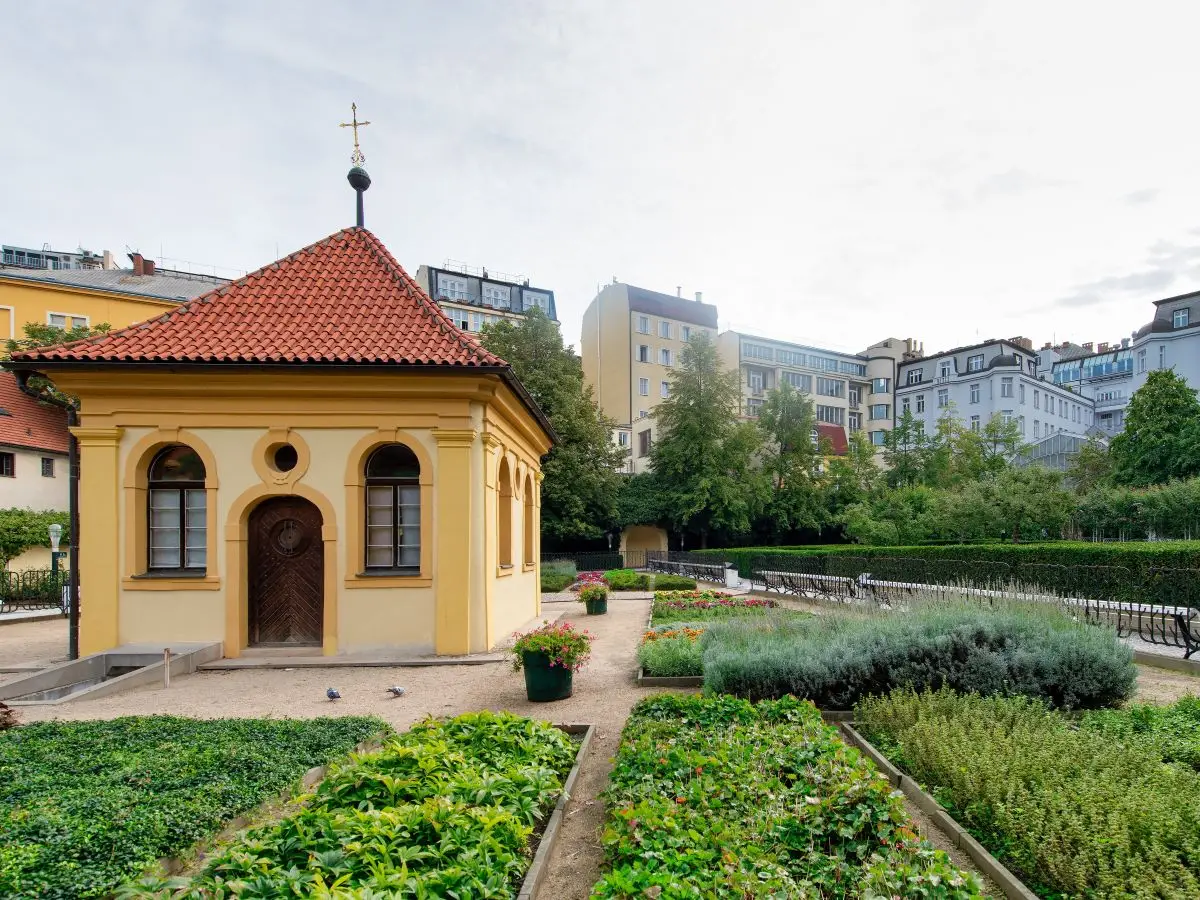
Cover: Franciscan Garden of Prague