


Oil's role in the US military action in Venezuela is first and foremost made clear by figures: the world's leading oil producer has attacked the country with the world's largest oil reserves. But it is also evidenced by the fact that Trump is making no attempt to conceal it: he has stated at every possible opportunity that the oil and gas industry had been warned, and that it is part of the process and the objectives. On Friday, he will meet with the heads of Exxon, Chevron and ConocoPhillips to discuss what to do. It's all out in the open.
Practically the only country that keeps calling the bombing of Caracas an attempt to export democracy is Italy, where there's this weird mix of cynicism and naivety that says, “anything goes as long as we got rid of Maduro”. This is a story of bitumen, wells and money. On Truth Social, Trump estimated that he expects to receive 50 million barrels of crude oil from the country he has just bombed.
It's a story of energy imperialism: they did it because they can, they did it to prove that they can. And there is nothing liberal, not even remotely, in what they have done or will keep doing. Trump's targets are not determined by their democratic status: they range from illiberal autocracies such as Venezuela to fragile but currently healthy democracies such as Colombia, old enemies such as Cuba, and solid allies such as Denmark. The world is a playground where everyone's lunch money is fair game.
It will not be a walk in the park: Reuters has referred to a “poisoned chalice” for the oil industry, given the costs and risks involved in rebuilding a sector that has collapsed due to US sanctions, but above all due to the inefficiency and corruption of Maduro's Venezuela. It is difficult to imagine today how it will turn out: at the moment, the US is trying to turn the ultra-efficient logistics of the Delta Force into a strategy. But kidnapping Maduro and chaining him up in a federal prison in Brooklyn was the easy part of the plan. The hard part comes now. For Trump and especially for the oil giants, who have in fact been very cautious in their statements in recent hours.
Indeed, the twentieth-century-like oil industry is not only centred on the resource itself, but also on the spirit of colonial conquest: it is a sector that is certainly not deterred by the violent unrest of a country on the brink of collapse. This is their ideal ecosystem. The hydrocarbon sector is an industry for adventurers. It will take decades, nerves of steel, capital and political support to get Caracas' oil back on its feet, but US oilmen have the ruthlessness needed for the mission.
On an economic level, there may be doubts about the rationality of the mission and its business plan, but Trump does not act like a venture capitalist looking for opportunities and profits. He acts like a disorderly and instinctive aspiring global tyrant, like an empire builder, like Walter White in Breaking Bad. Conquest for conquest's sake and conquest for the sake of appearances, especially now that the adrenaline rush of last year's election has subsided and the domestic front is in trouble, starting with the Epstein files.
Throughout 2025, we followed the narrative that Trump was being manipulated like a puppet by his oil and gas industry financiers. Perhaps we need to update this: today, it looks more like Trump is using oil as leverage for domestic and international hegemony. At this point in history, it is legitimate to ask: is Big Oil using MAGA, or is MAGA using Big Oil?
In 2025, Foreign Policy offered us a conceptual framework for interpreting the future: ecological cold war. The hydrocarbon axis (US, Russia, Gulf) against the Chinese electrostatic and its allies and vassals. The act of oil imperialism in Venezuela proves the accuracy of this interpretation. In the background, there is that small, now forgotten detail of greenhouse gas emissions, global warming, one and a half degrees, one and seven degrees, two degrees or who knows how much we are heading towards.
What began on 3 January is an effort to restore Venezuela's oil industry, which, in the best-case scenario, will take a decade: this means bringing Venezuelan oil up to full capacity in 2035. And from there, considering the investment, exploiting it for decades. At this point, how can we talk about limiting emissions, about a short and limited overshoot of one and a half degrees? They are rushing to set the world on fire, at any cost.
Calculations such as Paasha Mahdavi's from the University of California are both accurate and unrealistic, considering the precarious situation we find ourselves in. An increase in production to one and a half million barrels per day could add 550 million tonnes of CO₂ to the atmosphere. This would be equivalent to the climate impact of a country such as the United Kingdom. The situation is exacerbated by the fact that Venezuelan oil is dense and heavy, with a higher carbon content than traditional crude oil. Not only is it more expensive to extract, it is also up to four times more polluting. In addition, the Venezuelan industry has a major problem with flaring, the gas burned off during hydrocarbon extraction, releasing methane into the atmosphere (80 times more climate-changing than CO₂).
According to the World Bank's Global Gas Flaring Tracker Report, Venezuela is the fifth largest flaring country in the world. Another factor to add to the equation: it is unlikely that Chevron, Exxon and others will prioritise reducing flaring. The truth is that the annexation of Venezuelan oil into the US fossil fuel economy is a move of such vast destruction that we still struggle to comprehend it. Given the current situation, there is no country today that is as dangerous to the future of the human species as the United States.
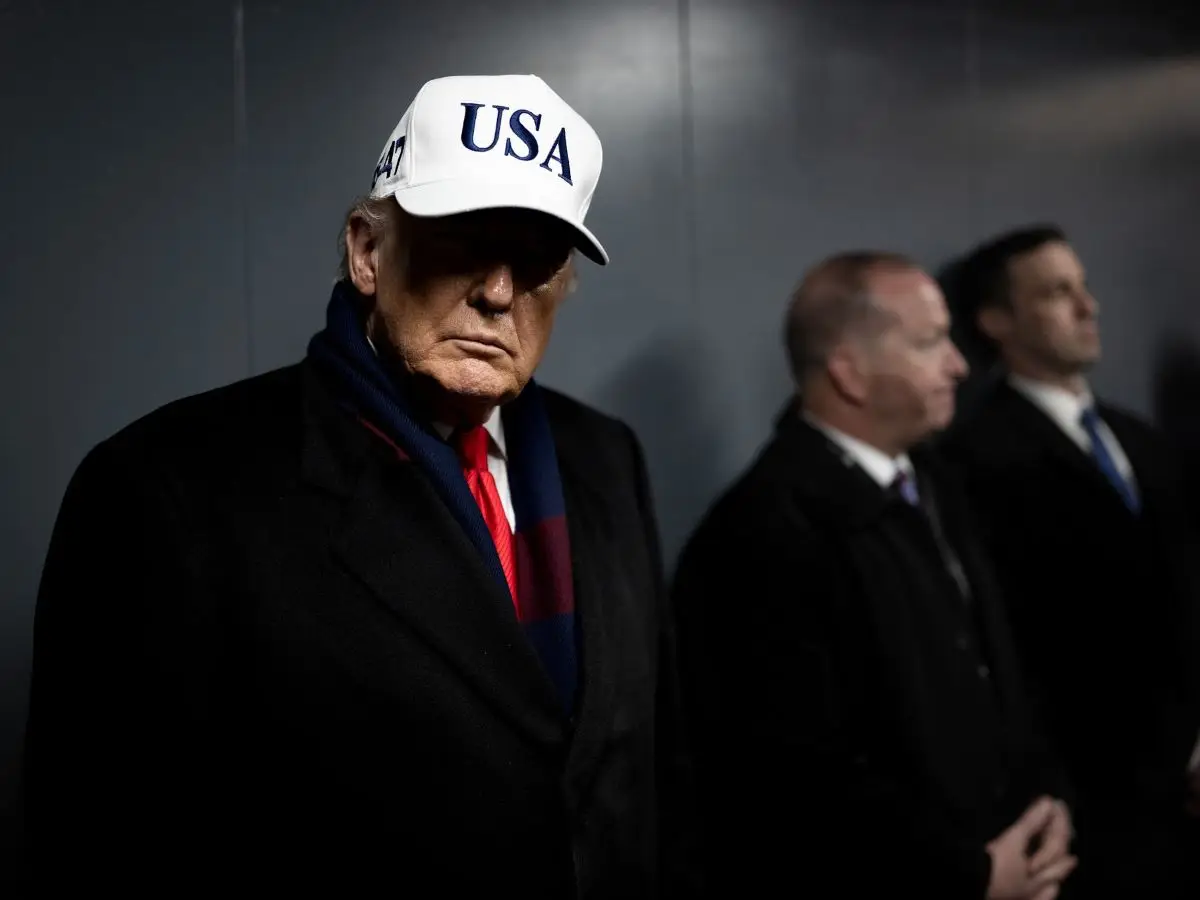
Cover: Official White House Photo by Daniel Torok via Flickr