


This article is part of the thematic channel The Carbon Observer: subscribe to the newsletter
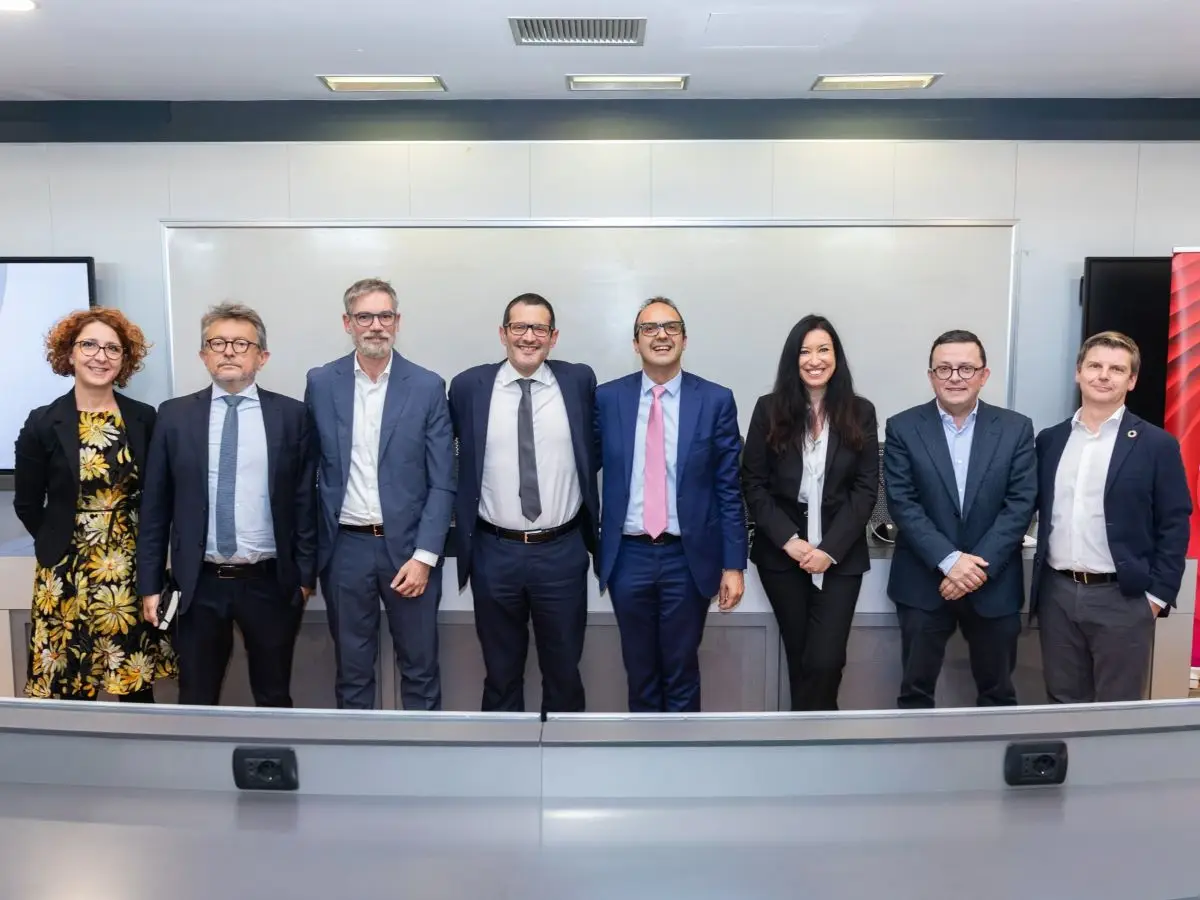
Translating CO₂ emissions into economic and social value to help businesses and institutions make more informed decisions about the transition: this is the goal of the Social Cost of Carbon (SCC) model developed by E.ON Italia in collaboration with the Politecnico di Milano (POLIMI), presented at the Bovisa campus during the conference entitled Dalla CO₂ al valore sociale: come cambia la misurazione dell’impatto energetico (From CO₂ to social value: how energy impact measurement is changing). The question is not only how much it costs to emit CO₂, but also what effect emissions (and their reduction) have on local areas, health, well-being and social equity.
The model identifies a value ranging from €236 to €307 per tonne of CO₂. The lower threshold considers already established impacts, such as those on health; the higher one also includes elements more difficult to monetise, such as biodiversity, ecosystem services and quality of life. This is not a market price and does not replace climate reporting tools, but rather is a measure of the cost incurred by society over time.
“The Social Cost of Carbon gives substance to the value of decarbonisation and opens up a broader understanding of social, economic and regional impacts,” explained Marco Grassi, Social Value & Decarbonisation Manager at E.ON Italia. The model is in fact based on the concept of “externalities”, i.e., costs that the market does not currently fully incorporate into prices and often pass on to future generations. “The SCC is not a direct value that appears on companies’ income statements but rather a tool to highlight impacts that are still difficult to recognise. The context is that of the triple transition: energy, digital and social, and none of the three must be left behind.”
Sustainability beyond “green”
The reflection fits into a broader re-evaluation of the very concept of sustainability. “In recent years, we have seen first a phase of hype and overexposure surrounding this issue, followed by backlash that has called into question the tools, investments and priorities,” observed Mario Calderini, Professor of Management for Sustainability and Impact at the School of Management of the Politecnico di Milano. One of the main causes of this crisis is “the overemphasis on the environmental dimension at the expense of the social dimension”. The social aspect is fundamental not only from an ethical point of view but also to build consensus among European citizens.
“Automotive workers who have seen their jobs called into question in the name of the electric transition are the most visible example of this shortcoming.” Calderini believes that sustainability must once again become a strategic business value, “the new blue ocean, a new way of creating value”, and must also be pursued “with a touch of boldness, by taking courageous decisions – the kind that sometimes put short-term profitability at risk”.
Affordability and the “energy trilemma”
For the energy sector, a key issue is affordability – that is, whether households and companies can afford energy – which appears to be at odds with sustainability. “The real challenge is to find a structural solution to the energy trilemma: affordability, security of supply and sustainability, without seeing them as conflicting objectives,” said Luca Conti, CEO of E.ON Italia.
From this perspective, “The government is doing the right thing by introducing the energy bill decree, but it is like taking medicine to bring down a fever: if you keep falling ill, you need to ask yourself what is causing the illness.” This highlights the importance of investing in renewable energy, energy storage systems and digitalisation, while avoiding “dogmatic” approaches to the transition. “When a solution is perceived as the only one possible, it risks being rejected by society.”
Measurement is not neutral; it is “political”
For years, sustainability has been portrayed as the sum of separate quantitative indicators, such as tonnes of CO₂ avoided, facilities installed and energy produced; today, however, this is no longer sufficient: it must be viewed as an integrated system, with the focus shifting from outputs to outcomes – in other words, the tangible consequences for local areas, health, the economy and communities. With one thing in mind, however: “Measurement is never neutral: whatever we choose to measure becomes visible, a priority and manageable in decision-making processes,” warned Irene Bengo, Professor of Global Sustainability and Impact at the School of Management of the Politecnico di Milano.
Behind every metric, she added, lie intentional choices that carry political weight: “For example, in defining the Social Cost of Carbon model, we chose to use a low discount rate, that is, not to pass certain costs on to future generations. It is a choice of intergenerational equity, a choice that is both technical and ethical.”
The issue, therefore, is about more than just constructing a mathematical formula; it concerns how priorities and responsibilities are defined in the energy transition.
Is the market wrong? No, but it cannot foresee everything
One of the most widely discussed topics revolves around the gap between the value attributed to CO₂ by the market and that estimated by the Social Cost of Carbon. Currently, within the European ETS system, the price stands at around €70 per tonne, significantly lower than the range identified by the model developed by E.ON Italia and POLIMI.
This gap is not necessarily a “distortion”, but rather a sign of a difference in perspective: “The market does not yet fully consider the social dimension, as it reflects short-term dynamics, while the social cost also incorporates long-term effects, non-monetised impacts and intergenerational aspects,” reflected Valentina Langella, president of Social Value Italia, an organisation that for over ten years has been promoting the culture and tools for measuring impact, such as the Social Cost of Carbon, encouraging dialogue between different stakeholders to enable their shared use. “Measurements become scalable and applicable if there is collaboration between different stakeholders with a common goal.”
How much is avoided CO₂ really “worth”?
The key focus for the companies involved is to transform sustainability from a reporting exercise into a strategic lever, as highlighted by Marco Stazi, Energy Manager at Siemens Italia, who described the SCC model as “the missing link” in corporate decision-making processes. “Assigning an economic value to CO₂ through the Social Cost of Carbon allows us to make impacts that are currently invisible measurable. The model presented, however, adds the ability to quantify these impacts and integrate them into processes to define more informed and responsible strategies in the medium to long term.”
The debate concluded with a reflection on the future and the urgency to act, expressed by Davide Chiaroni, Professor of Strategy & Marketing and Circular Economy Business Models at the Politecnico di Milano: “Ten years ago, CO₂ had virtually no economic value. Today, the market values it at around €70 per tonne because we have learnt to measure it.” The same evolution must also take place for the social value of decarbonisation: the open question is whether the economic system will manage to do so quickly enough, in a context where the climate crisis and its social repercussions are already a tangible reality.
Cover: photo by E.ON