


"Energy security will always be our priority." Wang Hongzhi, head of China's National Energy Administration, wasted no time in getting to the point when presenting the details of the country's 15th Five-Year Plan (2026–2030) for the energy sector on 26 June. Against the backdrop of the war in Iran and slowing global energy supplies, Beijing's policy document makes stability its foremost priority. But the senior official is also alluding to the People's Republic's domestic challenges.
In 2021, China set itself the dual goals of reaching peak carbon dioxide emissions by 2030 and achieving carbon neutrality by 2060. Since then, however, the Asian giant's environmental commitment has been severely strained by frequent electricity shortages, driven by the strong post-pandemic economic recovery, controls on electricity prices and drought, which at various times of the year drastically reduces hydropower generation. Meanwhile, the country's energy consumption continues to rise, driven by the development of artificial intelligence and other advanced technologies.
The new Five-Year Plan attempts to reconcile all of this: international climate commitments and domestic energy needs. The risk, however, is that this balancing act may encourage local authorities to take an overly cautious approach and, above all, to tolerate continued heavy reliance on coal, which still accounts for around 60% of the country's primary energy consumption and employs 2.6 million people in the mining sector alone.
After all, the new roadmap makes it clear: China has four priority targets for the next five years. “Strengthening energy security” comes first, followed by “promoting the green transition”, “enhancing technological self-sufficiency” and “improving market mechanisms”. This hierarchy reflects China's contradictory nature as both the world's largest carbon emitter and the leading investor in renewable energy.
The new plan sets a binding target of reducing the emissions intensity of the power sector by more than 10%, yet aims to do so without placing undue constraints on the role of hydrocarbons. The programme therefore envisages maintaining oil production at around 200 million tonnes a year while continuing to develop gas- and coal-fired power plants "in a rational manner" (a 10% increase by 2030 compared with current production levels).
Few of these recent announcements come as a complete surprise. The numerical targets have remained largely unchanged since 2020, despite progress that would allow for more ambitious objectives. What has changed is the political approach, with targets now described as "binding" and a subtle shift in language: whereas five years ago the aim was to build a "modern energy system", the new plan shifts the emphasis to adopting a "new-type energy system". Whether this is merely a rhetorical change or something more substantial remains to be seen.
More could be done on non-fossil energy
The plan devotes considerable attention to non-fossil energy sources, which together are expected to generate half of the electricity by 2030, compared with the 42.3% target set for 2025. Wind and solar alone are expected to account for 30% of electricity generation, while “technological self-sufficiency” will also be strengthened through the development of nuclear fusion, space-based power stations and superconducting transmission.
Although the targets are consistent with previous announcements, "emissions from the power sector might still increase during 2026-2030, particularly given that growth in electricity consumption exceeding 5% is likely to become the norm over the next five years", Yao Zhe, a policy adviser at Greenpeace East Asia, told Reuters.
A view supported by the uncertain intentions for wind and solar power. By the end of the five-year period, the Chinese government expects the two sectors to account for more than 50% of installed capacity, equivalent to 2,700 gigawatts (GW), up from 47% at the end of 2025. This may appear to be a substantial figure, but Yao believes it would in fact imply a "significant slowdown" in the current pace of renewable deployment.
The coal question
The greatest concern is the role assigned to coal, which the policy document designates as a "stable", albeit "small-scale", energy reserve. It envisages expanding five existing production centres while also allowing capacity to increase in the central and eastern regions. This trend confirms the intention to use this fossil fuel as a "lifeline" to offset fluctuations in wind, solar and hydropower generation, all of which remain heavily dependent on weather conditions despite progressive optimisation through artificial intelligence.
Last year, China added 95 GW of new thermal power capacity, the highest level since 2008. Those figures are likely to rise if approvals granted in the first quarter - already higher than the total recorded for the whole of 2025 - continue at the current pace throughout the year.
This upward trend is fuelled by the rapid expansion of the chemical sector linked to coal processing. This sector is backed by the powerful mining lobby, which is seeking new business opportunities given the existential challenge posed by the development of clean energy sources. Another factor is the conflict in the Middle East, which has driven up the prices of competing raw materials, such as naphtha and liquefied petroleum gas.
Another source of concern is the absence of any indication as to when the new "dual-control" system, based on emissions rather than energy consumption, will be completed. Under this mechanism, provinces and industries will be allowed to increase their overall energy consumption provided it comes from renewable or nuclear sources (which produce no emissions), while a strict cap will apply only to fossil fuels. Such a change would allow the Chinese economy to continue growing while meeting its environmental commitments. For now, however, it remains unclear whether, and when, this will happen.
Strategic caution or necessary compromise?
Optimists interpret Beijing's cautious projections as conservative estimates of what will actually be achieved. Given current trends, they argue, the use of green energy is likely to exceed the official targets in any case. Pessimists, by contrast, see signs of a reversal. The new roadmap appears to contradict President Xi Jinping's 2021 pledge to exercise "strict control" over coal projects, curb fossil fuel consumption during the 14th Five-Year Plan (2021–2025), and bring about a gradual reduction over the following five years.
All in all, the outlook is not particularly encouraging. According to the Finnish think tank, the Centre for Research on Energy and Clean Air, even if energy from clean sources were to account for 50%, the new five-year plan would still allow for a 10% increase in production from conventional fuels. And this is despite the fact that emissions already fell last year precisely because of the rise in renewables. At best, the path to carbon neutrality will therefore be slow and gradual. Is this a strategic calculation or a necessary compromise? According to Li Shuo, director of the China Climate Hub at the Asia Society Policy Institute (ASPI), it is a bit of both.
"A diversified 'all-of-the-above' energy approach and the oil reserves accumulated over the years have enabled China to weather the shocks resulting from the closure of the Strait of Hormuz without too much difficulty, demonstrating the overall effectiveness of China's long-standing energy strategy," Li tells Renewable Matter. The foresight of the country's green industrial policies should also be taken into account. In a sense, "Beijing is capitalising on an advantage built up over the past fifteen years, whereas Europe and the United States are barely getting started and have no real prospect of catching up in the near to medium term."
That said, the raised eyebrows are justified. In Li's view, the course set by Xi “downplays the importance of decarbonisation", which is no longer regarded as the priority. “China is not immune to broader global trends, including a notable backlash against climate action, most prominently in the U.S., but also increasingly in Europe,” the analyst concludes. In his view, this reflects the reality of the times: “In a turbulent global landscape, where major-power relations have grown more contentious, issues concerning the global commons are inevitably pushed to the back burner”.
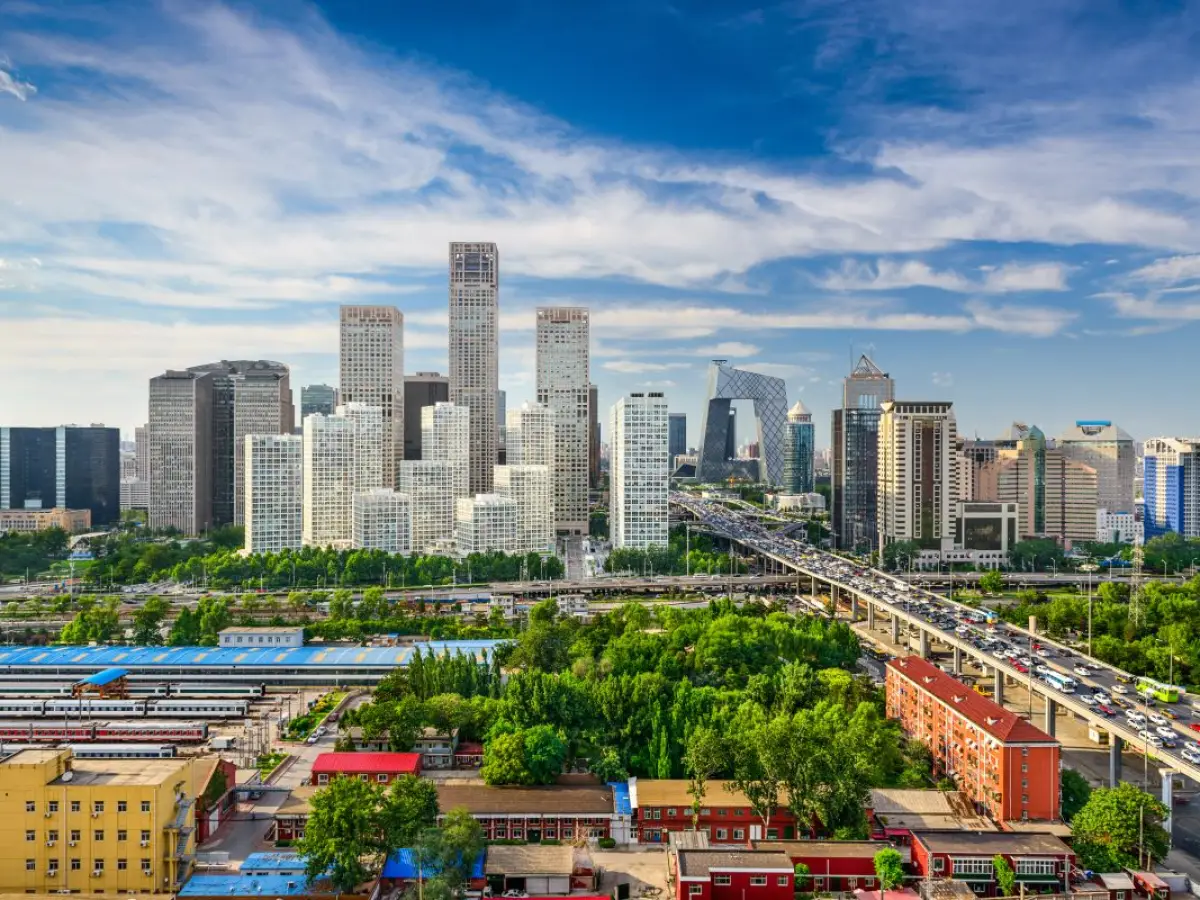
Cover: Beijing, photo by Envato