Issue #63

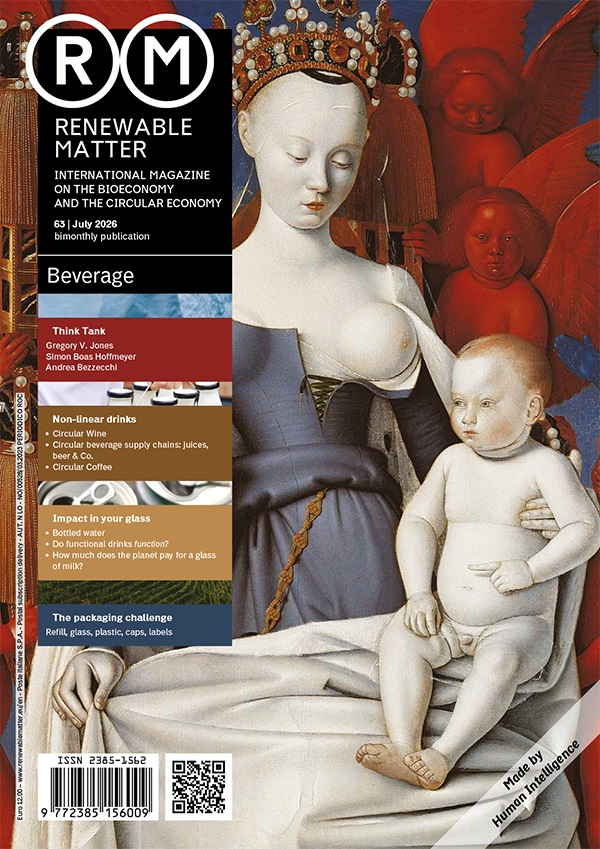
Water, wine, beer, spirits, juices, milk, coffee, soft drinks: the beverage industry is enormous, and so is its impact on the planet. RM63 sets out to explore the supply chains, production processes, markets, and consumption patterns behind everything we drink, along with the innovations making an industry worth trillions of dollars more sustainable and circular.
Summary
EDITORIALS
Nunc est bibendum
Dedicated to Carlo Petrini
Emanuele Bompan
In contemporary Western society, the ritual and spiritual dimension of the act of drinking is often reduced to mere material consumption or, at best, hedonism. And yet, our human history is peppered with deeply symbolic acts associated with drinking and beverages.
Every sip is a system
Franco Fassio
Water is the invisible infrastructure behind all beverages: an ingredient, a means of production, an agricultural resource, a processing fluid, and a tangible measure of the climate crisis. Within every sip lies water transformed by culture, energy, technology. It is worth remembering: drinking is never a neutral act.
THINK TANK
A grape for every climate
Interview with Gregory V. Jones
Emanuele Bompan
Climate change resilience, geographical shifts, drought resistance and terroir preservation: with a world-renowned climatologist and passionate Oregon winegrower, we discussed the future of viticulture.
A zero impact sip of beer
Interview with Simon Boas Hoffmeyer
Emanuele Bompan
Carlsberg aims for net-zero emissions by 2040. We spoke to the group's Global Head of Sustainability & ESG about paper bottles, regenerative agriculture, water stress in Asia, packaging regulations, and the hardest part of brewery decarbonisation: process heat.
Sour Renaissance
Interview with Andrea Bezzecchi
Giorgia Marino
Drinking vinegar may sound like a novelty reserved for a select few, but in reality the practice has its roots in millennia-old traditions across the globe. This is the premise behind Acetyca’s venture: starting with a soft drink, it seeks to bring that tangy flavour back into our glasses.
INSIGHT
The Circular Grape
Emanuele Bompan
From grape pomace to biomethane: Italy is leading the way in the circular wine bioeconomy, turning waste into cosmetics, energy and supplements. A journey through France, the USA and Italian excellence in the spirit of zero waste.
Circular supply chains in the beverage industry: juices, beer and more
Antonella Ilaria Totaro
Pulp, peel and seeds: the drinks sector sits on a mountain of organic by-products. Juice, beer and plant-based beverage companies are learning to turn this waste into ingredients, materials and energy. Here’s what and who is taking action to close the loop.
Bottled water: consumed out of mistrust or as a lifestyle choice, at a higher price
Giorgio Kaldor
From the luxury of icebergs to security deposits: an analysis of a global market heading towards $600 billion a year.
Do functional drinks function?
Giorgia Marino
They claim to boost energy, improve muscle tone, aid digestion and enhance concentration. And they look tempting, delicious and refreshing, often cloaked in an aura of healthiness and steeped in performance culture. Functional drinks are booming, and it’s worth finding out more about them.
How much does the planet pay for a glass of milk?
Lucrezia Lenardon
The dairy sector can reduce its environmental footprint with new technologies and innovation, but a structural transformation of the production system and consumption patterns is necessary to make a difference.
FEATURE – Glass, plastic, caps, labels: four challenges for sustainable packaging
Simone Fant, Giorgio Kaldor
Opaque PET for milk bottles: a recycling challenge
Smart labels: the digital flywheel of circular packaging
Glass: the “heaviest” dilemma for sustainable packaging
Cork: small in size, big in history
Back to the past: the modern challenge of refilling
Maria Carla Rota
From water houses to milk kiosks on farms to powdered drinks: sustainability in the beverage sector is becoming more and more about reducing packaging, even before recycling it.
CASE STUDIES
Circular coffee: the challenge is cultural
Antonella Ilaria Totaro
From Kenya to Uganda, the Center for Circular Economy in Coffee is working to turn coffee waste into value. Today, however, the challenge is no longer technical: it is cultural and generational, involving training, entrepreneurship, and international data networks.
The tap water we take for granted
Maria Carla Rota
Every day, Italians use more than 200 litres per person, without realising how scarce this resource is. Research by Gruppo CAP reveals the Italian paradox, while water service providers step up their efforts to raise user awareness.
Comieco encourages the carton recycling in Italy: the Pordenone case
Giorgio Kaldor
From supporting facilities to public awareness campaigns, the National Consortium for the Recovery and Recycling of Cellulose-Based Packaging is driving the growth of the beverage carton supply chain in Italy.
From cans to coffee capsules: Italy accelerates aluminium recycling
Maria Carla Rota
With a recycling rate close to 70% and record results for cans, Italy is ahead of European targets. Meanwhile, new solutions developed by the CIAL consortium are expanding the scope of the aluminium circular economy.
Gas in the glass
Emanuele Bompan
Odourless and invisible, nitrogen is beverages’ secret ally: it protects water, juice, and wine from oxygen, stiffens PET bottles, and prevents foaming in canned wine. Nippon Sanso explains how it works, from drop to production chain.
Corepla: plastic collection has matured, but recycling is struggling
Stefania Divertito
Plastic collection in Italy is nearing the 50% target set by the EU for 2025, but recycling is suffering due to high energy costs, cheap imported material, and weak domestic demand for secondary raw material. We spoke about this with the new president, Giorgio Quagliuolo.
STARTUPS
by Antonella Ilaria Totaro
Daffee: the coffee of the future, fermented from date stones
Kara Water: water born from air
Kumasi: fighting food waste with premium drinks from cocoa pulp
Ripple Foods: plant-based milk from pea protein
OUROBOROS
Europe is arguing over what we call milk. The real problem is how we produce it.
Ana Birliga Sutherland
EU regulations restrict the use of the word “milk” to market plant-based beverages. But all this semantic nitpicking heralds a far bigger question: can Europe successfully transition to circular food systems while continuing to defend the conventions of the very system it’s trying to transform?
CIRCULAR FUTURES: DISPATCHES FROM TOMORROW
2063: What will we be free to drink?
Patrick Schröder
For most of human history, asking “What would you like to drink?” was a question of preference. In 2063 it had become a question of survival. The beverage revolution assumed one fundamental condition: abundant freshwater. But climate change overturned that assumption.
DRINKING MATTER
A quick guide to organic wines
Emanuele Bompan
As an exception for this issue, our regular book column has made way for a roundup of organic wines produced with special attention to sustainability: Amarone Valmezzane, Divento, Diamant Pas Dosè.