


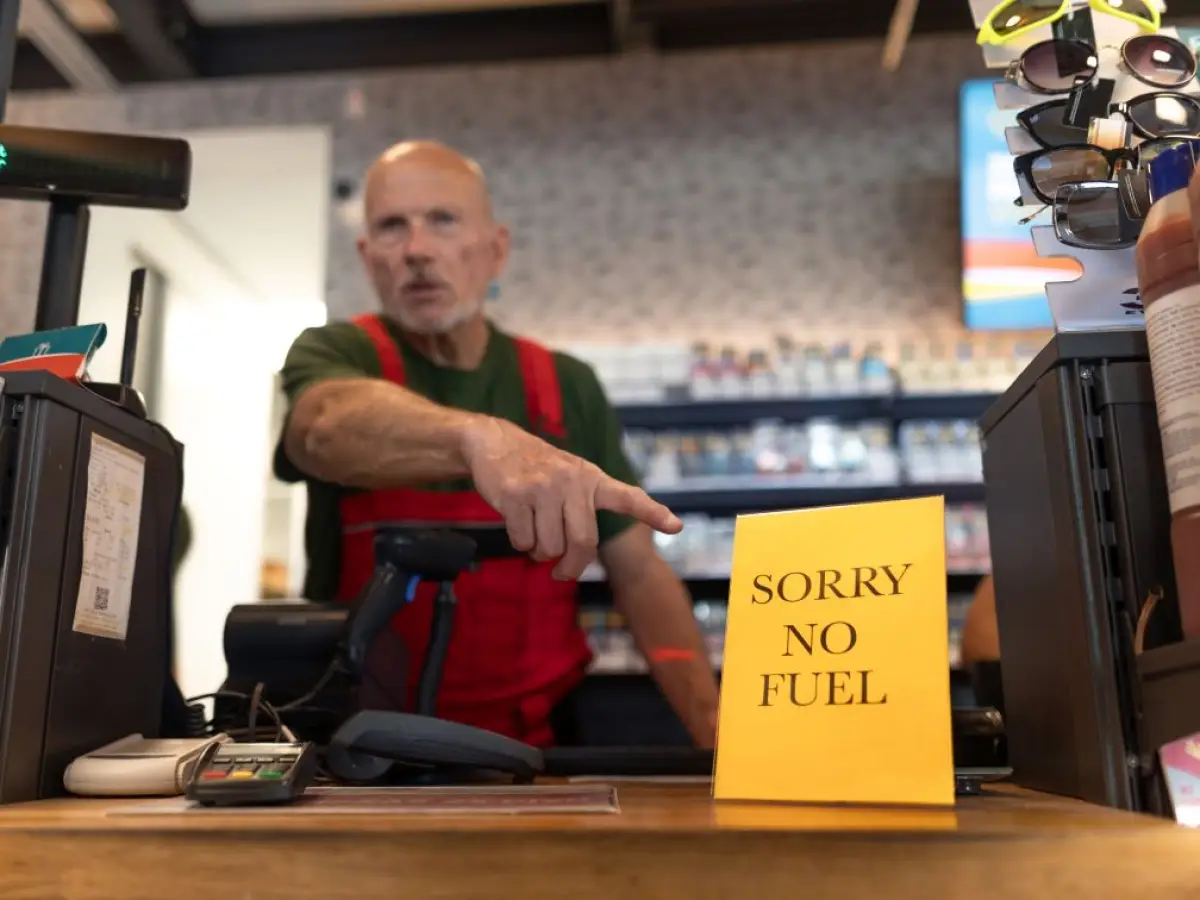

The Hormuz Strait energy crisis has reignited the debate over fossil fuel subsidies: should governments pitch in to limit the cost of fuel – and risk reinforcing their countries’ dependency on fossil energy sources – or should they only protect the most vulnerable citizens from energy price spikes while forging ahead with the generation of renewables?
Between Russia’s full-scale invasion of Ukraine in 2022 and the more recent US-Israel war against Iran, which caused the closure of the Hormuz bottleneck along one of the busiest oil shipping routes, European governments have adopted a variety of measures to avoid an energy breakdown while relieving price pressure on citizens.
From blanket subsidies to keep gasoline prices down (in the cases of Italy and Spain, for example) to the signing of new import contracts with the United States, to the reopening of shuttered gas fields (like in Norway) all the way to the building of new gas infrastructure from scratch (in Germany and Italy), decisions were made that kept the fossil fuel economy thriving.
Climate summits in Santa Marta, Colombia, in April, and most recently in Germany and London have stressed the urgency of phasing out fossil fuels as one of the most effective ways to prevent global temperature increases of more than 1.5 degrees Celsius. Colombia and the Netherlands, host countries of the Santa Marta summit, published a ten-point roadmap in June in which they highlighted the need to overcome economic dependence on fossil fuels, including by changing the financial flows and incentives that keep fossil fuels artificially competitive in many countries.
The continued subsidising of fossil fuel infrastructure is, however, having the effect of locking countries into fossil fuel consumption and, therefore, carbon emissions for the long term, experts warn. Countries are, in other words, locking themselves into fossil fuel production, import and consumption.
To Esther Bollendorff, Fossil Free programme manager at Climate Action Network Europe, any state aid measures or financial frameworks deployed in the service of fossil infrastructure end up perpetuating carbon lock-ins.
“Be it gas infrastructure projects, pipelines, or district heating, gas-based district heating, co-generation, gas-based co-generation, LNG terminals, then that is a lock-in, because that is infrastructure that will be built with a lifeline of 30 years,” Bollendorff told Renewable Matter.
“We really worry about lock-in effects [when it comes to] infrastructure created now, often with subsidies, and also long-term energy supply agreements,” Julian Schwartzkopff, team lead for the gas phaseout team at the German climate non-profit Deutsche Umwelthilfe, added.
From a simple economic perspective, investing public funds into fossil infrastructure takes them away from investment in renewables. “So it's kind of a double whammy situation where you are subsidising the stuff that we need to get out of, while at the same time reducing the amount of money that's available for actual solutions,” Schwartzkopff said.
Dependence on gas affects the planet and economies
Germany and Italy are two of the European countries most at risk of being locked into a fossil economy for long, especially due to their continued expansion of LNG infrastructure. Italy’s plans to expand its liquefied natural gas infrastructure are resulting in an increase of its regasification capacity from 16.1 billion cubic metres in 2022 to 47.5 billion cubic metres in 2026, according to a report by the Institute for Energy Economics and Financial Analysis (IEEFA). This is happening despite declining demand for the fuel, which in Italy dropped by 19% between 2021 and 2024, according to the IEEFA report.
Ana Maria Jaller-Makarewicz, the author of the report, told Renewable Matter that what this situation brings about is a so-called stranded asset, or an under-utilised piece of infrastructure, which in turn brings about higher costs for consumers. “The problem with carbon lock-in is that we don’t want investment where there isn’t going to be demand,” she explained. “What happens then is that consumers end up paying in these countries.”
Low demand, new infrastructure, booming costs
Italy’s newest LNG terminal near the northern town of Ravenna, which started operations in 2025, had a utilisation rate of 25% in 2026, according to IEEFA’s European LNG tracker. The terminal was financed with over €1 billion in investment from energy company SNAM, of which the Italian government is the largest shareholder. The government, on its part, committed in 2022 to yearly investments of €30 million to finance new LNG infrastructures or the repurposing of existing ones. Italy’s new infrastructure build-up and its push to position itself as the Mediterranean’s new gas hub are clashing against the reality of having among the highest gas prices in Europe.
In Germany, the 2022 LNG Acceleration Act was aimed at securing gas supply while the country managed its abrupt cut-off from Russian deliveries, on which it was heavily dependent. It resulted in nine new planned gas terminal projects, between floating and land-based, adding to an increase in import capacity. To Schwartzkopff of Deutsche Umwelthilfe, this was “a massive overreaction”.
Of the nine new LNG terminals and regasification units that Germany has built since 2022, only two exceeded 50% utilisation over the past four years (the Brunsbüttel and Wilhelmshaven floating storage and regasification units).
Schwartzkopff and a team of researchers from Deutsche Umwelthilfe and the Center for American Progress have calculated that the German state could disburse as much as €16.8 billion for all the new LNG plants, including guarantees in case of lower-than-contracted demand. “Building up LNG infrastructure means locking in higher costs for decades to come instead of investing in renewable and zero-emissions technologies, which are dropping in price,” the researchers say in their report, released in 2025. According to Bollendorff of Climate Action Network Europe, since the start of the Ukraine war, Germany has experienced a political shift with respect to its willingness to hang on to fossil fuels.
“What we see now with the new government is that there's just a reverse of the previous government's directions in terms of steering the energy transition,” Bollendorff said. “There's a very big shift in the general narrative in Germany.”
US gas imports: a short-term solution or a long-term lock-in?
Among the many disruptive policies that Donald Trump’s second term as US president is bringing about, unleashing local oil and natural gas production is the one expected to have major repercussions on the global climate.
The US’s aggressive marketing of its natural gas for export – and European countries’ willingness to sign contracts for it – perpetuates carbon lock-ins while also hitting economies with prices they might not really be able to afford, according to Deutsche Umwelt Hilfe’s and the Center for American Progress’s report.
“Expensive long-term contracts lock in high prices, and the import infrastructure LNG requires relies on domestic subsidies in order to be viable. Neither Germany nor the European Union can afford a wave of new, long-term LNG supply agreements,” the researchers said. The US is currently the European Union’s top gas seller.
Jochen Flasbarth, State Secretary at Germany’s environment ministry, told reporters during the Santa Marta climate summit at the end of April that Germany wouldn’t be open for business with the US for much longer. Schwartzkopff of Deutsche Umwelt Hilfe doesn’t believe this will be the case. Contracts signed with the US at the height of the 2022 energy crisis were usually 15 years long.
Maria Pastukhova, Programme Lead at E3G’s global energy transition agenda, explained that the gas exported by the US is shale gas, or the end result of oil production, and that its production is expensive. Buying this type of high-priced gas from the United States is not going to solve the issue of underused European LNG plants generating the carbon lock-in, Pastukhova explained.
While the current spike in fossil fuel subsidies and fossil infrastructure build-up spells trouble for the climate and is bad news for local economies as well, it is also a moment of opportunity to think through real change, experts like Schwartzkopff believe. If anything, it should be done with financial consideration in mind: “On all the price metrics, renewables are already beating fossil fuels,” he said.
Cover: photo by Envato