

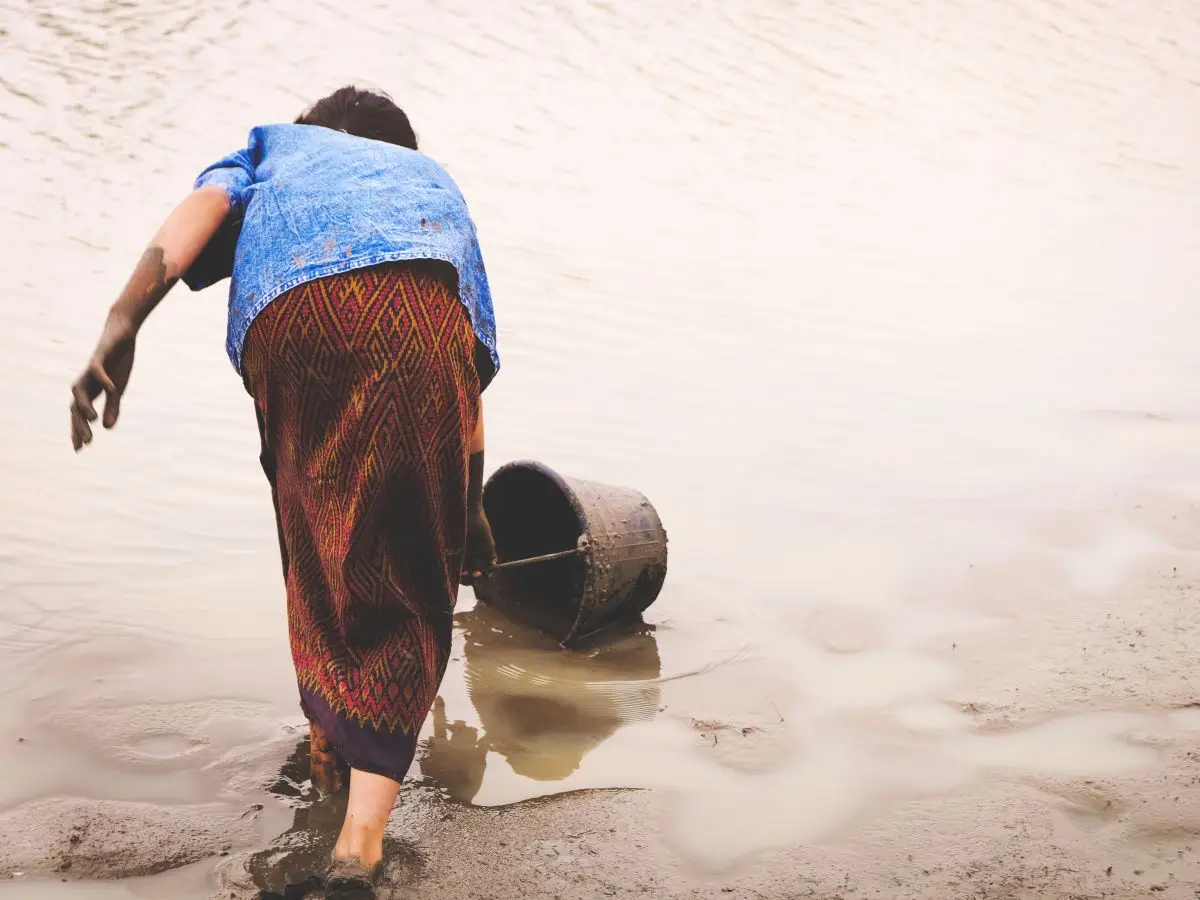

There were algae, carp, sturgeon, and other fish, fishing boats and canning factories. Along the shores of the Aral Sea, on the border between Uzbekistan and Kazakhstan, a vibrant community once lived by the lake until, in the twentieth century, the Soviet Union diverted the rivers that fed it to irrigate cotton crops. Today, the Aral Sea, once among the largest in the world, has almost disappeared. This is not an isolated case: the Great Salt Lake in the United States has suffered a similar fate. Globally, more than half of the world’s large lakes have seen their water volumes decline since the early 1990s, threatening the water security of nearly a quarter of the global population.
These figures come from Global Water Bankruptcy: Living Beyond Our Hydrological Means in the Post-Crisis Era, a new report published by the United Nations University Institute for Water, Environment and Health (UNU-INWEH), which argues that we have now entered what can be described as an era of “water bankruptcy”. Decades of over-extraction, pollution, and the effects of global warming have irreversibly compromised many water systems. The challenge is no longer to restore all that has been lost, but to prevent further damage from becoming irreversible, because in some regions it is no longer possible to turn back.
What is water bankruptcy
“This report tells an uncomfortable truth: many regions are living beyond their hydrological means, and many critical water systems are already bankrupt,” says lead author Kaveh Madani, Director of the UNU-INWEH. Water bankruptcy is a persistent, post-crisis condition in which water withdrawals consistently exceed renewable resources and the safe limits of reserves. This leads to the degradation of natural capital and largely irreversible damage, preventing a return to past baselines of water availability and ecosystem efficiency without disproportionate economic, social, and environmental costs. What matters is not only how much water is available, but also its quality: if water is polluted or affected by saltwater intrusion, part of it cannot be used, as if it did not exist.
According to the experts, water governance should focus on reducing demand, reallocating resources, and adapting to a new hydrological reality. In other words, this is not simply a question of scarcity, but a global structural crisis. Terms such as “water stress” or “water crisis”, long used in discussions about water, no longer adequately describe the situation faced by many regions.
“While not every basin and country is water-bankrupt, enough critical systems around the world have crossed these thresholds,” Madani says, “These systems are interconnected through trade, migration, climate feedbacks, and geopolitical dependencies, so the global risk landscape is now fundamentally altered.”
A structural water crisis
Water bankruptcy is not manifested solely in the gradual drying up of large lakes. Globally, in just fifty years, wetlands have shrunk by an area equivalent to the size of the European Union. Added to this is the loss of around 177 million hectares of marshes and swamps, with an estimated impairment of ecosystem services exceeding 5 billion dollars.
At the same time, the depletion of groundwater continues to accelerate: around 70% of the world’s major aquifers show long-term declining trends. The picture is completed by rivers that, for part of the year, no longer reach the sea, the progressive loss of the cryosphere, and the spread of freshwater salinisation processes.
In this context, water bankruptcy becomes a matter of justice and security. Billions of people already live in areas affected by water problems, while the costs of exceeding limits and of irreversibility fall disproportionately on small-scale farmers, rural and Indigenous communities, women, young people, and downstream populations.
“Water bankruptcy is becoming a driver of fragility, displacement, and conflict,” says in a press release UN Under-Secretary-General Tshilidzi Marwala, Rector of UNU. “Managing it fairly, ensuring that vulnerable communities are protected and that unavoidable losses are shared equitably, is now central to maintaining peace, stability, and social cohesion.”
“Despite its warnings, the report is not a statement of hopelessness,” adds Kaveh Madani. “It is a call for honesty, realism, and transformation. Declaring bankruptcy is not about giving up, it is about starting fresh. By acknowledging the reality of water bankruptcy, we can finally make the hard choices that will protect people, economies, and ecosystems. The longer we delay, the deeper the deficit grows.”
Economy and water: strategies to reduce risk
As the report underlines, investment must be directed towards protecting and restoring water and natural capital, strengthening their resilience rather than expanding unsustainable uses. From this perspective, Nature-based Solutions play a key role, including the restoration of wetlands: biodiversity hotspots capable of providing multiple ecosystem services, from carbon sequestration to flood mitigation.
Moreover, Madani explains, “we need finance that rewards risk reduction and water demand reduction, not just infrastructure. That includes concessional finance for high-exposure, low-capacity countries; blended finance for resilience projects; and results-based finance tied to measurable outcomes like reduced consumptive use, aquifer recovery, pollution reduction, and ecosystem restoration. Insurance and contingency finance can manage shocks, but bankruptcy management also needs longer-term transition finance, especially to support farmers and communities through changes in livelihoods and production systems.”
Farmers are among the groups most exposed to water-related pressures. Aquifers, which are being depleted faster than they can be replenished, supply around 40% of the water used for irrigation worldwide. Farming under conditions of scarcity or with polluted water only deepens water bankruptcy, making it increasingly urgent and strategic to invest in “water-smart” agriculture, systems capable of reducing consumption, strengthening resilience, and preserving resources for future generations.
Investment, moreover, must not contribute to worsening the water crisis or further eroding natural capital. On the contrary, harmful financial activities, such as those that encourage excessive water extraction or the export of highly water-intensive agricultural products, need to be redirected towards measures that improve overall water conditions. Such a shift can deliver tangible benefits both for ecosystems, by easing pressure on natural environments, and for human communities, by strengthening water security and long-term territorial resilience.
And, as Madani reminds us, to achieve this, “public, multilateral, and private financial institutions must screen investments for water bankruptcy risks because water bankruptcy turns into real financial risk, stranded and toxic assets, disrupted supply chains, higher operating costs, and political instability”.
The impacts of global supply chains
In some parts of the world, agricultural production, as illustrated by the emblematic case of the Aral Sea, nearly drained by intensive cotton irrigation, requires vast quantities of water to sustain export-oriented supply chains. This tightly links the issue of supply chains and international trade to that of water bankruptcy, as environmental impacts affecting production areas spread through global markets, with consequences for food security in other regions as well.
The risk is heightened when production is concentrated in geographically limited areas already under severe water stress. To reduce these systemic pressures, diversification strategies become essential, ranging from the promotion of less water-intensive crops to shifting production towards basins that are still operating within their capacity limits.
“Policies can require transparency on water risk in supply chains, set procurement standards for water-intensive goods from stressed basins, and use incentives to shift production toward water-appropriate crops and practices,” concludes Madani. “The key is fairness: if global consumers and firms benefit from low-cost production in water-bankrupt regions, they should share transition costs through standards, co-investment, and finance that reduces vulnerability rather than simply extracting value.”
Cover: Envato