


My childhood memories are tied not only to strolls under the porticoes of Saronno, a small town in the Milanese hinterland, but also to the local stream, the Lura. Largely covered over, the peculiarity of the Lura was that its waters changed colour every week. Most often purple or reddish, less frequently blue or petrol green, depending on the colours favoured by the dye works and textile companies in the Como area, which dumped their waste into the stream with impunity.
Back in the 1980s, purification plants were inadequate, and the textile industry still drove the economy of northern Italy before the rampant offshoring of the 1990s. The European Water Framework Directive would not come into force until 2000, and environmentalists were few and powerless. That is why my earliest memories of a river system are dotted with unnatural colours, dark shores, riverbeds clogged with waste, and blackish mud beaches. Sad, harnessed, toxic, foul-smelling waters. A memory that remains vivid in my mind, indelible. A scenario that many communities around the world still experience first-hand.
Throughout my life, I have had the opportunity to observe many other river systems: the disputed Jordan River, so beautiful yet sacrificed by the frenzied water extraction for illegal Israeli fruit cultivation in the occupied Palestinian territories; the poetry of the Colorado River surrounded by the Utah desert, a wild waterway that feeds the immense Hoover Dam; the Mekong, sailed from the Chinese to the Vietnamese border to recount the race to hoard water; the Senegal River on the border with Mauritania and its exploitation for biofuel crops; the Po, almost unrecognisable during the drought of 2022; the Mississippi Delta, devastated by the black wave of the Deepwater Horizon oil disaster in 2010. An endless list of beauty and devastation, of human arrogance and environmental resistance.
This issue, focusing on river systems, draws on these many memories and aims to bring attention to the health of the planet's circulatory system. As Alessandro Bratti clearly explains, river ecosystems are the heart of our society, on which all agriculture, a large part of industry, and even services such as AI, with their immense water footprint, directly or indirectly depend.
We have entered an era in which governments must place water management policies at the centre of their agenda. More and more cities and regions are at risk of reaching Zero Day, the day when water availability will be zero for an extended period of time. As Eric Tardieu points out, the management of river systems requires the involvement of all institutions and economic entities for integrated governance. The future of rivers will increasingly be one of renaturalisation, management through Nature-based Solutions, and the integrated use of hydraulic engineering and ecosystem management.
In this issue, you will also find in-depth articles on plastic pollution; on the complex relationship between energy production and rivers; on the impacts of climate change; on sand extraction (a topic that is as important as it is underestimated); and on river tourism.
Take your time reading it, perhaps alongside your favourite river, stream or brook. Reconnect with it. It will nourish your spirit and help you understand how rivers, even in the age of AI and space travel, remain the foundation of our society and economy.
DOWLOAD AND READ ISSUE #60 OF RENEWABLE MATTER: RIVERS
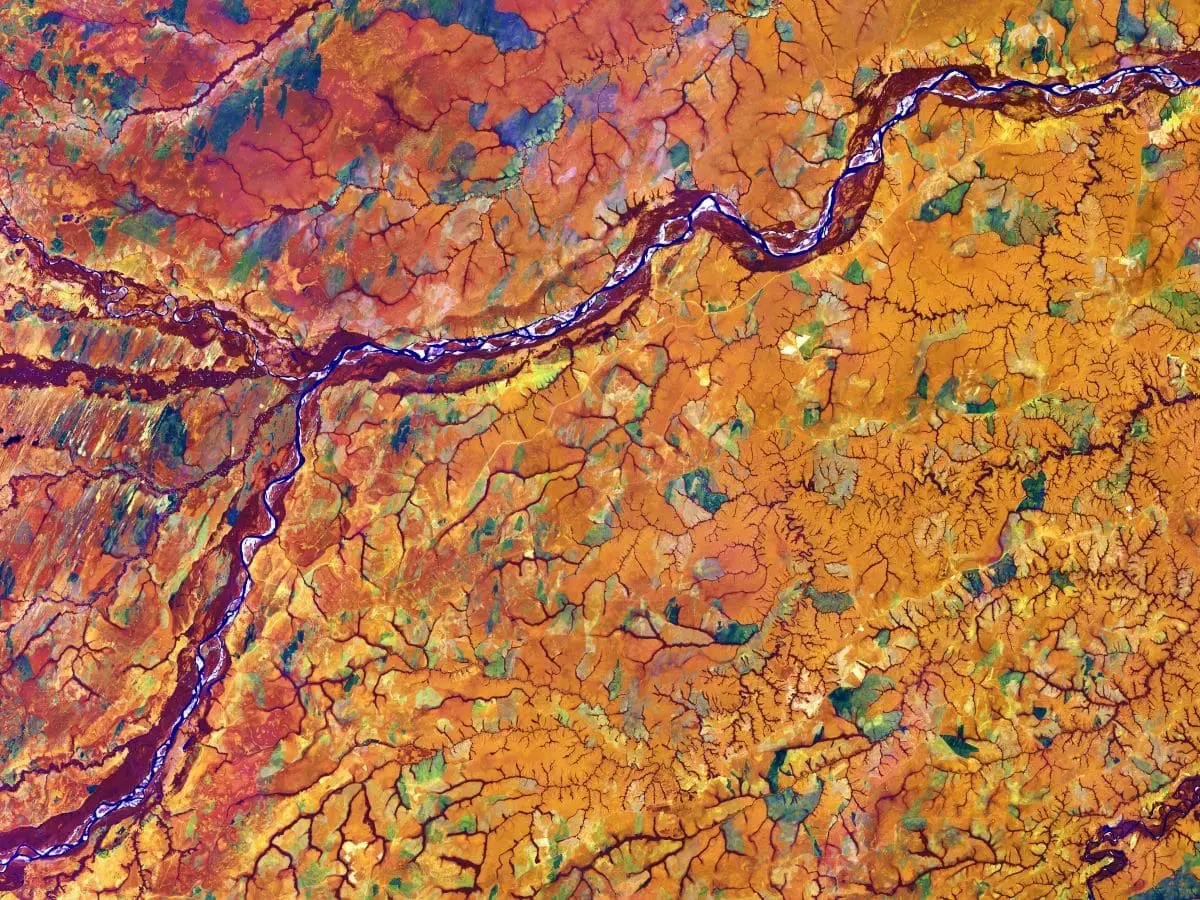
Cover: Meta River, Colombia, photo by U.S. Geological Survey (USGS) via Unsplash