


The Chinese car manufacturer Geely Automobile Holdings Limited was included in the S&P Global Sustainability Yearbook for the first time in 2026. This ranking by the international rating agency rewards companies with the best ESG performance globally, within their industrial sector. Geely Auto is the only Chinese car manufacturer to have been recognised this year for its environmental, social and governance performance, ranking fifth in its category in the Corporate Sustainability Assessment (CSA) score and receiving the prestigious “Industry Mover” award.
“This award reflects a significant improvement in our performance in the CSA and all ESG dimensions,” the Geely team told Renewable Matter. “On the environmental front, we have accelerated the electrification of our range, developing a dedicated platform and expanding our zero-emission vehicle offering.” The Hangzhou-based group surpassed 3 million sales in 2025 and has consolidated its presence in Europe by acquiring, over the years, brands such as Volvo Cars, Polestar and Lotus Cars.
The electric car sales boom
The crisis in the Strait of Hormuz and rising fuel prices have contributed to a boom in electric vehicle (EV) registrations in Europe: +42% in March alone. According to data from the European Automobile Manufacturers Association (ACEA), in December 2025, EV sales surpassed petrol vehicle sales for the first time.
“It is no coincidence that we have seen electric vehicle sales growth exceeding 50%,” said the Geely spokesperson. “On the other hand, the crisis also impacts the global supply chain, increasing the costs of critical raw materials for batteries and creating pressure on industrial margins. In this context, the most vertically integrated groups with diversified global supply chains – like Asian groups, and like Geely – can react with greater resilience.”
According to Geely, electrification is a necessary process that requires bolder systemic choices. The ban on internal combustion engine sales by 2035 in Europe provided a clear direction to the market, and manufacturers would have had to adapt. However, the European Commission’s decision to postpone the ban generated renewed confusion among EU manufacturers. Chinese players such as Geely, who had already committed to that path, have benefited from the situation.
“We will continue to invest in key technologies such as electrification, advanced batteries and software-defined vehicles. Furthermore, being included in the S&P Global Sustainability Yearbook 2026 allows us to accelerate international expansion, leveraging an image that is increasingly strong and aligned with global sustainability standards.”
AI and autonomous driving
Innovation is at the heart of the group’s strategy. An example of this is the integration of the DeepSeek R1 artificial intelligence model, which is transforming driver-vehicle communication. The car is thereby evolving into a digital platform, making systems more intuitive and customised, able to offer an ever safer and more comfortable experience.
Last year, the company announced the integration of so-called “distillation training”, a process through which DeepSeek R1 will further enhance the Xingrui, Geely’s first-of-its-kind vehicle, which has built-in AI that has been developed and controlled entirely in-house, at all levels.
The Xingrui, which includes three core models (linguistic, multimodal and digital twin), is set to become the first prototype for the next generations of Geely’s intelligent cars, which will include, among other things, autonomous driving, one of the pillars of the company’s technological development.
“We are testing advanced assistance systems and progressive autonomy solutions to improve safety and efficiency. The Beijing Auto Show 2026, with all its technological innovations, is also highlighting the group’s progress in this field.”
This content is produced thanks to the support of sponsors
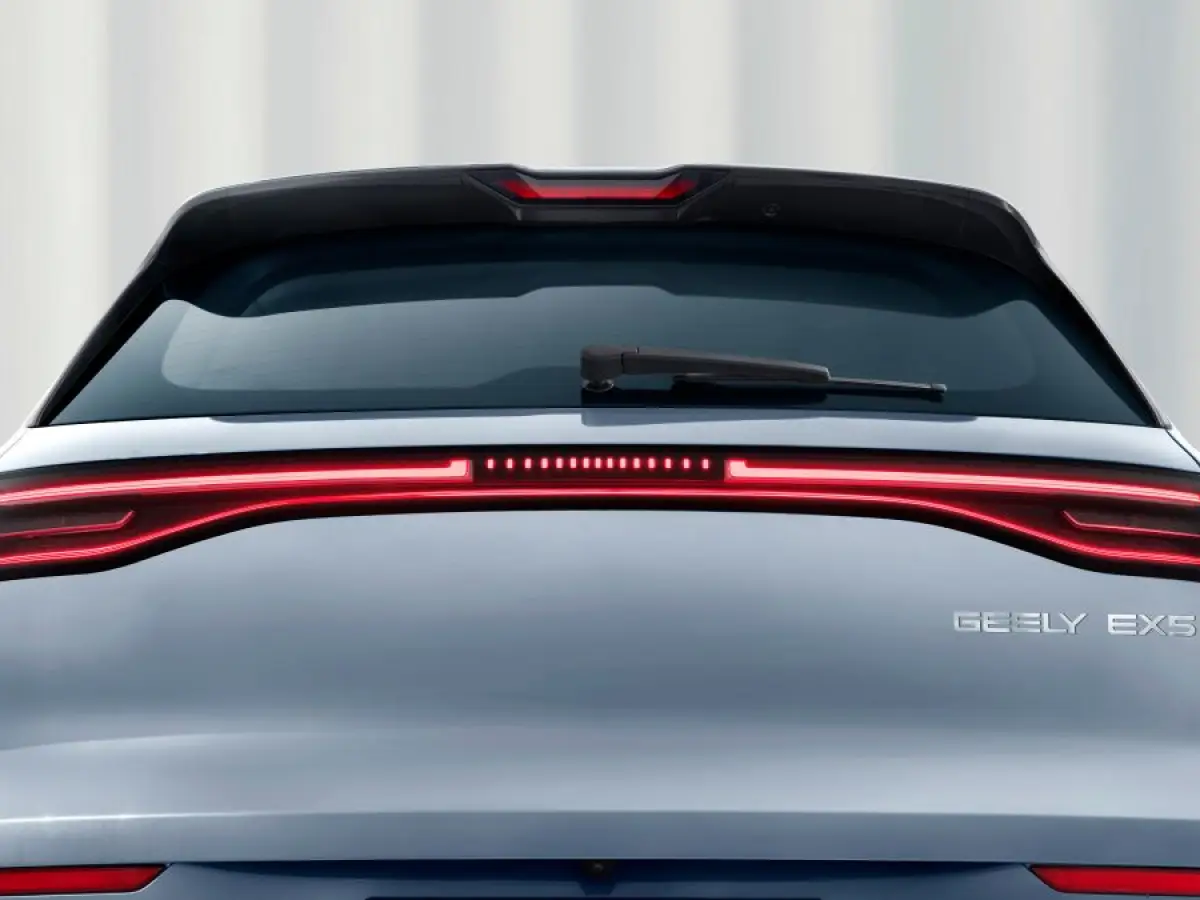
Cover: photo by Geely