


"Today, the Trump administration repealed the endangerment finding: the ruling that served as the basis for limits on tailpipe emissions and power plant rules. Without it, we’ll be less safe, less healthy and less able to fight climate change — all so the fossil fuel industry can make even more money." Barack Obama’s words on X immediately convey the gravity of Trump administration’s latest major assault to environmental regulations.
On Thursday 12th February, the President of the United States repealed the endangerment finding, the 2009 scientific basis under the Clean Air Act (established by republican Nixon) that established beyond dispute that greenhouse gas emissions pose a threat to human health. The administration also announced the withdrawal of limits on emissions from cars and trucks, previously regulated by the standard implemented during Obama’s first term.
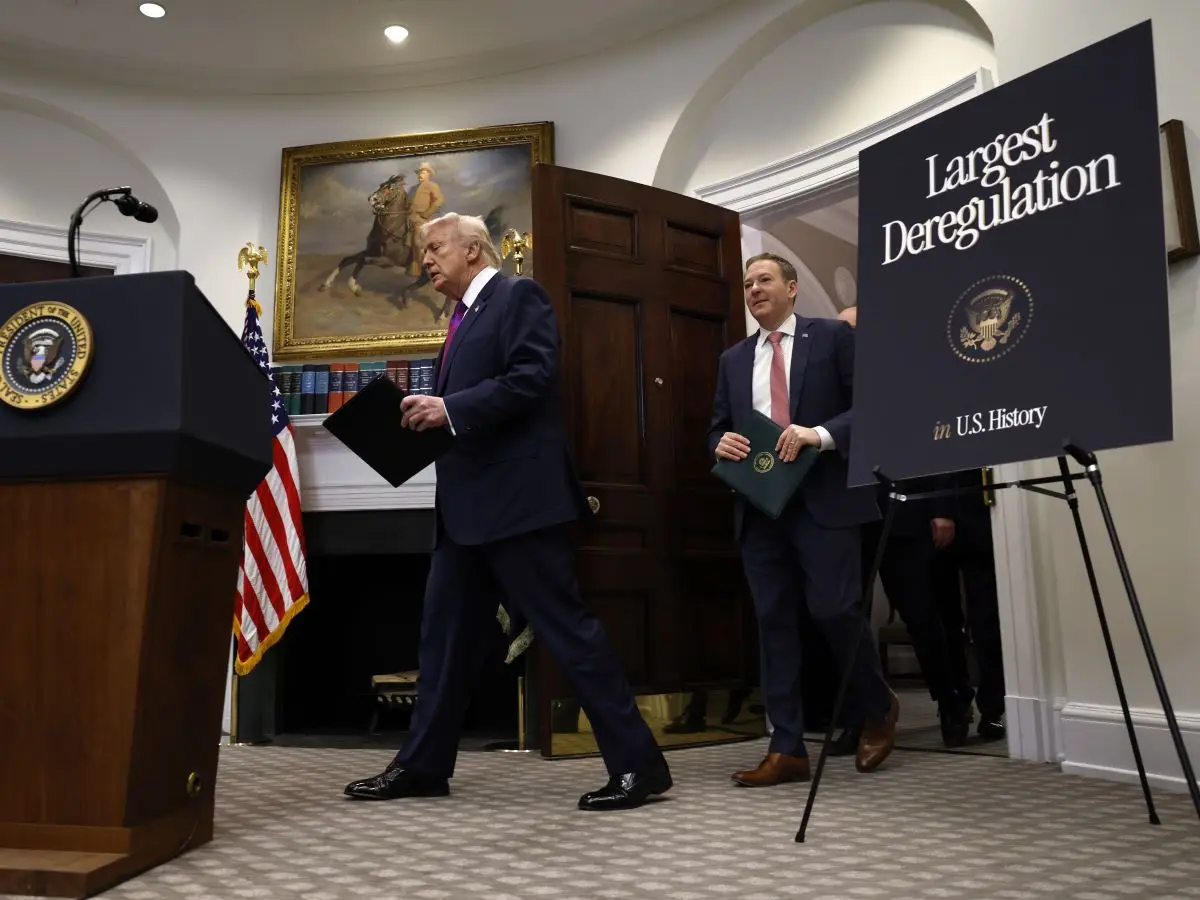
"This is about as big as it gets" President Trump stated from the White House, while Lee Zeldin, administrator of the Environmental Protection Agency (EPA) was smiling beside him. "We are officially terminating the so-called ‘endangerment finding,’ a disastrous Obama-era policy" he added.
Zeldin accurately described it as “the single largest act of deregulation in the history of the United States of America”. He accused Democrats of launching an “ideological crusade” on climate change that “strangled entire sectors of the United States economy”, particularly the automotive industry. And now it is time for revenge.
For nearly 17 years, EPA relied on this scientific ruling – based on over 200 pages of research and evidence – to justify regulations limiting emissions of carbon dioxide, methane and other and other pollutants from oil and gas wells, tailpipes, smokestacks, and other sources that burn fossil fuels. According to the Environmental Defense Fund, a non-profit environmental advocacy group, the annulment of the endangerment finding could increase US greenhouse gas emissions by 10% over the next 30 years, as well as worsening air quality in several communities. Factually, the US government delegitimise climate science. This is the greatest climate denialist action ever undertaken.
The news angered the Democratic opposition, the civil society, the scientific community and millions of citizens who strongly condemned the initiative on social media. The decision was contested by thousands of EPA employees themselves. The repeal was called a “betrayal” of EPA’s mission to protect human and environmental health by Justin Chen, president of the American Federation of Government Employees Council 238, that represents thousands of EPA employees. Trump hardliner Zeldin, however, no longer recognizes the union, after the agency terminated its contract with it in August.
In a press release, California Democratic governor Gavin Newsom, defined it a “reckless decision”, warning that “it will lead to more deadly wildfires, more extreme heat deaths, more climate-driven floods and droughts”. He subsequently threatened to take Trump to court over this.
The response to Trump administration’s wicked act will now move to the legal arena. Legal experts argue that carbon dioxide regulation is well supported by the text of the Clean Air Act. This is a fact that even the conservative Supreme Court recognised in several cases, suggesting that the Court could rule against the administration if the repeal ends up on its docket. Moreover, Trump decided to attack the only positive legacy of Republican President Richard Nixon (who signed the Clean Air Act on 31 December 1970). This move has been viewed negatively even by some Republicans. In short, a long season of legal battles lies ahead.
Most likely, the Supreme Court will be called upon to uphold previous decisions. But even if the Court were to rule that the federal government can no longer regulate greenhouse gases under existing law, states and private individuals would be free to set their own greenhouse gas standards or file lawsuits for damages caused by climate change, since they would no longer be subject to federal authority. This would create regulatory chaos, potentially forcing Congress to restore EPA’s authority.
“I think this is another incredible overreach by this administration, and I believe that is precisely why they will be held accountable in court” said Rachel Cleetus, senior policy director at the Union of Concerned Scientists, a non-profit science advocacy organisation.
There is also a detail that many overlooked: EPA decided to revoke the endangerment finding for “mobile sources” such as cars, but did not revoke the separate endangerment findings for emissions from “stationary sources” such as power plants and oil wells. Several groups representing polluting industries, including the American Petroleum Institutes (API), had urged the administration to focus on cars, “likely because of the increased legal liability they would face if carbon pollution is no longer subject to federal regulation”, writes Jack Bittle, in Grist.
This latest move confirms the loss of credibility of the United States and strengthens players such as China, but indirectly also Europe. According to several US pundits, Trump’s attack on environmental regulations will be a competitive disadvantage and a huge headache for future administrations. It will not be easy to restore trust in science and support for environmental laws, which have taken decades to become truly effective. The risk, however, is a prolonged ideological rift over the challenge of climate change and the protection of nature.
Also read: Trump's energy imperialism is a danger to the future of the human species
Cover: Donald Trump and Lee Zeldin enter the press conference announcing deregulation, photo by Will Oliver, IPA Agency