


This article is part of the thematic channel The Carbon Observer. Subscribe to the newsletter or update your preferences.
The construction sector is one of the most polluting in Europe. According to the latest official estimates from Eurostat, European buildings account for around 36% of greenhouse gas emissions. This figure includes heating, cooling, lighting and other energy services related to building use (operational emissions). However, a significant proportion of emissions also comes from construction and building materials (raw materials, production, transport, construction, maintenance): at a national level, this varies between 5% and 12% of GHG emissions.
This implies that a significant portion (approximately one-fifth) of the total footprint of a building in the EU derives from components that are not operational emissions (building use) but from emissions inherent to the materials and the construction itself.
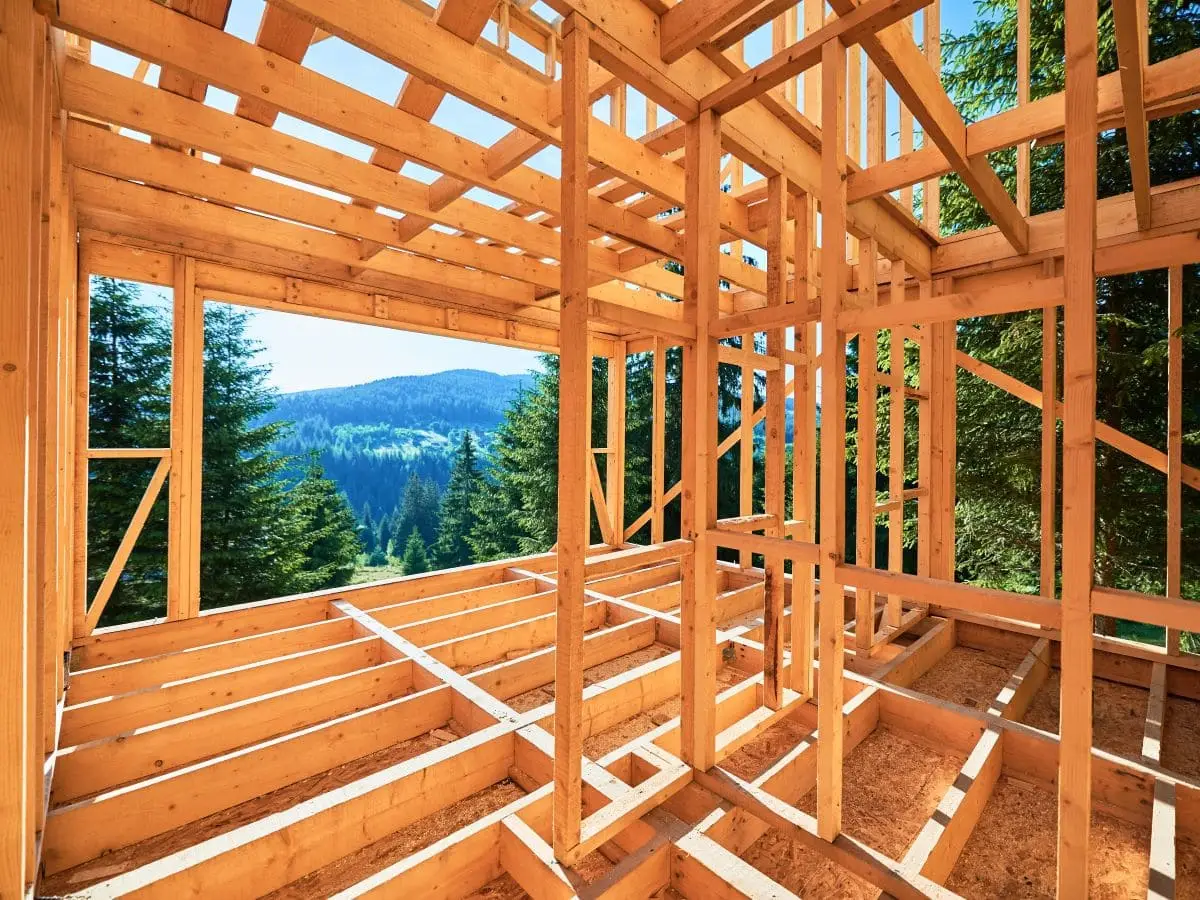
Efforts to reduce the carbon footprint of building materials need to focus on accelerating the decarbonisation of cement and the use of circular bio-materials, with a particular emphasis on timber. Wood is a natural, healthy material that can also act as a medium- and long-term CO2 storage medium.
This is why the European Commission is working on a mechanism and a registry to offer high-quality carbon credits to offset companies’ residual emissions. The aim? To make the timber construction industry more competitive and contribute to carbon dioxide absorption.
“Wooden buildings cost slightly more because they represent a high added-value investment, and betting on this sector means investing in the climate resilience of the building,” comments Francesca Guerra of Carbon Planet, a benefit corporation specialising in the carbon market. A vision shared by Habitech, a centre of excellence for energy and the environment, positioned as a leading advisor for property developers. The synergy between the two companies seeks to guide the sector towards real, certified and financially rewarding decarbonisation through new climate finance instruments. In fact, carbon credits could trigger a virtuous cycle between the builders and buyers of structural timber homes while contributing to the decarbonisation process. “It is a way to make the sector more competitive and promote a building material that acts as an excellent carbon sink,” adds Vittorio Vezzali, head of decarbonisation at Habitech.
The system provides incentives for the entire sustainable wood supply chain, thanks in part to the production of credits that can then be purchased by the company itself to offset its emissions in the area. “The difference with other systems is that instead of offsetting in remote areas of the planet, with classic avoidance projects [i.e. preserving existing forests, for example, ed.], these are geolocalised projects in Europe, involving removal, i.e., reducing the concentration of CO2 in the atmosphere,” adds Vezzali.
The quality of carbon credits generated by timber construction is explicitly regulated by the European Carbon Removals and Carbon Farming (CRCF) Regulation, enacted in December 2024. These credits are conditional on compliance with stringent requirements: they must be accurately quantifiable, additional (i.e., resulting from absorption activities that go beyond regulatory obligations and business as usual), characterised by guaranteed long-term CO2 removal and meet minimum sustainability requirements, producing measurable environmental benefits.
The European legislator has stipulated that, for wooden structures, the nominal life of buildings must be at least 35 years. In Italy, however, the lifespan of buildings is generally guaranteed for at least 50 years for private buildings and 100 years for public buildings.
The calculation methodology currently under development by the European Union takes into account the possibility of CO2 losses due, for example, to inadequate building maintenance or extreme events such as fires. To address these risks, a portion of the CO2 removed through building construction is set aside in a guarantee buffer, acting as an insurance mechanism against potential losses. In this way, explains Francesca Guerra, “the environmental integrity of carbon credits linked to timber construction is strengthened, boosting market and investor confidence”.
“This is where Habitech steps in,” adds Vezzali. “Construction projects that generate carbon credits must be monitored, reported and verified by independent third parties. Once validated, the credits can then be entered into a public registry, which ensures transparency and prevents the risk of double counting.”
To generate these credits, Habitech will need to be certified by Accredia, in accordance with the provisions of the CRCF (Carbon Removals and Carbon Farming) and the new Italian carbon credit registry, thereby ensuring alignment with European and national regulatory requirements. The European Union is expected to release the final and definitive version of the calculation methodology for structural timber structures in the first half of 2026, allowing the issuance of the first “certified units”, i.e. certified carbon credits, to begin.

Cover: Envato image