


This article is part of the thematic channel The Carbon Observer. Subscribe to the newsletter or update your preferences.
The Northern Kenya Rangelands Carbon Project (NKRCP), led by the Northern Rangelands Trust, is among the largest soil carbon removal schemes in the world, spanning more than 1.9 million hectares, an area roughly equivalent to the entire region of Apulia in southern Italy. Yet before it is a climate initiative, it is a community-driven effort with the purpose of restoring degraded rangelands and strengthening local livelihoods and sources of income. In northern Kenya, the wellbeing of pastoralist communities depends largely on the health of shared grazing lands, which underpin livestock production and, in turn, the area’s economic and social stability.
“Over time, erratic rainfall, pressure on pasture and water resources, and reduced coordination of traditional grazing practices contributed to declining vegetation cover, lower livestock productivity, and increased competition over grazing areas,” Aloise Naitira, Director of Programs at the Northern Rangelands Trust, told Renewable Matter. The project has, however, drawn some scrutiny over time. Verra — one of the world’s leading carbon credit certification bodies — has put the scheme under review on two occasions, first in 2023 and again in 2025. Criticism has also surfaced over the management of lands long held by Indigenous communities, as well as over questions surrounding transparency and the free, informed consent of the communities involved.
The Northern Kenya Rangelands Carbon Project
“The project was designed to support communities in strengthening their own rangeland governance systems”, Naitira continues. “Through community conservancies, locally governed institutions with elected boards, communities collectively plan grazing use, set aside recovery areas, and coordinate livestock movement across shared landscapes. Carbon finance provides a long-term funding mechanism to sustain these community management efforts.”
Formally launched in late 2012, the project set out to deliver benefits extending beyond the climate dimension. According to information published on the initiative's website, improvements in pasture quality have led to healthier, more productive livestock, with positive spillover effects on market prices and, ultimately, household incomes. More coordinated grazing management, they argue, has also helped to ease tensions over access to scarce resources. Taken together, these changes are said to have improved living conditions for more than 200,000 people across the participating communities.
“In terms of livelihoods, project revenues have supported ranger operations, water projects, community initiatives, and local employment related to monitoring and rangeland management. The project has also contributed to strengthening local governance and financial management capacity within conservancy institutions,” Naitira explains.
Beyond the direct benefits for communities, the project’s backers point to visible ecological gains. In several areas, wildlife sightings have reportedly increased, including African elephants, reticulated giraffes — listed as endangered on the IUCN Red List — zebras, and the Beisa oryx, a long-horned herbivore native to the region. Large predators such as lions and cheetahs are also said to have returned, a development that could, in turn, support local tourism.
However, according to testimonies cited in an article in The Wall Street Journal, for some herders, the new rules on carbon credits have led to the disruption of migration patterns that have been based on rainfall and the availability of pasture for centuries, limiting, for example, access to areas traditionally used for livestock.
Controversies and criticism surrounding the project
The first suspension of the credit mechanism came in 2023, following the publication of a report by Survival International as part of its Blood Carbon campaign. According to the document, the project interfered with the traditional indigenous pastoralism of the area, limiting long-established practices such as seasonal livestock migration, an essential strategy during periods of drought. The report also highlighted criticalities in the information and consultation processes involving the communities involved, as well as aspects to be clarified regarding the legal basis of the initiative and the demonstration of the actual “additionality” of carbon credits. However, after eight months of suspending the issuance of credits, Verra decided to reinstate the project.
The report’s author, Simon Counsell, formerly director of Rainforest Foundation UK, said in a 2023 press statement that “NRT’s carbon project fails to comply with some of the basic requirements for carbon offsetting projects, such as showing clear additionality, having a proper baseline, and being able to measure carbon ‘leakage’ to other areas. The mechanisms for monitoring the implementation and impacts of the project are fundamentally flawed. It is extremely implausible that the carbon credits being sold by the project represent any real additional storage of carbon in the area’s soils.” Among the companies to have purchased credits as part of their climate strategies are global giants such as Netflix and Meta.
In 2025, Verra announced a second suspension following a ruling by a Kenyan court in a court case brought by 165 pastoralists. The judge declared the two nature reserves linked to the NRT project were established illegally, noting shortcomings in community engagement and consultation during the process. In response, the NKRCP stated on its website that “The review does not stem from new concerns about the project’s methodology or technical foundations. The project remains fully compliant with the requirements of the Verified Carbon Standard.” No further updates on the status of the review have been made public, although the organisation highlighted that “the NKRCP continues to operate. Community governance structures remain in place. The court case is centered on conservancy formation, not the carbon project. No legal decisions have invalidated the carbon project’s operations.”
Reflecting on the project’s evolution, Naitira observes: “One of the most significant lessons has been successful rangeland management, carbon projects depend as much on governance as on technical measurement. Continuous community engagement, transparency, and community decision-making are essential for long-term sustainability. As awareness of the project has grown, communities have sought clearer information about how the project works and how benefits are distributed. In response, consultation processes, documentation, and communication have been strengthened to support informed participation.”
Carbon credits and rating methodology
“The project generates carbon credits by supporting improved grazing management that allows vegetation and soils to recover and gradually store more carbon,” Aloise Naitira explains. “A baseline scenario was first established to estimate soil carbon levels in the absence of improved management. Permanent sampling locations are then monitored over time, with soil samples collected and analysed in accredited laboratories to measure soil organic carbon. These measurements are combined with satellite monitoring, ecological indicators, and management records to estimate changes in carbon stocks across the landscape.”
At a later stage, the findings are consolidated into formal reports and submitted for independent verification. Once validated, the credits are issued and entered into a dedicated carbon registry, where they can be purchased by companies on the voluntary carbon market as part of their climate commitments and wider nature-based strategies. The project applies the VM0032 methodology, developed for the management of rangelands and grasslands, including in semi-arid regions.
“The methodology uses both measured and modelled approaches. Soil samples are physically collected and analysed to provide direct measurements at representative locations. These measured results are then used to calibrate ecological models and remote sensing data that estimate carbon changes across the wider landscape,” adds Aloise Naitira. “The measured data provide scientific grounding and verification, while modelling allows assessment at scale. Independent auditors review the monitoring data and calculations before any carbon credits are issued.”
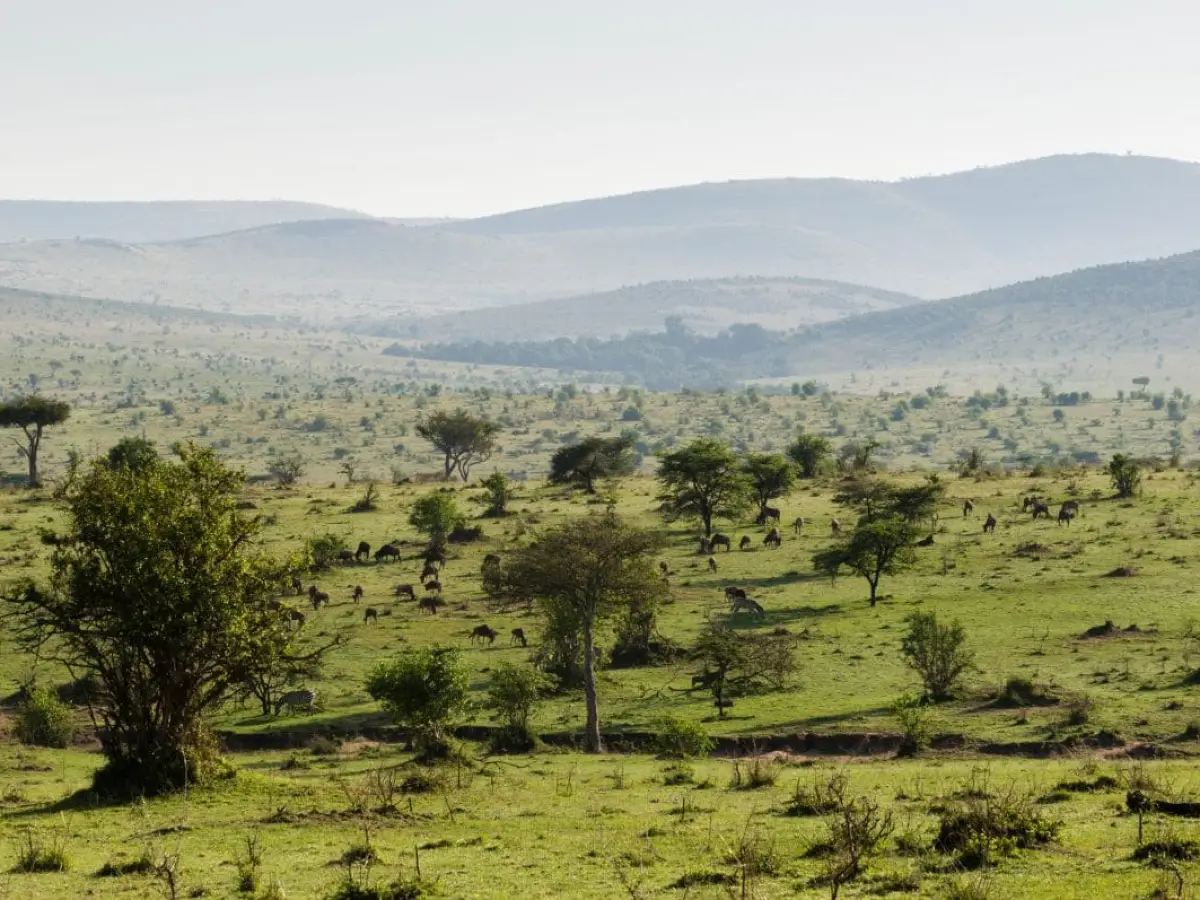
Cover: Masai Mara National Reserve, Kenya, Envato