


Europe’s water crisis is no longer a warning about the future – it is dramatically shaping life across the continent now. From Spain to Cyprus, water scarcity is becoming a chronic challenge, while even historically water-rich regions such as Flanders face growing pressure on groundwater reserves. At the same time, extreme weather is pushing water systems to breaking point: in recent years, Italy has seen the Po River shrink to a trickle during a historic drought, only to witness devastating floods hit Lombardy months later. Across the continent, catastrophic floods have struck Germany, Greece and Spain. And throughout central Europe, groundwater reserves remain dangerously low after consecutive dry years.
These events are not isolated headlines. Scientists now warn that Europe has crossed the planetary boundary for freshwater, the safe limit for maintaining stable water systems. Rising temperatures across the continent – already more than two degrees above pre-industrial levels in many regions – are accelerating evaporation. Rainfall patterns are ever more erratic and intense, while floodplains, peatlands, free-flowing rivers and forests that once helped regulate water have been degraded, and our groundwater and surface water reserves are under stress. The result is a growing instability in Europe’s water cycle and a continent facing a future of more extreme droughts and devastating floods.
The Water Framework Directive (WFD), adopted in 2000, became the EU’s foundational and world-leading law protecting rivers, lakes and groundwater. It was designed to restore the health of Europe’s river basins and tackle the root causes of water degradation. By managing water at the scale of entire catchments and involving citizens, scientists and local authorities, it recognised that healthy ecosystems – rivers, lakes, floodplains, other wetlands and forests – are essential natural infrastructure for storing water and reducing flood risks. Its implementation has underpinned some of the most impactful developments in water management in Europe, such as the multi-billion Room for the Rivers programme in The Netherlands, providing improved flood resilience, restored floodplains and nature. The WFD is the strongest legal basis we have for safeguarding and restoring our resilience to climate and human-driven change.
Yet, at this moment, the European Commission is considering reopening the WFD and weakening some of its key safeguarding measures in the name of competitiveness and regulatory simplification. This decision came as a surprise, since the Commission finished its previous revision after a two-year fitness check evaluation, concluding in 2020 that “there is limited room for simplification and reduction of the Directives’ administrative burden without jeopardising [its] objectives”. A clear message from the Commission, claiming that the WFD is still a modern and much-needed law to effectively implement and achieve the “good” ecological and chemical status to safeguard European rivers, lakes, groundwater and coastal waters.
This alarming proposal to revise the WFD also comes just five years after the Living Rivers Europe coalition successfully rallied hundreds of NGOs, businesses and over 375,000 citizens to safeguard the Directive from a previous attempt to undermine it. This time, though, the signs are that the Commission might press ahead regardless of our coalition’s renewed campaign to prevent it. Much of the current pressure to now review and revise the Directive is tied to Europe’s push for strategic autonomy in critical raw materials. As the EU accelerates efforts to mine lithium and other minerals essential for the clean energy transition, parts of the mining sector are calling for greater flexibility in water protection rules.
The challenge is real: Europe needs raw materials for batteries, wind turbines and digital technologies. But weakening water and wetland safeguards to the detriment of our health and environment is not the answer. Europe has already seen what happens when safeguards fail: in 2000, the Baia Mare mining disaster in Romania released tens of thousands of cubic metres of cyanide-contaminated waste into rivers that flowed into the Tisza and Danube, creating one of Europe’s worst environmental disasters.
Mining is among the most water-intensive and pollution-prone industrial activities. Cleaning up can take decades and cost billions of euros. Once groundwater is contaminated, the damage is extremely difficult – and sometimes impossible – to reverse, leaving communities to deal with polluted drinking water and long-term health risks.
The WFD has been instrumental in helping the continent restore its water bodies from the legacy of pollution from abandoned mines. Instead of securing its green transition with a regulatory race to the bottom undermining the ecosystems that sustain its water security, Europe should invest in research and innovation to ensure mining processes are minimally polluting and destructive so that they can be deployed at home and as exports across the world.
Weakening water protection rules will not make Europe more competitive but more vulnerable. At a time of growing water insecurity, healthy rivers, lakes and freshwater wetlands are not obstacles to development – they are essential infrastructure for a climate-resilient economy.
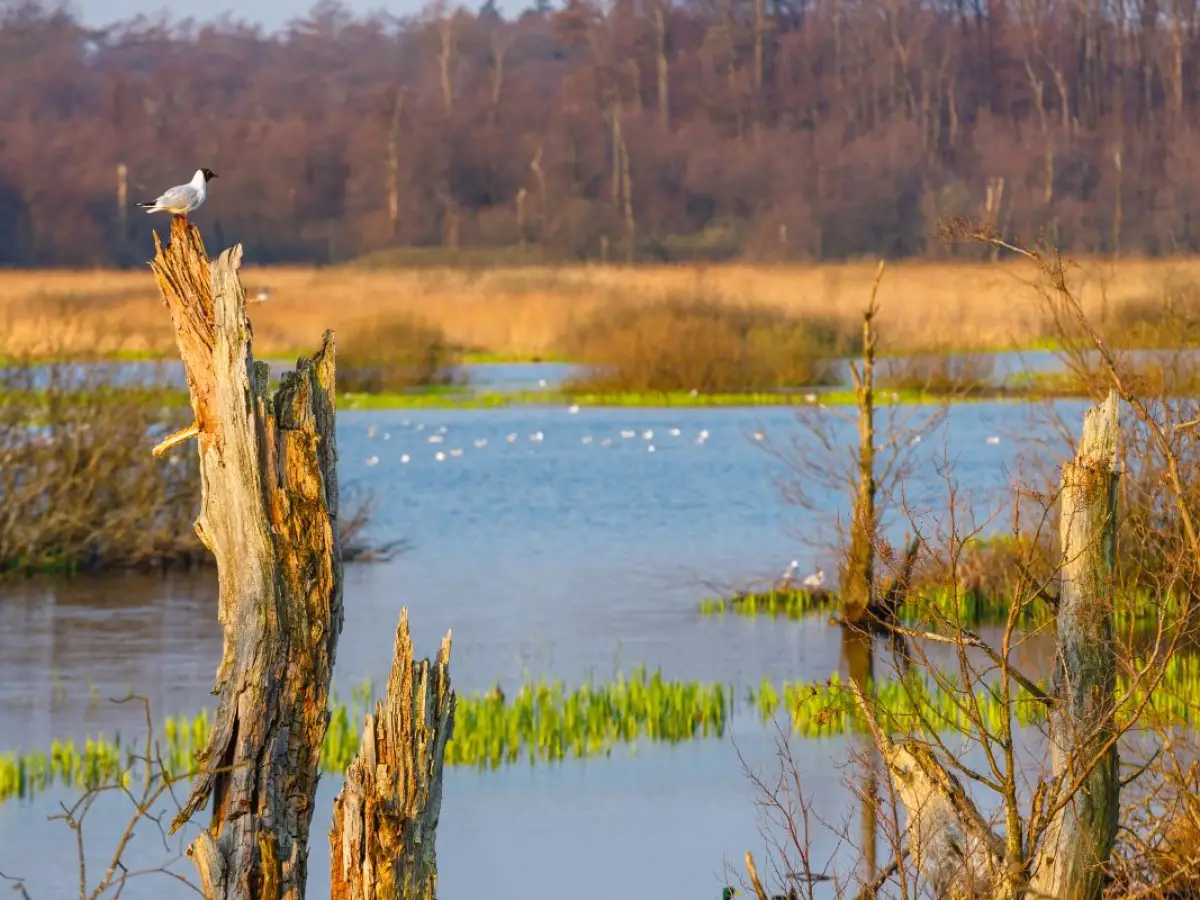
Cover: a bird reserve near Kolobrzeg, Poland, photo by Envato