


For anyone who has been there, it is obvious that the circular economy is in India's DNA. In the nation of Mahatma Gandhi, returnable empties are not a groundbreaking practice and reuse – often very ingenious and creative – of waste materials, mechanical components and second-hand objects is part of everyday life.
Today, however, the country is taking a scale leap. The ambitious plan unveiled by Narendra Modi and christened Viksit Bharat (literally “developed India”) envisions its transformation into a prosperous and modern nation by 2047, in time for the 100th anniversary of Independence. An accelerated development that will also have to incorporate the principles of sustainability and circularity, managing to combine a huge informal sector with the most innovative recycling technologies and proven practices and regulations.
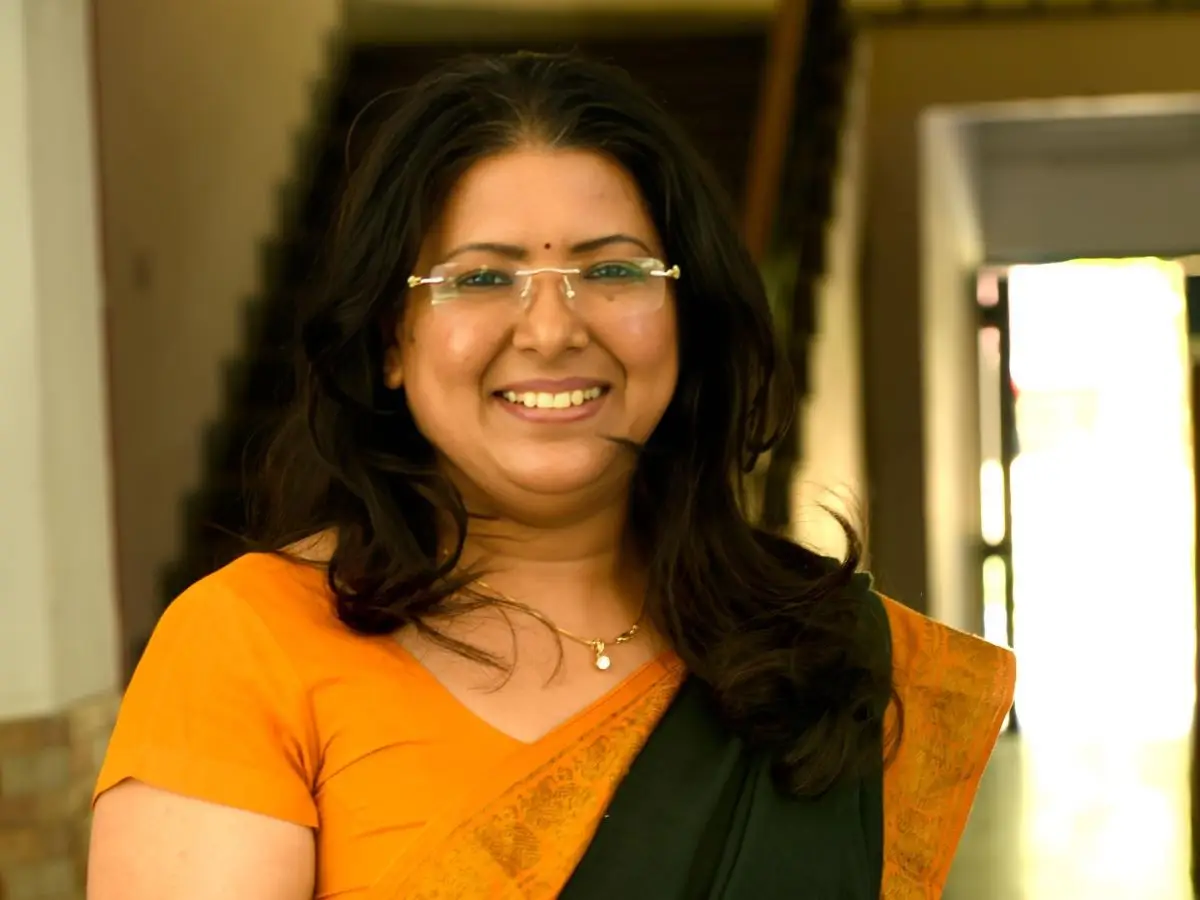
We discussed this with Shalini Bhalla, founder of the International Council for Circular Economy (ICCE), author of the first book published in India on the circular economy (Circular Economy. (Re)emerging Movement) and editor of India's first publication on the subject, the Journal on Circular Economy.
When did the concept of circular economy officially enter India?
The concept of Circular Economy has, in fact, been an intrinsic part of Indian culture for centuries. Our traditional practices—from reusing old clothes to repurposing containers and minimizing waste—reflect the core philosophy of keeping materials in use for as long as possible. This deep-rooted cultural mindset finds modern expression in Mission LiFE (Lifestyle for Environment), which is inspired by our age-old wisdom of mindful consumption and resourcefulness. However, in terms of formal recognition, legislative support, and broader mindset change, a significant milestone came in 2020. That year marked a pivotal moment when Prime Minister Narendra Modi and European Commission President Ursula von der Leyen signed a joint declaration announcing collaboration between India and the European Union on Circular Economy. This moment set the stage for structured dialogue, knowledge exchange, and policy integration around circularity in India. Since then, the government think tank NITI Aayog (National Institution for Transforming India) have been instrumental in accelerating this transformation. Their work in streamlining waste streams and prioritizing sectors for circular interventions has propelled initiatives across various industries—from construction and electronics to textiles and agriculture. The Indian government has also been actively evaluating and implementing policy measures that embed circular economy principles into the national development agenda. The momentum we are witnessing today—whether through industry roadmaps, academic integration, or public-private collaborations—is a reflection of this evolving commitment. So, while the circular economy is not new to India culturally, its formal entry into policy and strategic discourse can be traced to 2020, a year that catalyzed both national and international cooperation on sustainable transformation.
Is there any data on India's circularity rate?
As of now, there is no single report that provides an exact circularity rate for India. Unlike the global circularity rate of 7.2%, calculated by Circle Economy, India’s material circulation is more complex to quantify due to its vast informal sector and diverse waste management systems. However, several indicators suggest that India’s circularity rate is likely higher than the global average, much like other emerging economies. India has had a thriving recycling industry for the past 40–50 years, driven not only by formal businesses but also by a robust informal sector. This sector plays a crucial role in keeping materials in use for as long as possible, ensuring that materials with even modest economic value are collected, repurposed, or recycled using existing technologies. From scrap dealers and kabadiwalas to local repair shops, these decentralized actors form the backbone of India’s circular practices. If India builds upon this foundation by promoting circular business models such as rental, resale, and repurposing through favourable policy measures – including tax incentives, subsidies, or regulatory support – it could unlock significant green job opportunities, reduce dependence on virgin raw materials, and strengthen a parallel economy that not only supports livelihoods but also contributes to environmental sustainability. In essence, while the exact circularity rate is yet to be formally documented, India stands at a strategic advantage. The convergence of long-standing grassroots practices and emerging policy focus gives India a unique opportunity to craft a circular economy model that is both inclusive and regenerative.
If the informal sector is the starting point, what role can women's empowerment play in the development of the circular economy?
That is a good question. In countries like India, and many others, a lot of women today are taking a leading role in sustainability and circular economy. While there is a portion of the female population that needs support and empowerment awareness, women in the metropolises actually lead many companies and sit on boardrooms. Essentially, India is divided in two: on the one hand, there is urban India, where women work and are educated, and play almost equal roles to men; on the other hand, there is rural India, where there is still a lot of work to be done on women's empowerment.
There has been a lot of talk lately about Viksit Bharat, Narendra Modi's grand design for India's development. What does this plan consist of?
Viksit Bharat is one of the main drivers of the Indian economy right now. Viksit means development, and the vision is to transform India into a self-sufficient and prosperous country by 2047, the year in which the 100th anniversary of the nation's independence will be celebrated. The first objective is therefore an India in which the majority of the population is pulled out of poverty, in which everyone has a home and a minimum wage. To this end, the government has already started to adopt a number of policies. For instance, the Pradhan Mantri Awas Yojana, a government credit plan to supply all families with subsidies for decent housing or loans to build a house. Nowadays, exploring rural India, you discover that most people are moving from kutcha, traditional houses made of mud, to safer brick dwellings. The second goal is clean sanitation. The Swachh Bharat Mission (or Clean India Mission), launched by the government back in 2014, is first committed to eliminating open defecation, and then to making rural and urban India cleaner and greener through proper waste management. The third initiative concerns the development of quality infrastructure for the population, in particular roads, highways and an extensive railway network. A recent report suggests that 75 percent of the infrastructure development in Indian cities has yet to be completed. So we can imagine how much work still needs to be done and how many projects will need to be implemented in the coming years to make Viksit Bharat a reality and not just a vision. It is a big challenge, but I believe we are on the right track.
Does the plan also include initiatives for the circular economy?
Yes, there are a number of policies designed to ensure that this development does not take place at the expense of the environment, but rather that it will be a sustainable and circular development. In the infrastructure sector, for example, the relevant ministry is considering the reuse of construction and demolition waste. How can they be harnessed? How can a modular approach be introduced in the construction sector so that decommissioned buildings can be reused again and again? How to extend the lifespan of buildings, how to reuse land after demolition, how to increase green procurement in different sectors are also being examined. Regarding the circular economy, the think tank NITI Aayog has formed 11 subcommittees for different sectors and different waste streams. These subcommittees have been working on management strategies that fundamentally resemble European end-of-life schemes, but also focus on waste reduction. Analysing the strategy reports supplied by the subcommittees, the government has therefore identified five priority areas on which it is now developing circularity policies.
Do these policies include the application of extended producer responsibility schemes?
EPR is currently applied in India to five different sectors: plastics, tyres, e-waste and batteries, waste oil, textiles. In the coming years, however, the schemes will be extended to other sectors. In addition, the EPR for plastics includes the obligation to reuse 30 percent recycled plastic in new bottles (PET-to-PET), hence taking a step beyond simple collection and handling obligations and helping to reduce dependence on fossil fuels.
The rapid development of renewable energies in India will also mean having to deal with the end-of-life of solar panels in the next few years. Are there already initiatives for the so-called “solar circularity”?
India does indeed have a target of reaching 500 GW of installed renewable energy by 2030, and we are working hard towards that. At the same time, we are considering how to recover the materials of the panels already installed today, which have a life span of 10-15 years. Let's say that the government is fully aware of the problem and is looking for the right innovation.
What will be the biggest challenges in the coming years in the development of India's circular economy?
Without a doubt, the first challenge is policies. Most of today's policies, not only in India but globally, focus on end-of-life management. But we need more policies that focus on the design phase, promoting sustainable design. Instead of managing their own waste, industry should start considering how to design out waste. The second challenge definitely concerns recycling technologies. In India, there is a huge informal sector that has been involved in recycling for decades, but the technologies are old and the value that can be extracted from materials is minimal in comparison to what could actually be obtained. New technologies, such as chemical recycling, could generate much more value and increase the recycling rate, but investment in innovation is needed. And then there is the chapter of skills: to implement policies, you need people capable of doing so. That is why it is necessary to focus on training, communication, and experience in the field, incorporating these aspects into the new startups emerging in this sector. Our organisation ICCE works specifically on these aspects: innovation, training, advocacy. We train young people in the principles of the circular economy, we inspire companies and startups to adopt circular models, we encourage the implementation of new technologies and innovations for the sector and, at a macro level, we advocate for the establishment of circular policies.
You also publish a magazine, the Journal on Circular Economy. And so, as one colleague to another, I would like to ask: what impact do you have on society, the economy and politics?
We recently published an impact statement to give an account of our work over the past four years: the countries in which we have established ourselves, the cities involved, the training courses organised, the startups and companies helped. We have created something extraordinary, especially considering that we started in a situation that was not easy, during the lockdown. The response we receive from both industry and policymakers is great to see, and our work has been recognized by organisations and institutions in India, and abroad. In short, what we have managed to do so far, is simply fantastic, but it also calls for a well-defined and structured work further in future.
Cover: Shalini Bhalla