



While, contrary to popular belief, the famous Chinese anathema ‘May you live in interesting times’ is not Chinese at all, 2025 has certainly been a decidedly “interesting” year for Asia (also). The first twelve months of the Trump presidency, as feared, wreaked havoc in the region, as in the rest of the world, redefining trade balances and strategies. But the tariff war was only one of the destabilising elements of this turbulent Asian year.
The year of the Snake, as per the textbook, turned out to be a time of major transformations, between street revolutions, elections, regime changes, interim governments, rekindled tensions and threatened conflicts. And despite the fact that the cauldron is still simmering, at least one winner can be identified in the youth movements that thwarted the coup d'état in South Korea and challenged regimes and corruption in countries such as Bangladesh (already in 2024), Nepal, Indonesia and the Philippines (and is also doing so under the radar in China): the Generation Z, considered apathetic and detached, which instead proved capable of getting off social media and hitting the streets to protest and nail politics for its shortcomings.
The loser is international diplomacy “as usual”, which will need to find new ways of functioning in a world that is economically interdependent but with often fickle leaderships. As for the region's economic growth, the Asian Development Bank has recently revised its estimates upwards to an overall 5.1%, largely due to the unexpected boom in domestic consumption in India, but a slowdown to 4.6% is already forecast for 2026 as a result of the backlash from tariffs. In the certainty that 2026 will also be a rather interesting year, here is therefore a summary of the Asian 2025.
Leadership changes
To account for the merry-go-round of changes at the top that has affected the Asian continent over the past year, let us begin with those who have not changed for a good 60 years. In May, parliamentary elections were held in Singapore, called in advance by Prime Minister Lawrence Wong, leader of the People's Action Party, which has ruled the country uninterruptedly since independence in 1965. Wong, directly appointed by his predecessor, the resigning Lee Hsien Loong, was seeking confirmation. And he got it: the PAP obtained 65.6% of the votes, further boosting its consensus in the small Southeast Asian state. Credit also goes to the resolute stance taken by Wong – a US-trained economist and former finance minister – in the context of the tariff war, which, despite having affected Singapore much less than other countries, is still a source of great concern for a mainly export-oriented economy.
Decidedly more turbulent was the path to the June elections in South Korea. After the attempted coup d'état of former president Yoon Suk-yeol in December 2024, immediately foiled by the almost total opposition of parliament and an immediate popular uprising (to the beat of K-pop!), the general election for the new president resulted in the victory of Lee Jae-myung, leader of the Democratic Party and former rival of Yoon, now on trial for insurrection and treason. However, despite the admirable popular reaction a year ago, Korean society still appears divided, with the right wing gaining a foothold among the youth by focusing on anti-Chinese sentiment, as seen in the street demonstrations during Xi Jinping's visit at the end of October.
China's other historic rival, Japan, likewise held elections on 4 October 2025, delivering victory to the country's first female leader, the “Iron Lady” Sanae Takaichi. Considered the dauphin of Shinzo Abe, Takaichi belongs to the more conservative current of the Liberal Democratic Party (LDP): she is against many social reforms, rigid on immigration policies, but rather flexible on investments and monetary policies, a crucial feature in the delicate international economic contingency. Unfortunately, her nationalist positions have generated new tensions with China on the Taiwan issue. And so, compared to the spring of 2025, when Trumpian tariffs seemed to have led to a historical rapprochement between China, Japan and South Korea, the end of the year brings us back to the rivalries of all time.
Interim governments and upcoming elections
Some, instead, are preparing for the impending elections. Both the citizens of Bangladesh and Thailand are going to the ballots in February 2026, but they are approaching it from quite different situations.
In Bangladesh there is currently an interim government led by Nobel Peace Prize-winning economist Muhammad Yunus (the “banker of the poor”), appointed in August 2024 after the resignation of former prime minister Sheikh Hasina. Hasina, who led the country with an authoritarian fist for 15 years, was forced to flee to India by large-scale popular protests started by students in July 2024 to denounce corruption and cronyism. The verdict of the Bangladesh International Crimes Tribunal against the former prime minister, guilty of causing 1400 deaths in the suppression of the riots, was delivered in November: death sentence. But India, as expected, refused to grant extradition. Meanwhile, on 21 December, in Dhaka, hundreds of thousands of people attended the funeral of Sharif Osman Hadi, the student riot leader murdered on 18 December during his election campaign. Now, the country is once again simmering: certainly not the best climate to reach the electoral round on 12 February, when the Bengalis will also be called upon to vote in the referendum on institutional reforms.
In Thailand, interim Prime Minister Anutin Charnvirakul called for early elections on 8 February. For several years, between coups, military regimes and leaders in exile, Thai politics has not found peace. The last prime minister, Paetongtarn Shinawatra, daughter of the telecommunications tycoon and former exiled premier Thaksin Shinawatra, was suspended from office in July following an obscure phone call to Cambodian Prime Minister Hun Sen. Paetongtarn Shinawatra had in turn taken over in 2024 from Srettha Thavisin, then dismissed by a ruling of the Thai Constitutional Court. The elections now come in the midst of a low-intensity conflict with Cambodia, which despite the agreement signed in Kuala Lumpur in October under the patronage of Donald Trump, has resumed in December along the border between the two countries. A political instability that certainly is not good for Thailand's economy which, with a growth rate of 2%, is now the “slowest” in the whole of Southeast Asia.
Gen Z hits the streets
Also heading to elections in 2026 will be Nepal, which concludes a truly revolutionary year. The protests of Nepal's Generation Z, which erupted at the beginning of September, were first described (at least in Western media) as an uprising of kids angered by the blocking of the most popular social platforms. The discontent, in reality, had been brewing for some time, and young people found in social media not only an outlet, but also a means of circulating information about corruption, bad governance and the shameless display of luxury by the ruling class. Nepo babies have since become the symbol of an inequality that is no longer bearable, especially in a country where the majority of the population struggles to get out of poverty, where social mobility is practically non-existent and emigration is often the only viable solution. Thus, when the Kathmandu government announced the shutdown of 26 social networks on 4 September, Gen Z exploded. Also inspired by the example of Bangladesh, young Nepalese took to the streets in their student uniforms, quite literally setting the capital on fire. The result was 75 dead, hundreds injured and the resignation of Prime Minister K. P. Sharma Oli. The current interim prime minister Sushila Karki, former head of the Supreme Court, was chosen through an online consultation on Discord, virtually the gamers’ own WhatsApp. Elections are now expected in March 2026: former prime minister Oli is running again, but may be facing Kathmandu mayor Balendra Shah, who is young, anti-conformist and a former rapper (just like Zohran Mamdani).
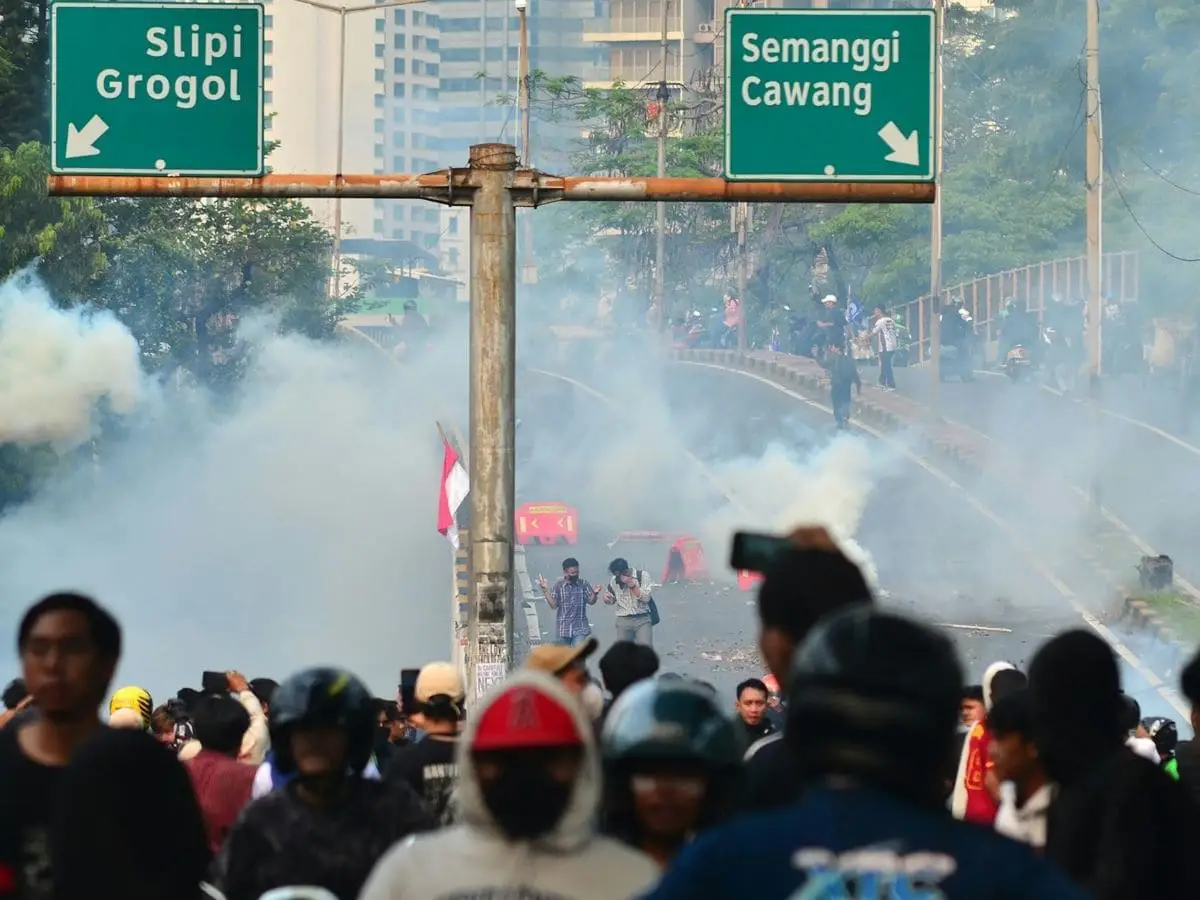
If Nepal was the most striking case, the Gen Z protests have, nevertheless, also shaken other parts of Asia. While Bangladesh, as mentioned, is again in turmoil; young people in Indonesia mobilised as early as spring to protest against Prabowo Subianto's policies, public spending cuts, the attempt to expand the role of the military in national politics, unemployment and the exploitation of workers in the gig-economy.
In the Philippines, meanwhile, youth protests erupted in November following a scandal related to flood funds, to which the island state, due to the climate crisis, is increasingly prone. 650,000 people took to the streets of Manila to hold President Ferdinand “Bongbong” Marcos Jr. to account for billions of dollars apparently vanished into thin air.
In short, Gen Z has awakened. And what has happened over the past year in Asia (but not only there, consider Madagascar, Kenya, Peru) is a sign of the descent of a new overwhelming political force that no country can afford to ignore any longer. Including emerging giants like India or solid titans like China (but we will talk about that soon).
Cover: Protests in Jakarta, Indonesia. Photo by Iqro Rinaldi, Unsplash