

In just a few years, critical raw materials (CRMs) have become the true bottleneck for Europe’s green and digital transition. Lithium, cobalt, rare earths, gallium, germanium – without these materials, there are no batteries, electric motors, semiconductors, or wind turbine blades. The Critical Raw Materials Act, in force since 2024, set three benchmarks for 2030: 10% of EU needs met through domestic extraction, 40% through processing, and 25% through recycling. However, the gap between ambition and reality remains wide, particularly regarding finance. Europe is slower than the United States, China, and the Gulf states to mobilize capital for a supply chain characterized by a unique risk profile.
Against this backdrop, EIT RawMaterials – the platform of the European Union that catalyzes innovation and industrialization across raw material supply chains – plays a pivotal role. We discuss this with Luca Meini, member of the Executive Board of EIT RawMaterials.
Let’s start with the mission. What does EIT RawMaterials do, and along which lines does it operate at the European level?
EIT RawMaterials is a platform tasked with catalyzing the European Union’s strategy on critical raw materials. It operates in four areas. The first is awarding grants, essentially funding innovation. Consider for instance Itelyum, the company that built a pilot plant near Frosinone, in Italy, for recycling and separating rare earth elements from magnets: they developed that pilot project using an EIT RawMaterials grant. The second area – one that is not always immediately associated with the organization – is that EIT RawMaterials manages the European Raw Materials Alliance, that encompasses all strategic European projects, and it is tasked with supporting them. It does not provide direct funding itself but facilitates access to finance and assists with project structuring. We are talking about large-scale investments that can involve hundreds of million euros, such as the El Moto project in Spain about tungsten – a material used in the defense sector – or the rare earth refining plant in Pulawy, Poland. The third area – the most recent and interesting one – is something that functions like an investment fund, involving direct equity investments. This represents a leap forward and we are investing in various companies. A recent example is E-Magy, a Dutch firm developing nanoporous silicon to replace graphite in lithium batteries: an innovative material that helps reduce a major dependency. The fourth area is education and training: building skills, encouraging students to enroll in mining-related degree programs, and raising the professional standards of the existing workforce.
On the equity fund: is it truly a break from the past?
It represents a qualitative leap in the direction of the EU needs. When reading the news, the distinction is not always apparent: we are not talking about grants, but rather genuine equity investments. The raw materials sector has a very different risk profile compared to manufacturing. There is the so-called Lassonde curve: perceived value peaks at the time of discovery, plummets during the permitting and industrialization phases, and finally rises again. But one must cross that valley, and that requires expertise in risk management. Price volatility is not a risk in itself; the real risk is failing to complete the project or to achieve competitive production. It is a matter of culture as much as of resources.
How does Europe compare to other major global players?
Every country is acting, each in its own way. The US established the National Energy Dominance Council to coordinate the efforts of various agencies regarding critical materials. For example, the Development Finance Corporation is partnering with the private fund Orion Resource Partners within the consortium, that is in turn negotiating the acquisition of copper and cobalt assets in the Congo. Saudi Arabia has Manara, a joint venture backed by the PIF. Manara is designed both to conduct business abroad and to develop domestic mining supply chains. China employs a long-term strategy regarding CRMs that is extremely well-orchestrated. Compared to the past, there is a universal push toward greater governance centralization and it has also become very much of a matter of intelligence: recognizing an opportunity at the right moment and having the agility to mobilize industrial players and financing. The United States is faster, particularly in finance. Europe always appears somewhat small-scale and insufficiently swift, although the funds are available and we are pushing in the right direction.
Let’s turn to Italy. If we were to take a snapshot in July 2026, how would the CRMs sector in our country look like?
Italy has recently established and made operational the "Made in Italy" investment fund, similar to the financial vehicles in place in France and Germany. Moreover, ENI has also invested in two major companies, one for natural graphite in Canada and the other for lithium in Chile. Significantly, however, the Italian strategic projects approved to date within the European framework are all linked to recycling. Comparing Italian projects with those of other countries, we are the only ones with this specific focus on recycling, This fact is tied to our recent history: we lack a tradition of mining, and this is precisely what is being addressed now.
What are the most promising segments in the medium term – over the next five to ten years?
There is an important aspect, often overlooked in Europe: refining. Refining infrastructure already exists, and it is crucial because there some materials are not directly mined but rather obtained as by-products during the process. Aluminum refining yields gallium, used in semiconductors; zinc refining yields germanium and indium, essential for infrared technology and other applications. Thus, a seemingly unnecessary infrastructure enables access to other strategic materials. Gallium and germanium, for instance, were subject to export restrictions by China, with serious consequences. Refining is crucial for Europe today. Then innovation will help: the substitution of raw materials could accelerate significantly, and here the EU and EIT RawMaterials may start from a more favorable position, with respect to traditional mining investments.
It is striking how little this topic is discussed in major newspapers, given its strategic importance. Is there a problem with the narrative?
There is a lack of fundamental knowledge that affects both public debate and professional training. Rare earth elements are often used as bogeyman, yet people often fail to grasp the differences between the various critical materials involved. These are complex issues requiring in-depth analysis: explaining why things unfold the way they do and understanding rational behind each country's strategy. A headline about an acquisition always makes for a good story, but one must also determine whether the move is practical and sustainable. Moreover, these are long-term endeavors that cannot be improvised as they span fifteen, twenty, or thirty years. Today, the real issue today is not the general debate, but rather implementation, turning investments into concrete reality. Knowledge and training are deeply interconnected to investments. Speaking with Australians or Canadians makes it clear: mining is immediately apparent as it is in their DNA. Here industry is still viewed through the lens of the 19th-century miner, while today everything has improved. It is the same old paradox: people want products but they do not want to know where they come from, much like wind turbines, which no one wants in their own backyard. You can recycle all you want, but some raw material extraction remains essential. We need to act on all fronts. It is not merely a matter of culture, nor is it just about money, since funds are available also in Europe. What is missing is the ability to move from strategy to execution. Having funds is not enough; you need governance, intelligence, and rapid implementation.
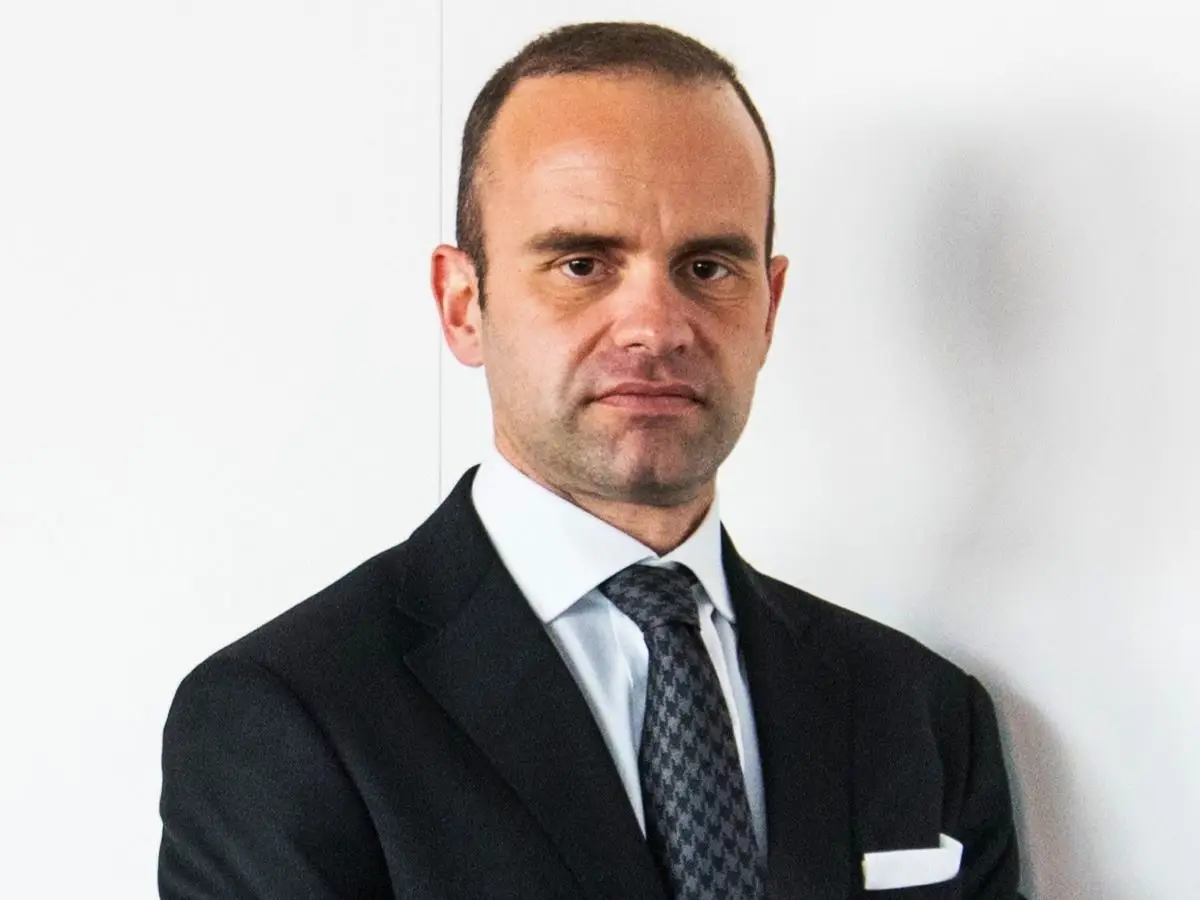
Cover: Luca Meini