

This article is part of the thematic channel The Carbon Observer: subscribe to the newsletter
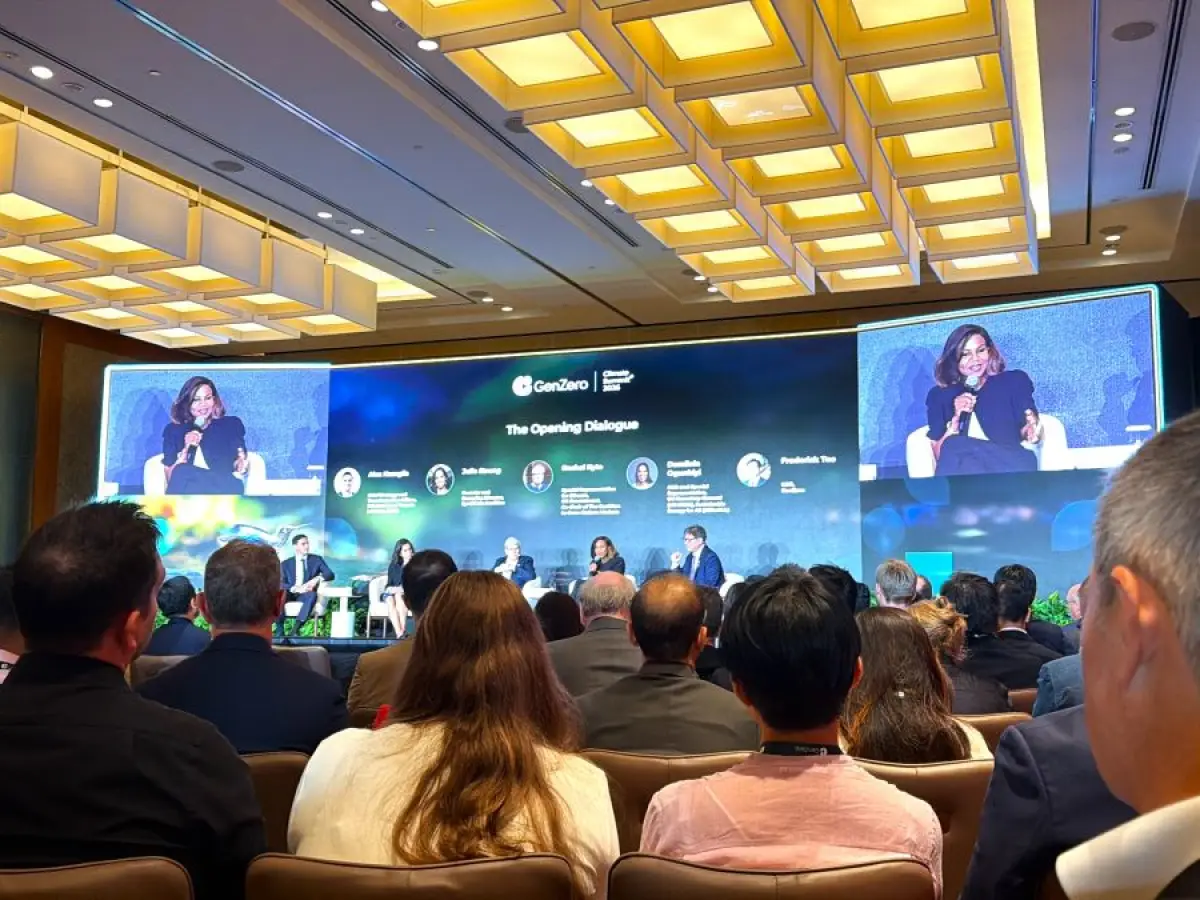
During the week of May 18 to May 23, I was in Singapore for two of the most important carbon market events of the year: Ecosperity and Innovate4Climate. And honestly, one moment really stayed with me. During the opening ceremony at Ecosperity, I was genuinely impressed by the keynote speech from Mr Alvin Tan, Minister of State at Singapore’s Ministry of Trade and Industry.
To be honest, I am usually not a big fan of government speeches at carbon market events. Too often they feel disconnected from the reality of the market itself: generic climate ambitions and broad political statements, but limited understanding of how carbon markets actually function in practice.
This felt completely different. What impressed me was not only the content of the speech but also the energy and enthusiasm around carbon markets and Article 6. I honestly do not remember many speeches from political leaders where support for carbon markets was expressed so clearly and directly.
Singapore was presented as a platform, a partner, and a connector capable of helping to build the trust and credibility that carbon markets urgently need. There were announcements around investments, international coalitions, market infrastructure, digital systems, and a very explicit willingness for Singapore to become one of the global leaders of the carbon market ecosystem. After spending the week here, I think this ambition is real and achievable.
At one point, while describing the role of technology and digital infrastructure in scaling carbon markets, Minister Tan unexpectedly mentioned Iron Man as his favourite superhero when he was a child. Not because Tony Stark is cool, but because of the arc reactor in his chest: energy, technology, engineering, and innovation. The story revolves around the idea that technology can help solve problems that initially look impossible. And honestly, the analogy felt surprisingly accurate for Singapore itself.
Singapore is no longer trying to understand whether carbon markets will matter in the future. It is already acting as if it will become part of the future global economic infrastructure. Carbon is still a relatively new commodity, and, for years, many people in this sector have reiterated the same idea: if carbon markets want to scale, they need to evolve more like financial markets. They need transparency, standardisation, trust, infrastructure, liquidity, and international connectivity.
The good news is that carbon credits are not physical assets. They do not need warehouses, factories, or roads. What they really need is confidence, robust systems, and institutions capable of building market infrastructure. And this is exactly where Singapore already has decades of experience. The country has already demonstrated how to build one of the most powerful and internationally connected financial hubs in the world.
What also impressed me this week was the level of commitment visible across the ecosystem. Singapore is investing everywhere: in project developers, registries, coalitions, country readiness programmes, digital MRV infrastructure, financial platforms, and, most importantly, Article 6 implementation and cooperation with countries that want to build an efficient and scalable global carbon market.
Beyond that, Singapore is also actively welcoming startups and international companies to relocate and scale through important incentive schemes designed to accelerate innovation and market development. And they are doing all of this during one of the most difficult moments the carbon market has experienced in years.
Many companies today are struggling. Revenues are under pressure, and a large part of the ecosystem is burning cash while waiting for demand, clarity, and scale to arrive. But what I felt in Singapore is that many stakeholders here are looking at the market from a completely different perspective.
If you truly believe carbon markets will become part of the future global economic system, then short-term volatility becomes secondary. You build before the market fully arrives. You invest before everything is fully de-risked. You focus on the long game.
The conference itself and the quality of the panels were excellent. But I think the most important signal was not only inside the conference rooms: it was the atmosphere around them. You could feel the energy of people who were not simply competing against each other, but genuinely wanted to make the carbon market work.
Almost the entire carbon market ecosystem was in Singapore: governments, registries, standards, project developers, investors, technology providers, coalitions, corporates, rating agencies, and multilaterals. And, honestly, many people are probably going home with something the market badly needed: positive energy and the feeling that maybe we can actually build this market together. But to reach that point, the ecosystem also needs to evolve.
Too often, carbon markets still behave like a fragmented collection of tribes, with everyone trying to prove they have the best project, the best methodology, the best technology, the best monitoring system, the best coalition, or the best fund. But if the market itself does not grow, eventually everybody loses.
What happened this week in Singapore felt different. Less ideological, more practical, and more aligned with the spirit of the conference itself: moving beyond a binary way of thinking and focusing on building the ecosystem together.
Maybe that is the real Iron Man analogy. Not the superhero himself, but the mindset behind it: engineering systems, building infrastructure, solving complexity, and having the courage to invest in the future before the rest of the world fully sees it. In carbon markets, vision and consistency are everything. If you are not consistent, you will never succeed. And I know this from experience. I look forward to coming back to Ecosperity in 2027 to see what progress the ecosystem will be able to achieve over the next 12 months.
Cover: photo by Andrea Maggiani