


Yerevan - Finance for biodiversity is at the heart of COP17, both in the political negotiations and in the growing role of private finance. The latter was discussed primarily at side events hosted in the pavilions of several countries and international organisations. Investments in nature and the impacts of biodiversity loss are increasingly central to the private sector, particularly for banks and insurance companies. While this trend may take a back seat to the negotiations, it is proving vital for biodiversity conservation and restoration projects.
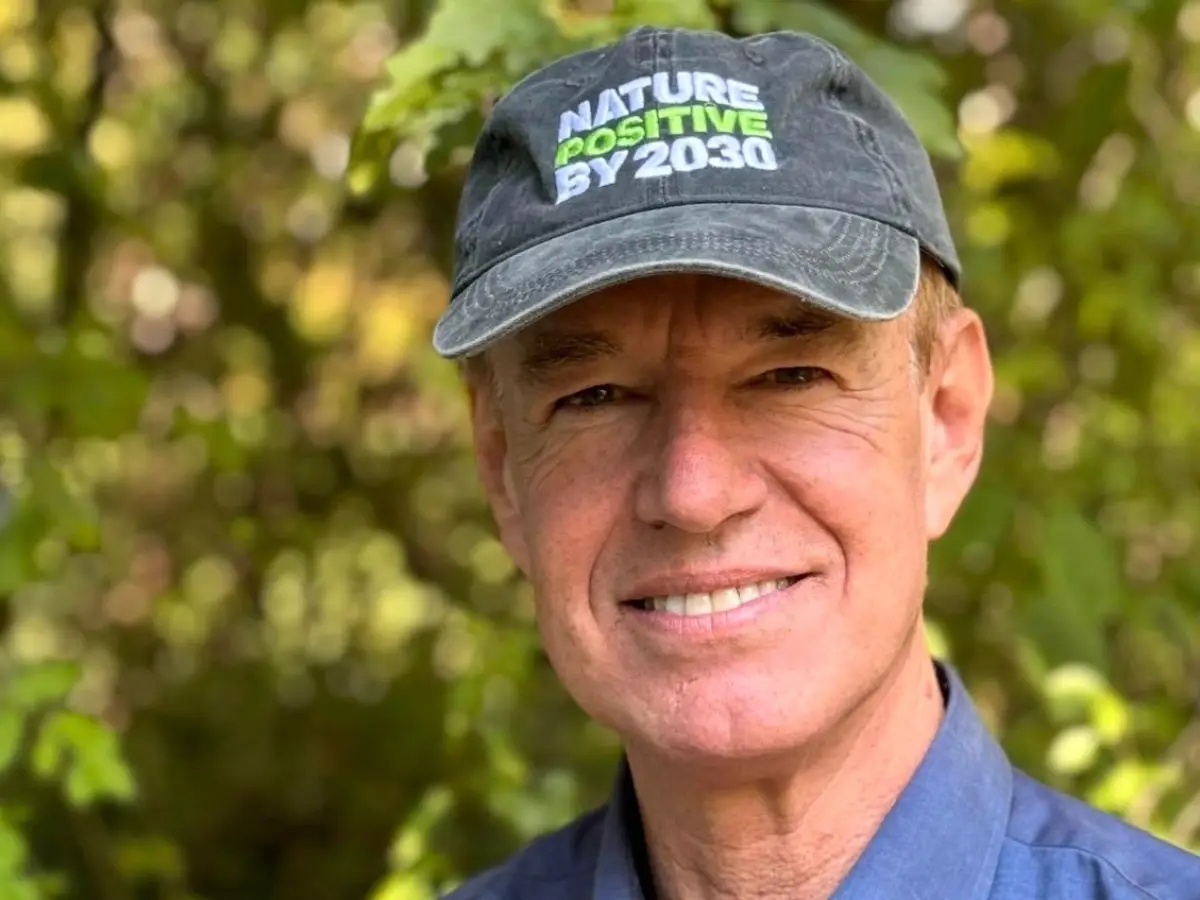
In Yerevan, we discussed developments in biodiversity finance with Marco Lambertini, former Director General of WWF International and current Executive Chair of the Nature Positive Initiative, an alliance established to make measurable and operational the global target of reversing nature loss by 2030.
The target of mobilising $20 billion in international finance for biodiversity by 2025 has stalled at around $16 billion. Is this a delay that can be made up for, or a sign of growing difficulties for governments?
First and foremost, we must recognise that having got this far is already a good result, because never have so many resources been allocated to biodiversity as today. Since the adoption of the Global Biodiversity Framework in 2022, funding has increased. Admittedly, we are not on track to meet the target, but there are still four years to go before 2030. There is also the question of how the funds are defined: the $20 billion consists mainly of official development assistance. This figure excludes investments from which nature may benefit indirectly but which are often not counted, for example, private investments aimed at modernising supply chains and making them more sustainable. Consequently, I have the impression that more is being done than the figures suggest.
With the Yerevan Call on Target 18, the COP17 presidency is giving new impetus to the reform of environmentally harmful subsidies – a reform promised for years by governments and called for by businesses and financial institutions. Why is the private sector ahead of the game?
The issue cannot be reduced to a clear-cut dichotomy. The current subsidy system is a legacy of the post-war period, when in Europe the economy and food security were in a dire state, and the bulk of resources went towards energy and food. That system made sense at the time and should not be demonised, but it supported an energy and agricultural model that today shows clear limitations. It is not a question of abolishing subsidies, but of redirecting them towards the energy and food transition, even more so when energy prices are soaring. The climate crisis is affecting all sectors, particularly industrial agriculture, while regenerative agriculture is proving far more resilient. This summer, in the rice fields of northern Italy, many farms had below-average harvests. The few that had adopted regenerative agriculture were the exception, as the soil retained moisture for longer and the plants withstood the heat.
Why is the reform of these subsidies not happening?
Mainly for three reasons. The first is the extensive lobbying by the agribusiness sectors. A recent example is the report by Mighty Earth, which reveals that, between July 2024 and July 2026, US companies and industrial groups organised over 350 lobbying meetings with European Union officials in an attempt to weaken the EU Deforestation Regulation (EUDR). The second is the weakness of incumbent European governments, starting with the Italian government. From an environmental perspective, the Meloni government is, in my view, one of the worst we have ever had. This was apparent in the farmers’ protests over the past few weeks, following which funds were allocated to calm the situation, but without any systematic or strategic plan: in a few years’ time, we will no longer be competitive. The third reason concerns voters and political polarisation: people are seeking refuge in a sense of identity, without paying attention to the issues or the sectors that are crucial to our future.
How can banks finance the protection of biodiversity and the reduction of nature-related risks?
This depends on how the private sector, including the financial sector, perceives nature. Previously, it was seen as a matter of public relations and reputation, then as corporate social responsibility. Now, nature conservation is becoming a material and economic issue. Costs linked to nature and the climate, such as disruptions in supply chains and production, are beginning to appear in some companies’ financial statements, while they were not present until a few years ago. When companies realise where these costs are coming from, investors and, above all, insurers start asking questions: where is this cost coming from, and what are you doing to ensure it does not happen again next year? These questions are beginning to affect the cost of capital and even access to credit. Nature and biodiversity are no longer discussed in terms of ethical responsibility, but in terms of financial resilience, credibility and risk profile. Some banks, such as Norges Bank, Triodos and Rabobank, which also finances the agricultural sector, are well ahead of the curve. The European Investment Bank and multilateral development banks are beginning to address these costs, although many other banks are still paying little attention to them. The sectors most at risk, such as the insurance sector, recognise that their business is increasingly vulnerable to crises and are therefore beginning to incorporate the protection of nature and biodiversity in assessment and decision-making.
Ahead of COP17, the Nature Positive Initiative presented the State of Nature Indicators and Metrics framework, distilling over 600 metrics down to four indicators: the extent and condition of ecosystems, extinction risk and species populations. What are the main benefits?
We have not invented anything. Our job was selecting the best indicators, based on credibility and practicality, to help businesses understand their impacts on nature and how to reduce them. Understanding the pressures and impacts is the first step, but then we need to look at concrete results, because if the state of natural ecosystems does not improve, companies’ dependencies will not stabilise and risks will not decrease. The state of nature is, in fact, the ultimate indicator. The four indicators are organised into three levels of detail, and the first is very simple precisely to encourage companies to adopt them. They are designed to answer investors’ questions: is nature stable within my supply chain? Are the ecosystems that provide water or mitigate climate impacts healthy? For most companies today, the key aspects relating to biodiversity is nature’s role in limiting climate impacts and ensuring access to water.
The Taskforce on Nature-related Financial Disclosures (TNFD), the Science Based Targets Network (SBTN) and multilateral development banks are incorporating these metrics. Will they change the way investment decisions are made, or will they remain merely a reporting tool?
Reporting and investment are closely linked. Disclosure exists precisely to answer the questions that investors and insurers are beginning to ask companies: what are your risks and dependencies on nature, what are you doing to reduce them, and what is the state of the ecosystems which you depend on? The data collected is then used by investors and, where regulations exist, by regulators to evaluate companies. These evaluations are already beginning to affect the cost of capital and access to credit. The new metrics will certainly have an impact, because they provide a common language for measuring whether nature is improving or deteriorating, within the supply chains and regions in which a company operate.
Can biodiversity credits become a widespread source of finance?
Biodiversity credits are a new tool that has yet to be fully developed. they can turn out to be a key component of the strategy to reduce impacts and achieve a positive balance for nature, but only under three conditions. The first is the hierarchy of actions: first, one avoids impacts that can be avoided; then one reduces those you cannot avoid; and only the residual impact is offset using credits. For example, take a mine where excavation takes place to extract minerals: that is the impact, and it must be reduced as much as possible before any offsetting takes place. It is not as if a company continues to cause destruction while buying up credits. The second condition is that nature is different from climate. Emissions are all attributable to CO₂, wherever they occur. Nature is instead purely local; it changes just ten kilometres away. This is why the credits used for offsetting must be equivalent: for example, if one damages an oak forest, then one must then protect another natural oak forest, not plant a different species. The positive aspect is that, as these are local actions, it is much easier to verify whether things have been done properly. The third condition is that credits can also be used for actions that contribute to the protection of nature at a global level. In this case, credits can be purchased anywhere, because they do not offset negative actions but they are added to positive global action.
Climate change has made its way into balance sheets and boardrooms, but biodiversity is still struggling. What is needed for it to become “mainstream”?
First and foremost, we need to link biodiversity both to the mitigation of climate impacts and to the water cycle. All sectors need water, and biodiversity is essential for regulating it. Relevance of biodiversity also depends on the sector. For example, fisheries depend directly on fish stocks and their biodiversity. Conversely, agricultural businesses rely on pollination and other ecosystem services, and sooner or later they will see a decline in yields and become more vulnerable to climate shocks if ecosystems deteriorate. This is already happening, as there are companies selling small bumblebee hives to be taken out into the fields to mitigate the pollinator crisis. The protection of biodiversity is intertwined with several environmental and climatic aspects, and this complexity needs to be explained and highlighted.
Cover: Marco Lambertini