


Italy is one of the countries in Europe with the highest seismic and hydrogeological risk. According to the ANIA 2024 report, around 40% of residential properties are located in areas with medium to high seismic risk, while almost 95% of Italian municipalities are at risk of landslides, flooding or coastal erosion. In total, over 80% of residential properties are at medium to high risk for at least one of these events.
Nevertheless, in this context, insurance coverage against catastrophic events is still insufficient. The phenomenon of underinsurance affects not only homes but also businesses: the obligation to take out a catastrophe policy introduced by Legislative Decree 84/2024 addresses precisely this issue. Only 5% of Italy's 4.5 million businesses currently have adequate coverage, with significant differences between micro-enterprises (4%), small businesses (19%), medium-sized businesses (72%) and large businesses (97%).
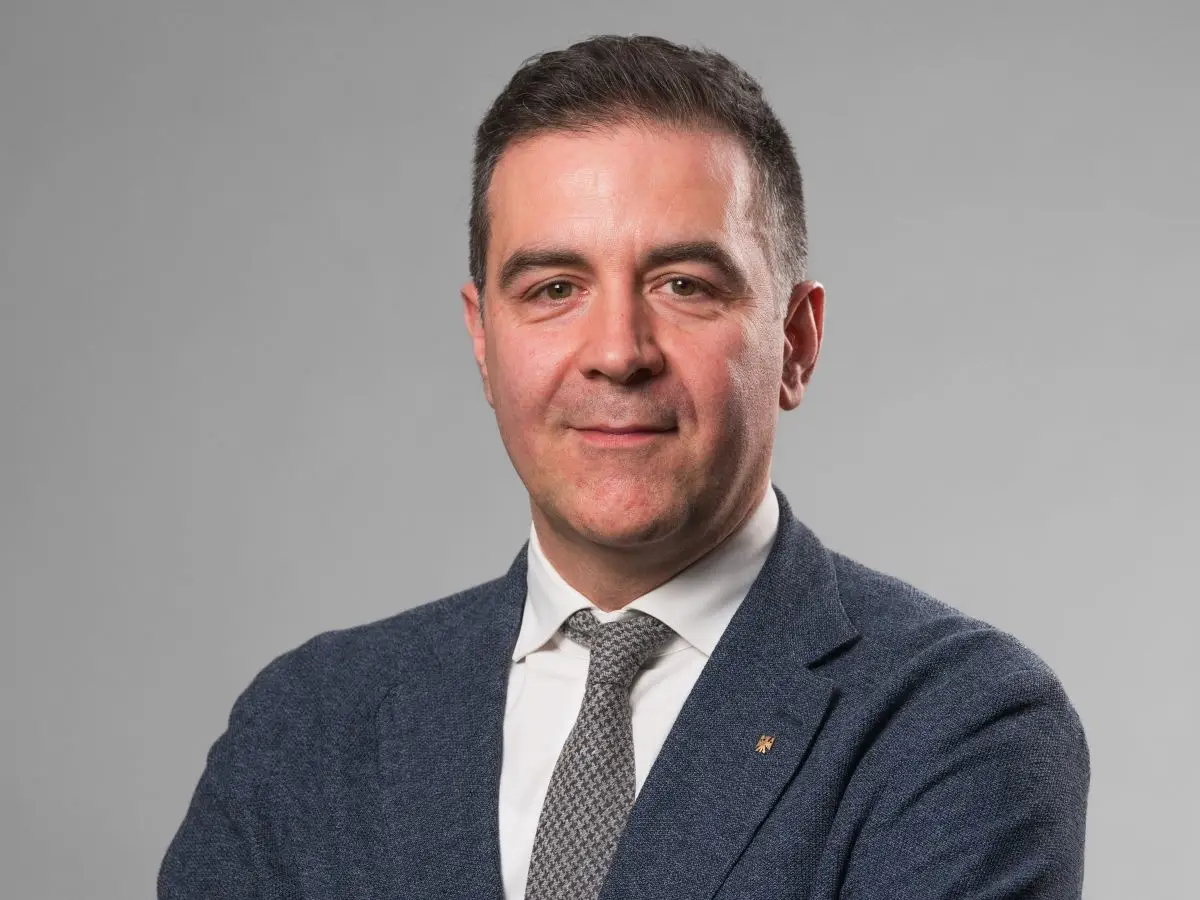
In order to analyse how the insurance sector can contribute to more effective risk management, support the resilience of economic and social systems and encourage greater attention to prevention, we spoke to Massimo Iori, Head of Products and Pricing at ITAS Mutua, Italy's oldest insurance company, established in 1821 in the form of a mutual insurance company.
Iori, let's start with the phenomenon of underinsurance. Is there a reason behind this gap between risk and coverage?
The gap is mainly related to risk awareness, in particular of those with very long return times, such as earthquakes. These are events that people tend not to perceive as real and therefore are not taken into account in their daily choices. In the past, climate change-related events were less frequent and limited to certain areas. Today, on the contrary, people's awareness of these effects is growing. And the more visible, frequent and widespread these effects become, the more the need for protection becomes a real necessity.
Recently, the Milleproroghe (literally translated as Thousand Extensions) Decree introduced an extension for certain micro and small businesses in the commerce, tourism and fishing sectors, pushing back the original deadline of 31 December 2025 to 31 March 2026, whereas for other businesses the deadline remains unchanged. The challenge remains complex in any case. How can we balance the sustainability of premiums and provide adequate coverage?
It is necessary to adopt innovative tools for risk assessment, such as complex statistical catastrophe models no longer based solely on observed data. The next step is to incorporate forward-looking scenarios into these models, particularly with regard to the effects of climate change. The focus, however, must remain on the individual and their needs. It is essential to consider how the insured person adapts to risk and how they perceive it. Insurance products must be designed with these elements in mind, and clarity and simplicity are required to enable individuals to understand their choices and actively participate in risk mitigation. In this regard, a significant part of the action concerns what people, i.e., the insured, can do directly. For example, in the case of floods and landslides, by installing protective barriers, and in the case of earthquakes, by carrying out anti-seismic structural work.
Does this lead to a logic of risk sharing?
All active parties should be taken into consideration. In this sense, insurance companies should also take into account the virtuous behaviour of their members/customers. That means evaluating and recognising actions taken by policyholders and considering them in risk assessment and, consequently, in the final premium. That allows us to say that relationships with people are already evolving, increasingly placing the individual at the centre of the insurance relationship.
One additional point that is often overlooked. Given that the function of the insurance industry is to support and share in the systemic management of risk, information sharing becomes essential. Is ITAS working towards this goal?
Consistent with the requirements of the classification system, we provide the data we have to public bodies and plan to extend this sharing to universities and research centres in the future. There is no doubt that the availability and sharing of information generates value and provides research and the insurance system in general with more tools to understand and manage environmental risks.
One of your stated sustainability goals is to incorporate European taxonomy criteria into the product creation process.
The approach ensures that sustainability does not remain a mere formality, but becomes a tangible, shared and operational element. With this in mind, ITAS is working to classify the guarantees of its product dedicated to catastrophic damage as eco-sustainable and fully aligned with European taxonomy. The component relating to future climate scenarios still needs to be integrated, and will be gradually introduced without placing an excessive burden on premiums once the real dynamics of the market and the distribution of risks have been understood. The latter element is a clear sign of commitment to intergenerational equity. In short, we must take responsibility today to act now so that we do not leave the extreme consequences of climate change as a legacy for tomorrow.
This content is produced thanks to the support of sponsors
Cover: Massimo Iori