


In the global debate on corporate sustainability, environmental initiatives have historically attracted a great deal of attention, joined in recent years by a growing focus on social issues, while too little attention is still paid to the governance structure that brings about this transformation. As Rossella Sobrero points out in an interview with Renewable Matter, it is instead essential to integrate ESG criteria into corporate decision-making processes, from strategy definition through to operational monitoring. This is the case with Aquafil, an international group active in the production of nylon, synthetic fibres and polymers, which began this process almost twenty years ago, long before Europe introduced the CSRD (Corporate Sustainability Reporting Directive).
The history: pioneers of the circular economy
Founded in 1965 in Arco, Trentino-Alto Adige, by the Bonazzi family, Aquafil now operates in 13 countries across four continents. With a turnover of €520 million and a workforce of around 2,200, the group is listed on the Euronext STAR Milan segment of Borsa Italiana and on the US OTCQX Best Market.
Starting in the 1990s, the company embarked on an innovative research and development programme, culminating in 2011 with the launch of the ECONYL regeneration system, a technology for the production of regenerated nylon derived entirely from waste such as old carpets, textile scraps and fishing nets. Products made from this material now account for over 60% of the fibres division’s turnover, whilst over 1,900 brands worldwide use it to create products in the fashion, design and textile flooring sectors.
The group’s sustainability strategy was formalised as early as 2008 with “The Eco Pledge”, a set of five principles that still inspire its activities: rethinking products from a circular perspective; protecting the environment; sharing responsibilities throughout the production chain; safeguarding people’s wellbeing; and supporting local communities.
A multi-tiered system of governance
For Aquafil, sustainability is a priority at every level of governance, from the top down to the operational structure. “The management of ESG issues is structured on several levels and involves both the corporate bodies and operational management,” explains Mattia Comotto, Group Head of ESG and Circular Economy & Sustainability. “At board level, we have the Control, Risk and Sustainability Committee, an internal committee composed of three independent directors, responsible for supporting the Board of Directors in activities related to risk management, internal control systems, and financial and non-financial reporting.”
This is accompanied by a second body within the organisation: the ESG Committee, a management entity responsible for defining and implementing the group’s sustainability strategy. “It consists of eleven permanent members with expertise in environmental, social and governance matters, including the CEO and senior management. It meets quarterly to monitor the progress of ESG initiatives and objectives.”
As defined in the ESG Policy, the ESG Committee supports the Board of Directors in assessing and managing all environmental, economic and social impacts, as well as the opportunities and risks associated with them; it establishes an ESG strategy, setting out timelines and priorities, with the aim of integrating sustainability into all business processes; it monitors the achievement of the ESG objectives approved by the Board of Directors and proposes corrective actions in the event of deviations; it monitors regulatory developments in the ESG field and decides on the implementation of Group rules and regulations.
Supporting this structure is the ESG Manager, who coordinates a network of ESG representatives across the Group’s various offices and functions. “These representatives are responsible for collecting data, monitoring indicators and assessing impacts, risks and opportunities within their respective areas of expertise, thereby helping to integrate sustainability into day-to-day operations,” continues Comotto. “The result is a comprehensive structure that combines strategic direction with operational monitoring, enabling us to track the evolution of key environmental, social and governance indicators in real time.”
Long-term vision: generational shift
Strategic sustainability planning looks to the medium and long term. “In 2021, Aquafil adopted a sustainability plan with quantitative and qualitative targets for 2025, which has guided numerous initiatives, while the company is now developing a new multi-year plan,” explains Comotto.
A new element, particularly relevant to governance, is succession planning for senior management. “The group has defined a policy for the succession planning of senior executives, a structured strategic step to ensure continuity in the organisation’s leadership.” An increasingly central issue for many companies, both in complex and international industrial contexts and within family-run SMEs, where leadership stability is a key factor for the continuity of long-term strategies.
Sustainability integrated into the business model: the results
The governance framework supports a wide range of initiatives across the three ESG dimensions. On the environmental front, as outlined in the 2024 sustainability report, Aquafil sourced 92.3% of its electricity from renewable sources and collected 19,000 tonnes of post-consumer waste. Among the most recent initiatives are a reduction in water consumption of over 20%; the development of an Inventory Management Plan to standardise emissions calculations in accordance with the GHG Protocol; the introduction of a global Water Policy to improve water resource management; and the drafting of a Biodiversity Impact Assessment and a Biodiversity Risk Assessment to evaluate the direct and indirect impacts of the company’s activities, as well as physical and reputational risks, with a view to protecting biodiversity.
On the social front, the company invests in training (32,000 hours delivered), worker safety and the promotion of diversity and inclusion. Moreover, for years Aquafil has been collaborating with schools and universities on educational projects and with local associations, such as Alba Chiara, on issues of primary interest, including gender diversity, intercultural understanding and the prevention of violence. 100% of Italian facilities are covered by UNI/PdR 125 certification for gender equality, while approximately 600 working hours were dedicated to corporate volunteering.
In 2024, no company within the group received sanctions for breaches of the code of ethics or for incidents of corruption. Still on the subject of governance, 44% of the Board of Directors is made up of women, and 670 hours of training in business conduct were provided. The path taken by Aquafil, concludes Mattia Comotto, “shows how sustainability can become an integral part of industrial strategy when supported by solid governance, capable of translating principles and objectives into organisational processes and operational decisions.”
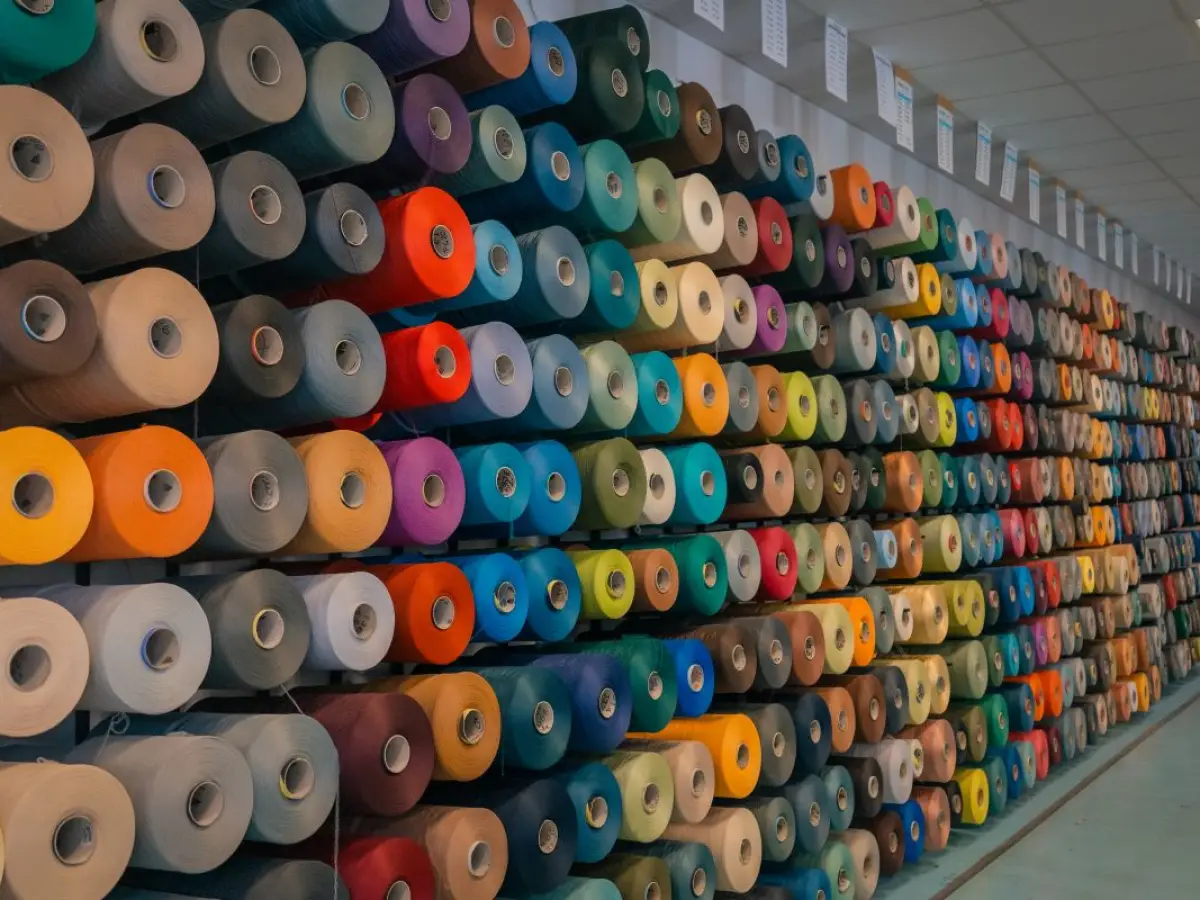
Cover: photo by Aquafil