



It is rare for the anthropological community to choose, with a collective voice, to occupy the public square to intervene in systemic emergencies, abandoning the comfortable detachment of the observer to immerse itself in the fray of political debate. In this regard, the publication of the Anthrofood 2050 Manifesto in January by the European Association of Social Anthropologists' Food Network (EASAFN, 2026) marks a significant discontinuity. This stance does not arise in a vacuum; rather, it is the mature fruit of a journey that began in Milan in July 2025, within the lecture halls of the Università Cattolica del Sacro Cuore. There, during the “Anthrofood 2050” event, dozens of international scholars wove a tight dialogue aimed at overcoming disciplinary fragmentation to respond to a not merely environmental, but profoundly cultural crisis.
The genesis of the document reflects a new awareness: the urgency of focusing attention on the socio-cultural aspects of food, too often relegated to the margins of a public and political debate revolving around purely technical solutions. If we analyse the global food system through the clinical lens of data, the image that emerges is of a mechanism not only jammed but on the verge of collapse under the weight of its own contradictions.
Most recently, the United Nations (UNEP, 2025) described an ecologically unequivocal and alarming reality marked by a structural inefficiency in resource use. For instance, although livestock occupies 77% of the world's agricultural land (including pastures and crops destined for feed), it provides humanity with only 18% of the global caloric supply and 37% of total protein. We stand before a thermodynamic and economic paradox which, in a scenario of continuous agricultural expansion, threatens to obliterate residual biodiversity and deplete the planet's water resources. However, to reduce this epochal crisis to a mere matter of engineering or agronomy is to commit a grave error.
The Anthrofood 2050 Manifesto intervenes precisely in this shadowed space, offering itself as a critical contribution to challenge what Rowan Gibson (2015) would term “orthodoxies”: deeply rooted beliefs that constrain our understanding of food and impede a genuine ecological transition. The document undertakes a systematic deconstruction of these contemporary mythologies. Firstly, it radically contests the notion that food is merely biological fuel, a reductionist view that eclipses the affective, ritual, and symbolic dimensions fundamental to social cohesion and community resilience. Even more incisive is the critique levelled at the rhetoric of the “local”: anthropology warns us of the risk that “zero-mile” food may become an exclusionary fetish, an aesthetic luxury for the few that conceals new forms of elitism and fails to resolve injustices in access to resources.
The crucial knot, the Manifesto argues, is structural injustice. The current food system is not “broken” by chance; in its current articulation, it appears designed to reproduce inequalities of class, race, and gender. To ignore these power dynamics is to propose cosmetic solutions to systemic problems. In this context, the document highlights the vital importance of “care” work: the silent, often invisible infrastructure – from seed conservation to domestic preparation –managed predominantly at the margins of the public sphere by women, the elderly, and migrants. Recognising the political and economic value of this labour is the first step towards a regenerative economy.
Finally, there is a call to promote the intrinsically dynamic and hybrid nature of gastronomic knowledge, abandoning museum-like approaches that attempt to “freeze” tradition: only by accepting miscegenation and evolution can we overcome the growing identity tensions that traverse our societies.
In proceeding with this necessary deconstruction and reconstruction of the alimentary reality, the anthropological community has not limited itself to critique. It has sought to offer readers – be they policymakers, activists, or citizens – a conceptual “toolkit” to read the daily horizon with greater clarity, alongside a precise message on how to act. The invitation is to abandon vertical, top-down logics typical of technocratic approaches that impose solutions from above upon territories they do not know. Centrality is placed instead on horizontal action, comprised of peer relationships between institutions and communities.
It is a matter of replacing directives with listening, and competition with mutuality, abandoning every residue of academic or political paternalism to elaborate solutions together, starting from those who work and live the land daily. We are not facing yet another rhetorical celebration of “small is beautiful” or a naive localism, but a collective request for engagement in a structural dialogue. In this process, anthropology offers itself not as an external judge but as a facilitator capable of building bridges between diverse knowledges. While it is true that technology will furnish the instruments to produce food in 2050, it is culture alone that will instruct us on how to share it correctly.
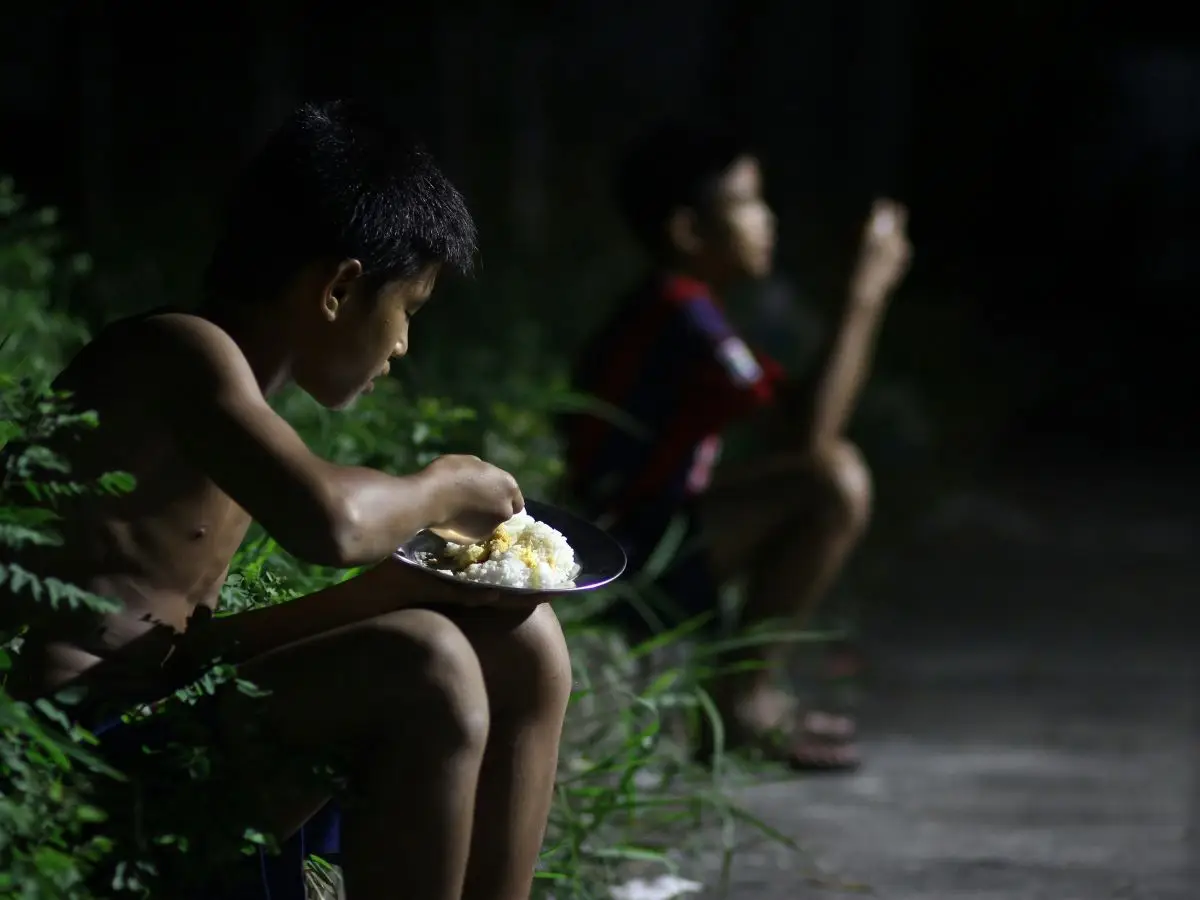
Cover: photo by Jonathan Tomas, Unsplash