
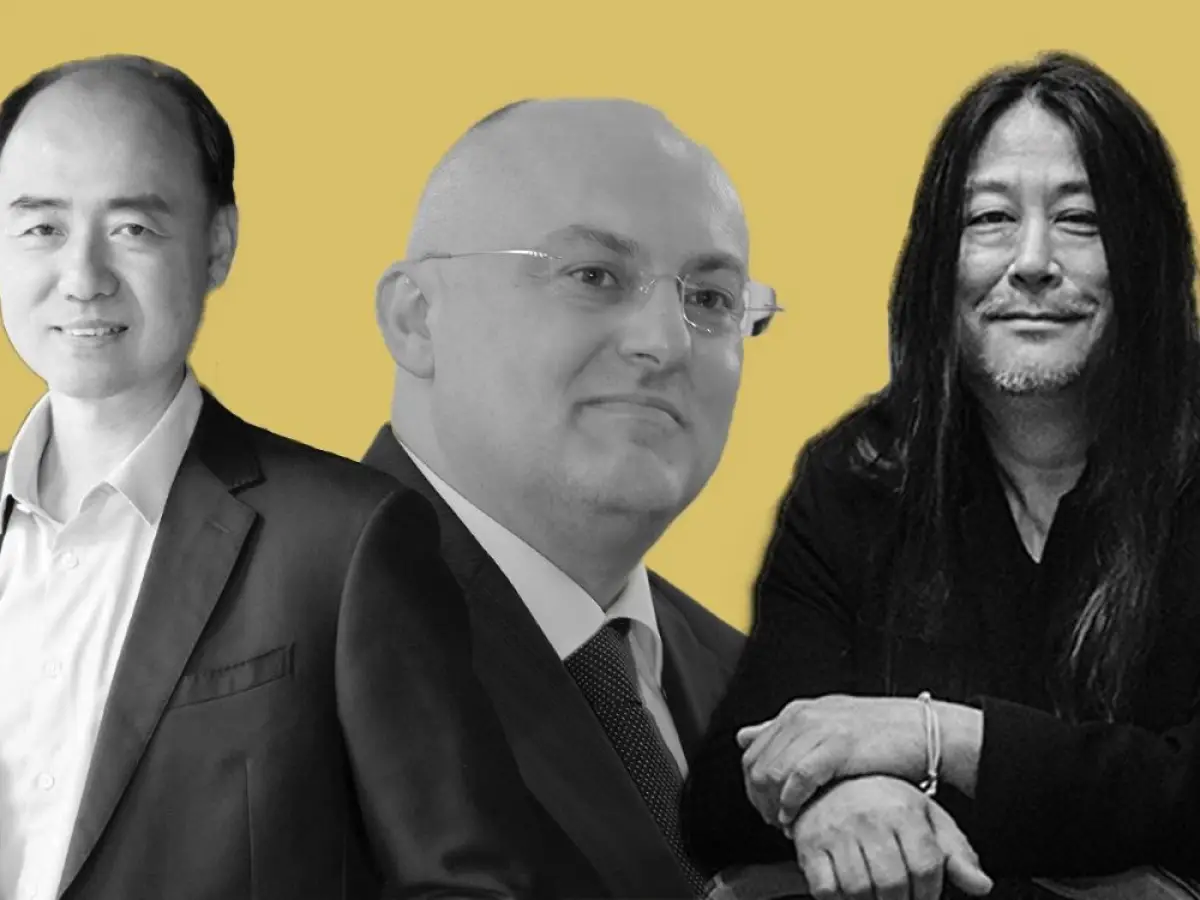

In the 62nd issue of Renewable Matter, we invited three experts to the Think Tank roundtable discussion to offer us an in-depth perspective on some of the key issues facing present-day China, such as climate and environmental policies, cooperation with Europe, and tensions with the United States.
We contacted Ma Jun, China’s most prominent and well-known environmental activist, who spoke to us from the offices of the Institute of Public & Environmental Affairs in Beijing about how the country has shifted, in less than twenty years, from “development at any cost” to “ecological civilisation”. On Sino-European relations, we spoke with Massimo Bagnasco of the European Union Chamber of Commerce in China, and discussed points of friction and common ground upon which to build cooperation between the two parties.
Finally, on the highly heated topic of relations between China and the US, we spoke with Kaiser Kuo, considered today to be one of the most interesting voices on the subject. Below is a preview of the interviews you can read in Renewable Matter #62.
Ma Jun: Data and pragmatism – the Chinese approach to environmentalism
If you visit Beijing today and look up to find a clear blue sky instead of a thick layer of smog, it is partly thanks to him. An investigative journalist and later a full-time activist, Ma Jun is one of the three or four key figures who feature in every account of Chinese environmentalism.
Beginning in the 1990s, with his reports for the South China Morning Post on polluted rivers and toxic industrial emissions, he helped to expose the dark side of China’s remarkable economic development. His investigative book China’s Water Crisis (中国水危机 – Zhōngguó shuǐ wéijī), published in 1999, had an impact comparable to that of Rachel Carson’s Silent Spring in the 1960s, inspiring the birth of a genuine environmental movement.
Ma Jun, however, did not stop at mere condemnation. In 2006, in Beijing, he founded the Institute of Public & Environmental Affairs (IPE), a non-profit organisation that centres all its research and activities on the analysis of environmental data, with the aim of creating extensive and transparent databases to promote collaboration between businesses, institutions and civil society. Together, they seek to find effective solutions.
The Blue Map platform, developed by the Institute, along with all its initiatives and, above all, the results achieved, earned Ma Jun the Goldman Environmental Prize (the Nobel Prize for environmentalists) in 2012, as well as a role in the 2016 documentary Before the Flood, alongside DiCaprio. He, however, remains firmly grounded, because, as he told Giorgia Marino in a lengthy Zoom interview, “the mission is not yet accomplished”.
Massimo Bagnasco: Beijing and Brussels – climate partners, industrial rivals?
The European Union and China position themselves as key partners in advancing the global green transition. At the same time, their relationship is evolving as both sides navigate differences on trade, industrial policy and competition in clean technologies. Based in China for over two decades, Massimo Bagnasco, the States’ Representative on the National Executive Committee at the European Union Chamber of Commerce in China, has observed these dynamics up close.
In this interview with Giorgio Kaldor, Bagnasco reflects on where Brussels and Beijing continue to find common ground on climate and the circular economy, and how ongoing discussions around level playing field conditions, carbon pricing and industrial strategies may shape the future of their cooperation.
Kaiser Kuo: China and USA, the (im)possible balance
Attraction and repulsion, rivalry and complementarity, fascination and misunderstandings. The relationship between China and the United States is now, more than ever, at the very heart of international geopolitics. Every bilateral summit, every exchange between Xi Jinping and Donald Trump, awaits and is observed with a mixture of hope and fear by the nations of the Global South, with undisguised apprehension in Europe, and, in general, with a certain unease across the globe.
Stock markets, energy prices, the flow of raw materials, and even more seemingly mundane aspects of daily life, such as access to social media, all depend on the fluctuating tensions and de-escalations between the two superpowers. But what are the real changes in Sino-American relations in the era of Trump’s second term? And what do the Chinese think of the Americans today, and vice versa?
Giorgia Marino spoke about this with an exceptional observer. A rock guitarist, former member and founder of China’s first heavy metal band (Tang Dynasty), former director of international communications at Baidu, journalist and expert in new technologies, Kaiser Kuo was born in the United States to Chinese parents and lived for more than twenty years in Beijing, where he has recently returned. Since 2010, on the hugely successful Sinica Podcast, he has been discussing and analysing Chinese politics, economics, society and culture. He is considered one of the most original and insightful voices on the relationship between China and the United States.
DOWLOAD AND READ ISSUE #62 OF RENEWABLE MATTER: CHINA
Cover: Ma Jun, Massimo Bagnasco and Kaiser Kuo