

Much is often said – and even more so these days, with COP30 underway in Belém, Brazil – about reducing emissions, mitigating and absorbing CO₂. Much less often, however, is it remembered that one of the most effective solutions, naturally occurring, is right under our feet: healthy soil.
A new report published by Save Soil during the climate summit highlights profound shortcomings in most NDCs, Nationally Determined Contributions, regarding soil and agriculture, stressing that over 70% of countries do not include soil as a climate mitigation tool.
“There are many soil-focused events taking place on the sidelines of COP30, such as discussions on science, farmers’ perspectives, investment and climate finance,” Praveena Sridhar, Chief Scientific and Policy Advisor at Save Soil, based in Belém, tells Renewable Matter. “But within the negotiations, the role of soil is still weak.”
Regenerative agriculture
The soil ecosystem, one of the largest natural carbon reservoirs on the planet, plays a crucial role in combating climate change. It achieves this in two ways: by sequestering carbon from the atmosphere and by reducing greenhouse gas emissions through the transition from conventional agriculture to a regenerative model.
“The world is sitting on a carbon sink under its feet that is 45% larger than anticipated, yet our current climate mitigation plans almost never recognise soil health as an effective and economically advantageous climate solution,” explains Sridhar. According to some studies, restoring the health of agricultural land could capture up to 27% of the emissions cuts required to keep global temperature rise below 2 °C. However, this is only possible when the soil is healthy: rich in organic matter, that improves soil structure, supports microbial activity and protects organic carbon from decomposition.
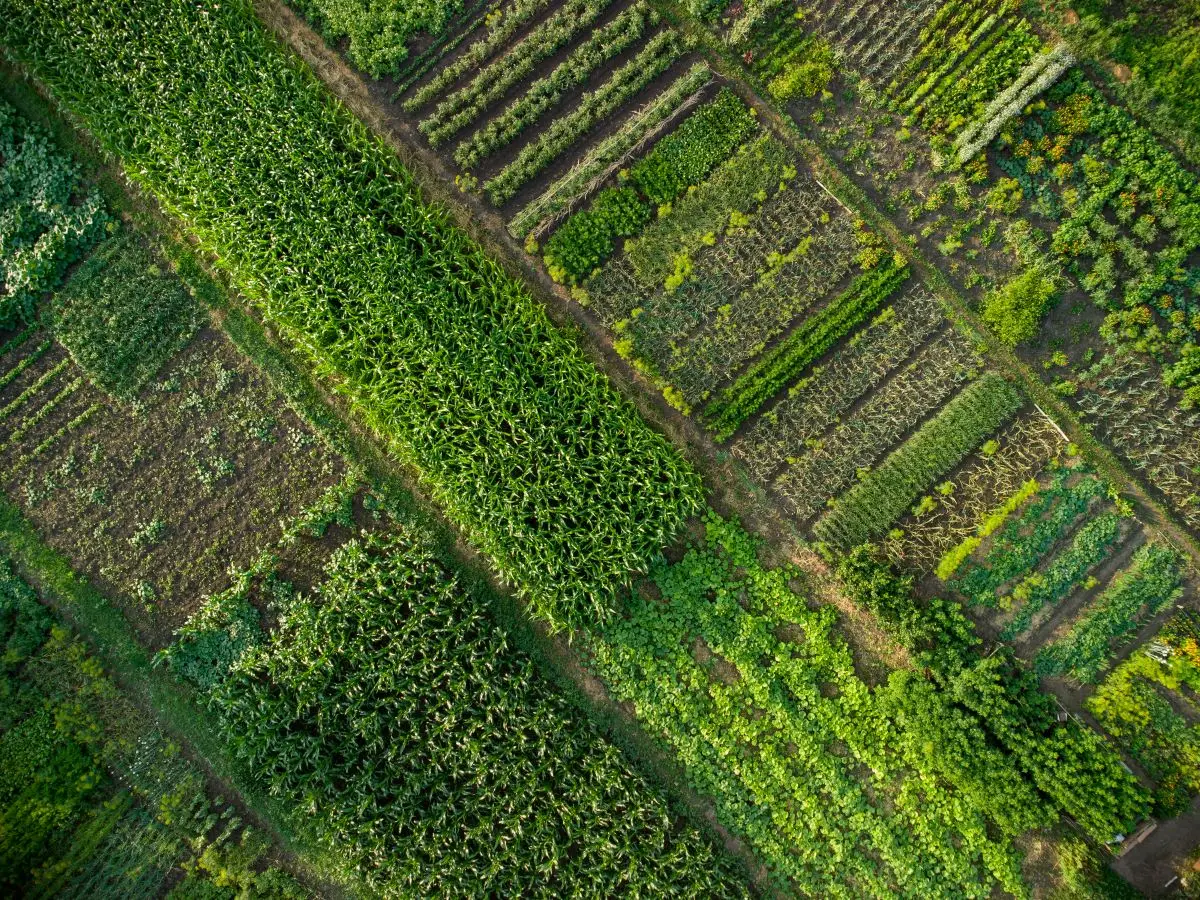
A way to increase organic matter is to apply the principles of regenerative agriculture, one approach that aims, for example, to minimise soil disturbance and maximise plant diversity. By doing so, what we grow not only serves to produce food, but also becomes a tool for capturing carbon, improving soil fertility and rendering agriculture more resilient to climate change.
“When a farmer adopts regenerative practices, they are usually presented as an adaptation strategy, as something that helps them withstand drought or unseasonal rains,” Sridhar points out. “But by applying these practices, they also sequester carbon. And that is precisely why countries should set quantitative targets for carbon or soil organic matter. Once you set a target, you end up promoting both mitigation and adaptation. Currently, the soil appears only vaguely in the NDCs, without specifying how much carbon they intend to sequester. Quantification would change that.”
Healthy soil not only stores more carbon, but also prevents it from becoming a source of emissions. Data from the European Commission indicates that the release of 1% of the carbon contained in our continent’s soil would produce the same emissions as one billion cars. However, this risk can be reduced through regenerative agriculture, which limits soil disturbance.
Policies, incentives and finance: how to unlock change
“Protecting and restoring soils requires strong policies, as farmland is managed by millions of farmers, many of whom are smallholders without safety nets to manage risks,” explains Sridhar. “They need support: incentives, training, community networks. From the outside, it is easy to tell them to switch to regenerative agriculture, but when you are actually farming, ten thousand things can go wrong in the transition from one system to another.” On top of this, there is the issue of incentives and risk-sharing tools, as Sridhar points out: “Today, insurance premiums are the same whether you practise regenerative agriculture or not, even though regenerative farms face less climate risk. Insurance tools should reflect this difference.”
Regenerative agriculture also contributes to the reduction of direct emissions from conventional agriculture, heavily dependent on synthetic inputs such as fertilisers, a major source of greenhouse gases. One study estimates that in 2018, the synthetic nitrogen fertiliser industry produced over 2% of global emissions, on par with the aviation industry. In contrast, according to a 2023 University of Cambridge survey, practices that make synthetic inputs more efficient could reduce fertiliser emissions by up to 80% by 2050 without compromising food system productivity.
Even just a few figures highlight the potential of soil as a climate mitigation tool. For this reason, the report wraps up with recommendations for policymakers, emphasising the crucial role of access to finance: “Even large projects involving thousands of farmers face difficulties in accessing funds due to a lack of institutional support in terms of data collection, bureaucracy and reporting requirements,” states Sridhar. “Unlike water or air quality, soil data is not measured consistently by governments. And without reliable data, funders cannot be sure that a project has actually increased soil carbon, and therefore cannot release payments. Ironically, doing good farming is much easier than measuring it.”
Moreover, acquiring soil data is complex and costly, as it requires physical, chemical and biological measurements. At present, those seeking funding in this area must manage monitoring independently, as institutional systems are not yet in place. Among its suggestions, the report also stresses the importance of including annexes in NDC updates that translate soil targets into carbon sequestration estimates and regular monitoring plans, while measures currently considered adaptation should be reclassified as mitigation to facilitate access to funding. In addition, social and biodiversity safeguards and independent verification should be integrated into all financial instruments.
“I would like to finish with a hopeful footnote,” concludes Praveena Sridhar with a smile. “A recent victory gives us great motivation: the new IUCN resolution, in which all members agreed to work towards a Soil Security Act. We want to build on this and work with IUCN members to elevate soil health in the UN system and on the global agenda.”
Cover: photo Envato