


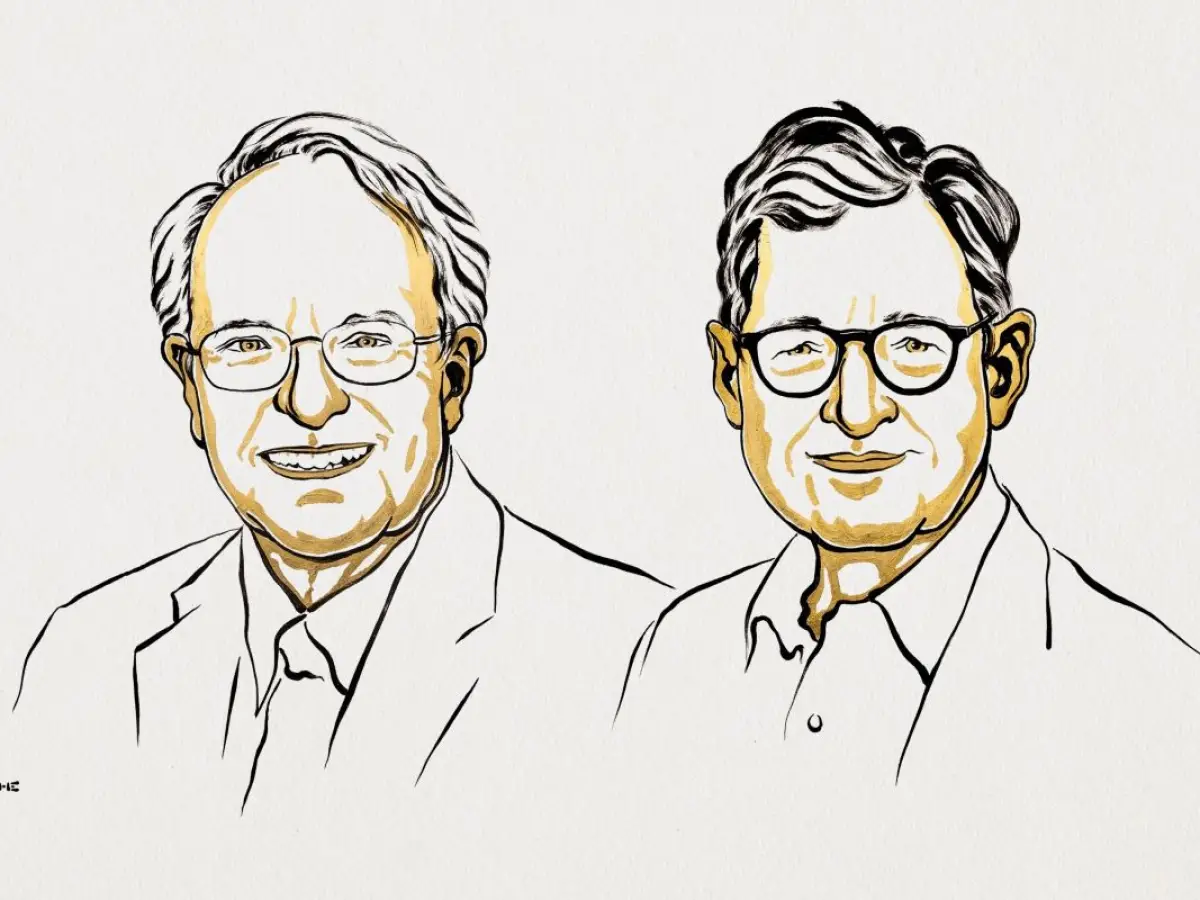

Robert E. Hall of Stanford University and Michael Woodford of Columbia University have been awarded the 2026 Nobel Prize in Economic Sciences for their contributions to the microeconomic foundations of macroeconomic stabilisation. According to the Royal Swedish Academy of Sciences, their work has strengthened the theoretical tools available to policymakers to tackle recessions and periods of excessive growth, helping to cushion the impact of economic fluctuations.
Economic activity naturally moves through cycles of growth and contraction. Since John Maynard Keynes developed his influential theories nearly a century ago, governments and central banks have sought to smooth these fluctuations. In a downturn, cutting interest rates and allowing public deficits to rise can support demand. When growth accelerates too sharply, tighter policies may be needed to cool the economy.
Yet the oil crises of the 1970s exposed serious weaknesses in the models used to guide these interventions. Rather than bringing unemployment down, some policies coincided with spiralling inflation. Western economies endured a difficult combination of sluggish growth, rising joblessness and rapidly increasing prices. The experience fuelled doubts about whether public intervention could stabilise the economy at all.
Bringing individual decisions into the picture
Hall and Woodford helped renew the theoretical foundations of stabilisation policy by changing how economic models are built. Instead of relying primarily on statistical relationships between indicators such as inflation, output and consumption, their approach places the decisions of households and businesses at its centre.
These individual choices matter because the economy is not an abstract system operating independently of the people within it. Decisions about saving, spending and setting prices collectively shape economic performance. Understanding these choices offers a more detailed picture of how policy measures can influence the wider economy.
Expectations are particularly important. Households and companies make decisions not only in response to current conditions, but also according to what they believe will happen next. When governments and central banks clearly communicate their plans, they can influence those expectations and, in turn, economic behaviour. The timing and credibility of policy announcements can therefore help determine whether interventions have the intended effect.
The models developed by the laureates now provide a theoretical foundation for approaches used by governments and central banks worldwide. They cannot remove uncertainty, but they can help policymakers respond more effectively when unexpected events disrupt economic activity.
John Hassler, chair of the Committee for the Prize in Economic Sciences, highlights their relevance to challenges such as energy crises and sudden changes in household consumption. In an increasingly volatile world, understanding how decisions and expectations interact remains essential to limiting economic shocks and supporting stability.
Cover: Robert E. Hall and Michael Woodford by Niklas Elmehed © Nobel Prize Outreach