

This article is part of the thematic channel The Water Observer: subscribe to our newsletter and receive exclusive contents from the world of water
Water is no longer international diplomacy’s forgotten dossier. From the Euro-Mediterranean Water Forum in Rome to COP31 in Antalya, Türkiye, and the UN Water Conference in Abu Dhabi, 2026 is shaping up to be a defining year for a resource that connects climate, security, biodiversity, health, industry and finance.
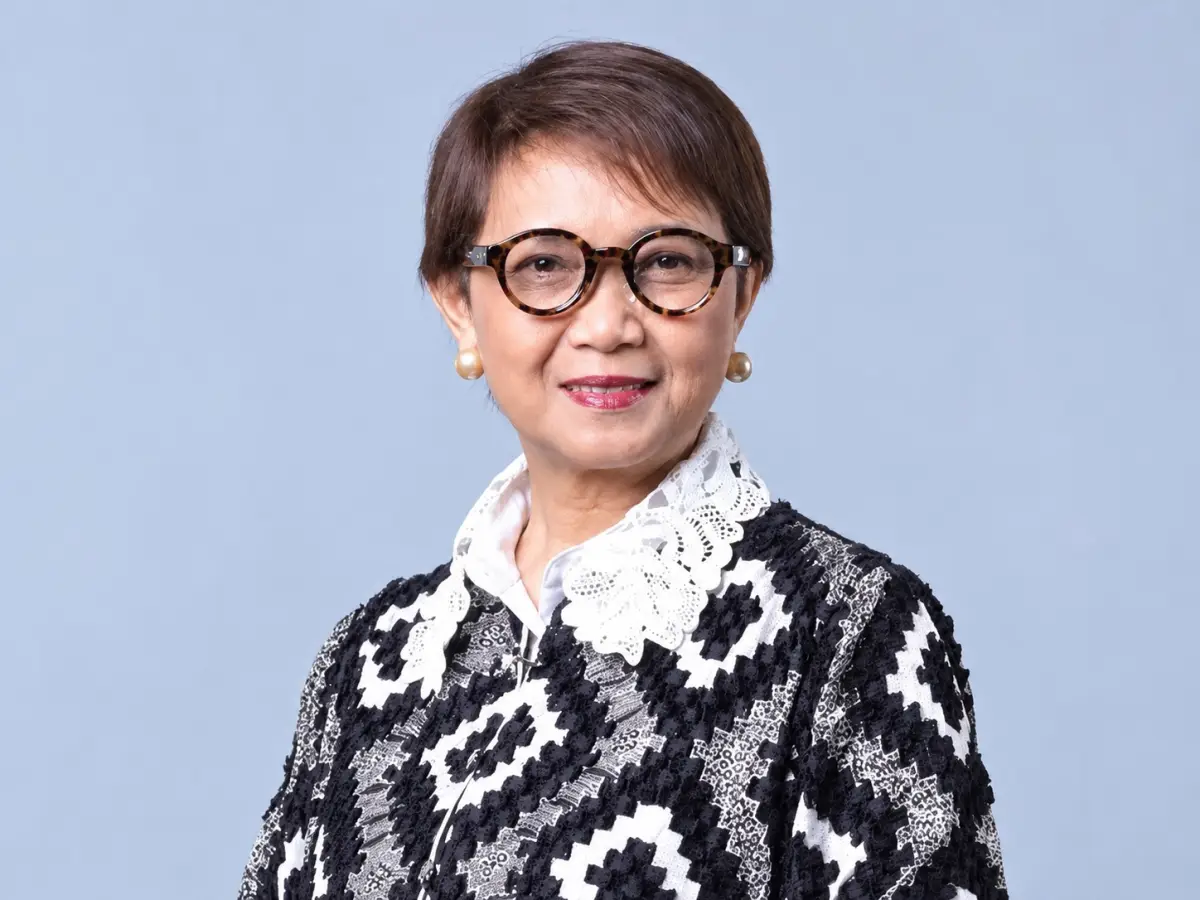
At the centre of this emerging diplomatic agenda is Retno L.P. Marsudi, the first UN Secretary-General’s Special Envoy on Water. Former Minister for Foreign Affairs of Indonesia from 2014 to October 2024, she took up the position in November of that year. During her ministerial tenure, Marsudi oversaw the 10th World Water Forum, held in Bali in 2024 — an event convened every three years by the World Water Council. For its thematic channel, The Water Observer, Renewable Matter interviewed her in Rome during the first Euro-Mediterranean Water Forum.
On the eve of the Euro-Mediterranean Water Forum, the UfM Ministerial Declaration on Water in the Mediterranean affirmed a shared commitment to water security and resilience. How can the region ensure this commitment does not create a two-speed transition, with better-resourced countries advancing while the most water-stressed areas fall further behind?
We are all connected. The world is connected by water, an important asset to protect the only world we have. Countries must realise that water challenges affect everyone equally. When one country faces water challenges, the others will be impacted by them. For example, in water-related disasters such as droughts in water basins, most of the time it is cross-boundaries. So, no country is truly independent from water challenges happening in other countries. Therefore, international cooperation is key. No country can address the water challenges alone. And we find momentum now, to strengthen international cooperation, where regional cooperation can contribute a lot.
Should water become the practical centre point for joining up the climate, biodiversity and desertification Conventions? And, if so, what governance mechanism is missing today?
The answer is yes; water is a cross-cutting issue across the three Conventions. First, because water is impacted by the three challenges. Second, because it also offers solutions to all of them. To answer your question on what governance mechanism is missing today, my answer would be, that it is not necessarily about the governance mechanism that is missing. In reality water is already mainstreamed in the three agendas, although it is a bit late. Recently, a "water day" was introduced at COP UNCCD, and water has only just become an explicit focus at COP UNFCCC. And many other examples reflect that it is only recently we realised about the centrality of water to the three Conventions. What should we do then? Continue to advocate for water within the three agendas and continue to invite experts in the three agendas – climate change, desertification, and biodiversity – to water-related forums. This is what we are trying to do with the 2026 UN Water Conference. Rather than having water-expert talking about water, we invite experts from various agendas (health, climate change, biodiversity, gender expert, etc) to talk about water.
Looking ahead to December in Abu Dhabi, what should the 2026 UN Water Conference deliver that the 2023 conference did not?
I think it is not how we should see the 2023 and the 2026 UN Water Conference. Both, I think, bring different role and impacts, in accordance with each of their context. The 2023 Conference has managed to bring back water into the global stage of development agenda. After almost 50 years without any UN Water Conference, in 2023 the Conference took place. It is one of the huge and most significant achievements we must recognise from the 2023 event. The 2026 Conference will be the first Conference talking specifically about SDG 6. So, the expectation to the 2026 Conference is different – that is to ensure acceleration and actions on water as we approach 2030. The 2026 event is expected to specifically talk about actions, capacity buildings, financing and investment, and many other topics – to make sure that acceleration of the SDG 6 implementation is on the way. But ultimately, countries want the two conferences to be strengthening each other. It is recognised through many resolutions that 2023, 2026, 2028 UN Water Conference are strengthening each other and bringing us into linear progress from Conference to Conference. In between, I believe, we must include other major water processes, such as the World Water Forum.
You have moved from representing Indonesia in global diplomacy to representing the global water agenda. How has Indonesia’s experience as a vast, diverse archipelagic country influenced your view of the kind of water diplomacy the world now needs?
Very much. Coming from a country prone to disaster risk I realised that most of it occurs from water-related hazards. Furthermore, I became more aware that resilience comes from the way we prepare to respond to disaster, not only the ways in which we cope with the impacts and the effects of disaster. But also, it gives me the view that water has always been seen as sectoral issue only, not much into the global politic arena. And that is what missing, I would say, to connect global politics with technical experience on the ground. That is what my experience in diplomacy teaches me about how we advance water as a priority among political agendas. Second, coming from Indonesia, we always strive to achieve consensus and constructive outcome in every global dialogue and processes. Therefore, in doing water diplomacy, I always do the same. How can everyone be part of water-related conversations without feeling left-out or being cornered – but instead feel the ownership and feel comfortable? That is very important in having everyone inclusively be part of water conversation.
Does the world need a stronger institutional home for water at the UN - one with greater authority to coordinate climate, food, health, cities and development finance?
It is up to countries to decide. The discussion on the future of water is going on right now. The issue will also be discussed under the Interactive Dialogue E (Water in multilateral process) of 2026 UN Water Conference. One thing that is also very important right now is focusing on the most immediate aspect we need to work on – it is actions on the ground. Therefore, while on this the exchange of ideas is undergoing, I keep on encouraging every expert from different fields as you said (climate, food, health, cities and development finance) to mainstream water into their conversation.
Cover: Retno Marsudi