


This article is part of the thematic channel The Water Observer: subscribe to our newsletter and receive exclusive contents from the world of water
Rome - The Mediterranean is entering a phase in which water cooperation must address not only scarcity, but also the challenge of turning political commitments into fundable projects. Launched in Rome, the Rome Initiative on Water is a framework promoted by the Union for the Mediterranean (UfM) to facilitate the design, financing and management of sustainable water systems in the Mediterranean region.
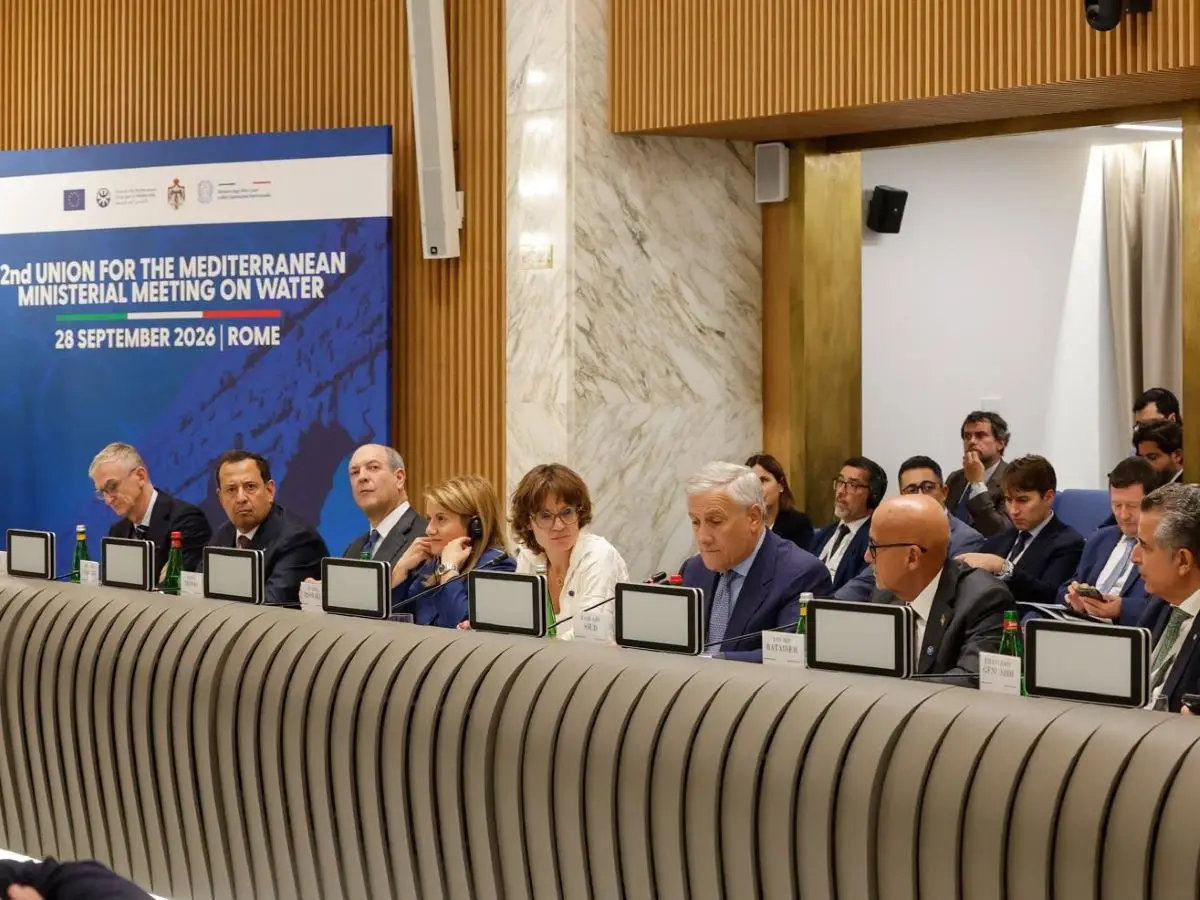
The initiative was launched on 28 September at the second UfM Ministerial Meeting on Water, co-chaired by Jessika Roswall, European Commissioner for Environment, Water Resilience and a Competitive Circular Economy, and Raed Abu Saoud, Jordan’s Minister of Water and Irrigation. Hosted by the Italian Republic, the meeting brought together all 43 member states.
The significance of this development extends beyond the technicalities of water management. The Declaration comes on the eve of the Euro-Mediterranean Water Forum, taking place at the Nuvola convention centre in Rome from 29 September to 2 October, and is the first UfM ministerial declaration to be adopted since the events of 7 October. Reached by consensus, it required the unanimous agreement of all member states, including Arab countries and Israel. The agreement thus gives back to water a tangible role as a vehicle for dialogue in a region marked by conflict and geopolitical tensions.
The text builds on the Union for the Mediterranean’s first Ministerial Declaration on Water, agreed in Malta in 2017. Nearly a decade later, the update comes at a time when the Mediterranean is increasingly exposed to the effects of climate change, demographic pressures, ecosystem degradation and the growing vulnerability of water infrastructure and services.
“Achieving the water-related Sustainable Development Goals is a major challenge in the Mediterranean, a climate change hotspot that must simultaneously contend with socioeconomic and demographic pressures and geopolitical unrest,” said UfM Secretary General ad Interim Fadi Hajali. “As the UfM Ministerial Declaration on Water in the Mediterranean highlights, regional cooperation towards sustainable and integrated water management must be strengthened if we wish to meet these goals in the near future. The Rome Initiative on Water brings us one step closer to this ambition by turning political commitments into tangible results.”
Italy lies at the heart of the Mediterranean geographically, historically and culturally, and promotes dialogue and cooperation across the region,” stated Italian Minister of Foreign Affairs and International Cooperation Antonio Tajani. “Water is strategic to our common future: managing it sustainably helps build a more resilient, stable and prosperous Mediterranean. Italy is turning this commitment into action through water security projects and regional dialogue, including the 2nd Union for the Mediterranean Ministerial Meeting on Water, hosted in Rome. A new Italian initiative will also help Mediterranean countries design and finance water security projects, making water a stronger driver of cooperation among States.
The challenges of water resilience
Water stress is a reality across all countries on the Mediterranean's southern and eastern shores. In southern Europe, 70% of the population lives in areas affected by water stress during the summer. Across the region, more than 180 million people are classified as water-poor. Alongside climate change, there is also environmental degradation, demographic pressures and a geopolitical landscape marked by persistent crises.
The Rome Initiative, referenced in paragraph 21 of the Declaration (available here in full), aims to mobilise investment and technical assistance by encouraging cross-border partnerships, skills development, knowledge-sharing and project preparation. Its model is the UfM’s Blue Mediterranean Partnership, a platform designed to connect and coordinate existing initiatives, increasing their impact and visibility. Financing is also a key issue. Although access to water, sanitation and hygiene services has improved in parts of the region, the financial sustainability of the systems remains far from assured in many countries.
“The Mediterranean region is one of the regions in the world most vulnerable to water scarcity and the impacts of climate change,” said EU Commissioner Jessika Roswall. “By setting out the priorities for national action and regional cooperation on sustainable water management, climate adaptation and mitigation, financing and infrastructure, I’m convinced that today’s meeting will significantly contribute to enhanced water resilience in the region.”
Cover: photo © UfM, via Flickr