

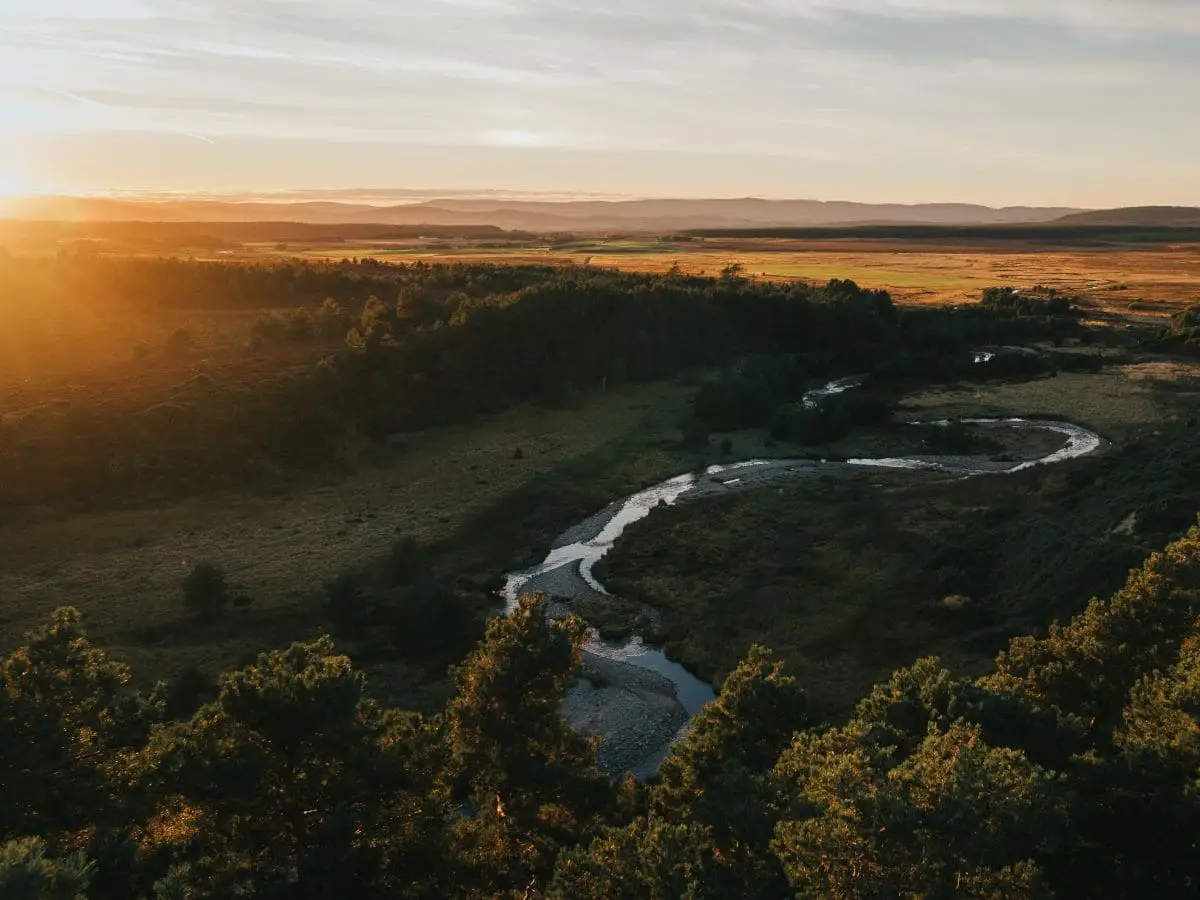

A vast expanse of moorland stretching to the horizon, ponds teeming with life, and the cold waters of the Scottish sea: these are among the images that greet visitors to the Oxygen Conservation website. The British company was founded to tackle the climate crisis and the collapse of biodiversity by championing conservation on a large scale.
“We invest private capital to acquire landscapes at scale, develop products linked to natural capital, including carbon credits, generate financial returns, and reinvest them,” explains Elena Doms, the company’s Director of Europe. “We manage the entire asset lifecycle, from land acquisition and project development through to portfolio management and value creation.”
Large-scale conservation
Oxygen Conservation is a platform focused on the conservation and protection of natural capital. The company acquires, restores and manages extensive landscapes, with the primary aim of delivering positive environmental and social outcomes, while generating economic value as a consequence of that work. “Our portfolio is currently valued at around 400 million pounds. We manage more than 50,000 acres of land, and this portfolio connects over 500,000 acres of land in total,” Doms continues. Across these landscapes, the company develops a range of natural capital products (including carbon credits, Biodiversity Net Gain units and nature credits) which represent the principal driver of value creation. These are complemented by other assets within the estates, such as a property portfolio comprising more than one hundred buildings, alongside renewable energy projects and ecotourism initiatives.
Beyond their scale, the landscapes stand out for their variety, ranging from woodlands and peatlands to areas of regenerative agriculture. The company currently manages 12 estates across the United Kingdom, from Cornwall to the Scottish Highlands. Each estate is distinct in its geography, environmental characteristics, soil composition and biodiversity. As a result, no cookie-cutter approach is applied; instead, management and restoration strategies are tailored to the specific conditions of each site.
“In the south of England, for instance, we manage an area of remarkable Atlantic ancient rainforest, where our work focuses primarily on protecting existing ecosystems and supporting their natural expansion,” explains Elly Steers, Head of Marketing at Oxygen Conservation. “A very different picture emerges in the border regions with Scotland, where some landscapes were historically used as shooting estates and heavily shaped by human activity. In these contexts, we focus on ecosystem regeneration, with the aim of restoring the landscape as closely as possible to its original natural state.”
A close relationship with land and community
One of the first steps the company takes following the acquisition of a site is to carry out a thorough assessment of the area. This process includes analysing the historical use of the land, identifying existing species, studying soil conditions, and developing strategies to engage local communities. In practical terms, this may involve inviting the locals to visit the estates and meet the Oxygen Conservation team, helping them to feel part of the project from the outset. These encounters have also given rise to a range of collaborative opportunities, leading to the creation of jobs, internships and volunteer initiatives. In this way, the company seeks to generate a positive impact not only on the environment, but also on the social fabric of the areas involved.
“Of course, some people are sceptical, which is entirely understandable. The negativity that we receive is always because of a fear of change,” Steers notes. “Our role is not to force anyone to change their view, but rather to provide clear information and act with the utmost transparency.” To this end, the company’s website features a section titled Criticise us, where the most common concerns are openly addressed. It is a section that continues to evolve, reflecting how the company’s approach develops over time through experience, research and ongoing dialogue.
The company also organises meetings with local communities, hosts open days, takes part in council meetings, and promotes initiatives such as newsletters and other informational materials, all with the aim of building a lasting relationship of trust and open dialogue with the people who live and work in these areas.
Carbon credits and emerging markets
Building on the results achieved in the UK, one of Oxygen Conservation’s next goals is to extend its business model throughout Europe. According to data from the European Environment Agency, more than 80% of protected habitats across the continent are in poor or critical condition, between 60 and 70% of soils are degraded, and only 37% of surface waters are in good ecological status. “At present, we are in discussions with investors and assessing where it’s best to begin,” highlights Elena Doms. “We are focusing on three priority regions: Western Europe, particularly France and Spain; the Nordic countries, Denmark, Finland and Sweden; and the Baltic states, Estonia, Latvia and Lithuania.” Italy, one of Europe’s most biodiverse countries, is also among the regions under consideration.
A central pillar of Oxygen Conservation’s model is the development of financial instruments linked to natural capital, particularly carbon credits. “Our portfolio currently includes around two million carbon credits, primarily generated through woodland and peatland restoration and conservation projects. This makes it the largest carbon credit portfolio in the United Kingdom,” Doms explains. These credits are developed in line with recognised standards such as the Woodland Carbon Code, which require independent verification and ongoing monitoring. As Doms notes, “technologies such as LiDAR surveys, drone mapping and geolocation tagging allow us to deliver a high-quality, highly transparent product. Our aim is to build partnerships, rather than simple buyer–seller transactions.”
To support this approach, the company has developed its own monitoring platform, Oxygen Intelligence, which allows buyers to track the progress of projects over time, observing indicators such as carbon, biodiversity, water quality and soil health. These tools are designed to channel private capital, now more essential than ever, into the restoration of nature.
Cover: photo by Oxygen Conservation