


If onshore wind projects are slowing down in areas such as Sardinia, it is the MASE (Ministry of the Environment and Energy Security) that is blocking the development of several GW at sea: for months now, the tenders have not been launched, leaving an entire Italian industrial sector in the doldrums.
Aero, the trade association created on the initiative of 13 founding members and now bringing together 63 companies and public bodies such as the Port System Authority of Augusta and Taranto and the Polytechnic University of Bari, has repeatedly asked Minister Picchetto Fratin to follow up on the FER2 (Fonti di Energie Rinnovabili 2, Renewable Energy Sources) decree now dating back to 2024. Renewable Matter met Fulvio Mamone Capria, president of AERO, to discuss the situation.
President, what is the state of the art of Italian offshore wind energy?
There are now 130 projects submitted under FER2. In fact, 26 projects with an advanced EIA are ready to be commissioned, with a total potential of 18.5 gigawatts. Out of these, 4 projects have already been approved by the MISE and the MIC, for 2.3 gigawatts. A fifth project has been approved by the MASE and is awaiting the MIC for another 500 megawatts.
The FER2 decree was issued in August 2024, with an incentive tariff of €185, considered appropriate for both fixed and floating plants, which require complex engineering. What happened next?
At the end of 2024, the MASE halted the auction claiming there weren't enough players to compete, even though 1.3 GW had already been authorised. In 2025, when the authorised projects had reached 2.3 GW, the problem of a single tariff for fixed (e.g. in front of Rimini and Ravenna) and floating plants came up. The pretext is that the incentive tariff would increase the system charges on the bill [which currently weigh about 11% of the bills, ed]. It should be borne in mind, however, that offshore plants will take at least five years to be built, and you will see system charges on your bills in 2031, when support for old photovoltaic plants will be exhausted. In fact, the cost will be about €1 per month for an Italian family.
Stalling the supply chain, however, constitutes a serious setback in the country’s industrial development and a loss of competitiveness.
Each euro invested in the offshore wind industry pays back three. 3.8 gigawatts of installations will generate 15 billion euros in building sites, work, transport, assembly. This could lead to a supply chain made up of ports, workshops, employing steel and concrete. We estimated a supply chain of 11,400 workers. If we managed to install 20 GW, as per the project pipeline, offshore wind power would provide a very high value especially in southern Italy, where most of the jobs would be created, and we would really be able to lower the price of kWh in the bill.
In the USA, offshore wind power was creating an immense industry in the port and shipbuilding sectors, until it was cut back by Trump. Could this also be the case for Italy in the Mediterranean?
It could certainly contribute to absorbing the crisis in the steel and automotive sectors, repositioning workers and plants. With an adequate plan, Italy, with its great shipbuilding expertise in the naval sector, could lead an innovative floating wind industry in the Mediterranean. The competition would be with France, which already has a strategic port. In Port le Nouvel, steel and reinforced concrete floats are now being built and the first pilot plant has been constructed in front of Marseille, with three blades of eight megawatts each. But there is room for competition and interest is growing in states such as Greece, Turkey, Tunisia, Malta and Israel.
Could creating a chain of floats also be useful for floating solar and other blue economy initiatives?
They are the most expensive part of the project, which can be up to 70 metres long, and could be an entirely Italian segment of the green economy.
What about wind turbines?
Siemens and Vestas produce 12-15 megawatt blades, hardly the most suitable for the Mediterranean, while there is interest from the Chinese, who also have 20 MW blades. The market will be played out here between European and Chinese producers (who could also open a factory in Italy) provided there is certainty in the industrial direction.
Nevertheless, onshore wind power has been criticised by a minority for its impact on the landscape.
Over here, we are far from the coast, an average of 25 kilometres, where even the largest blades can be seen at most on mist-free days. Less known is the positive environmental effect, instead. Wind turbines do have an impact in the development phase, but when they become operational they are sanctuaries for fish, as they establish natural habitats for crustaceans, molluscs and marine mammals for at least 25 years. As AERO, we are also entering into agreements with fishermen, both to involve them in maintenance and to show them how creating nurseries around the facilities will repopulate the fishery. For birds, there are now radar sensors that detect flocks within a two-kilometre radius and adapt accordingly.
Which are the risks if the MASE does not launch tenders by the end of the first half of 2026?
The tendering companies have already invested €300 million. With no vision for investors, there will be yet another flight from Italy and claims for damages and restitution of charges paid will be triggered. A growing industrial sector will come to a halt, limiting energy availability for the new data centres on the way, and the current enormous bills will persist. Offshore wind is a technology that can be built today and productive in a few years. Let us not miss this opportunity.
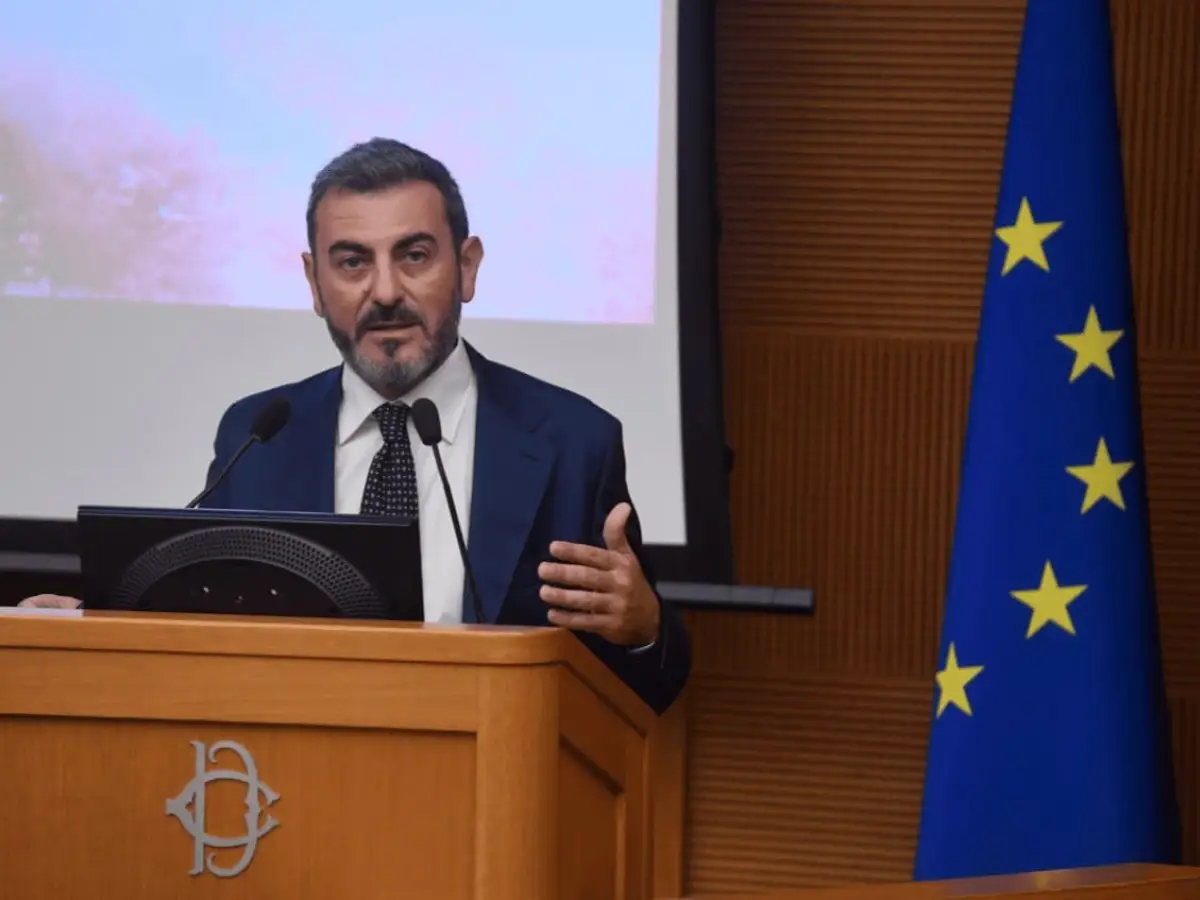
Cover: Fulvio Mamone Capria