

Refrigerant gases are the invisible protagonists of our daily lives. From household refrigerators to supermarket aisles, from office air conditioners to pharmaceutical cold storage: wherever temperature control is needed, refrigerants are present. For decades, they posed a silent but serious environmental challenge: if released into the atmosphere, many traditional refrigerants have a global warming impact thousands of times greater than that of CO2.
The sector is now undergoing an unprecedented revolution. European regulations – from the 2014 F-Gas Regulation to its latest update in 2024 – are driving a radical transition: a drastic reduction in high-climate-impact gases, the introduction of next-generation refrigerants and, most importantly, the creation of circular economy supply chains capable of recovering and regenerating waste gases instead of disposing of them. We discussed this with Marco Lorusso, Refrigerants Business Director of the Nippon Gases Italia group.
Your company has a dual soul: deeply rooted in Italy, but with an international outlook that extends all the way to Japan. How do these two dimensions come together?
Our strength comes from the meeting of two complementary cultures. On one hand, there is the history of Rivoira, founded in 1920 by Cavalier Rivoira, which has navigated an entire century of transformations in the Italian industry. On the other hand, by joining Nippon Sanso Holdings Corp., we have gained a more global vision and access to even more innovative technologies. Today, Nippon Gases is strongly committed to decarbonisation and the development of advanced technologies. Among these, the refrigerant gases sector, encompassing recovery, management and regeneration, represents an essential contribution to support our customers on the path to carbon neutrality. For us, the circular economy is a daily commitment: we regenerate gases, reduce waste and losses, invest in new applications and collaborate with universities and research institutions to find innovative solutions. The union of Italian and Japanese excellence has enabled us to create not only economic value, but, above all, environmental and social value.
You are in the midst of a crucial phase of market transformation. What is the greatest challenge?
The ongoing transition in the refrigerant gas sector is probably one of the most radical the industry has ever faced. It means decommissioning all the old equipment, all the old refrigeration and air conditioning systems that contain gases whose use will no longer be permitted in the coming years. The most strategic challenge is precisely circularity. The European F-Gas Regulation (517/2014), recently updated by Regulation (EU) 2024/573, mandates a drastic reduction in high-climate-impact fluorinated gases: by 2030, emissions must drop by 79% compared to 2009-2012 levels. This revolution is propelling the industry down a dual path: on one hand, the development of next-generation, ultra-low-impact refrigerants such as HFOs (hydrofluoroolefins); on the other, the creation of circular economy supply chains to recover, regenerate and reuse existing gases. All types of waste gases currently on the market will need to be recovered, analysed and regenerated, giving them a second life. The great challenge is to adapt our technologies and facilities so that, in the coming years, we will have the capacity to regenerate these gases that are currently treated merely as waste to be disposed of.
Why is this important not only from an environmental perspective, but an economic one too?
EcoStar is our circular economy programme and represents the heart of our approach to sustainability. The starting point is very simple: when a technician extracts refrigerant gas from a system, it legally becomes hazardous special waste, to be disposed of through thermal destruction. Instead, we treat it as a resource. The process always starts with a thorough analysis, through which we establish the refrigerant’s “identity card”. Only when it has the same characteristics as virgin gas is it reintroduced to the market. Regeneration creates a virtuous cycle: less waste, fewer emissions and lower resource consumption. From an economic standpoint, regeneration also enhances the value of the recovered gas. If the fluid is suitable for regeneration, it represents an asset: we are willing to purchase it, providing economic value to the customer, before regenerating it and putting it back on the market. EcoStar was designed to simplify this process: it combines regulatory compliance, environmental sustainability and economic benefit.
Are your clients primarily large industrial players?
Industry certainly represents a significant share, as does large-scale retail. But we also work with refrigeration technicians, who service private homes or offices.
What does the job market look like in your sector? Are there adequate training programmes in Italy for the challenges ahead?
The transition toward more circular models cannot happen without real growth in skills across the entire supply chain. This is why we collaborate with trade associations, universities and all market stakeholders – designers, installers, manufacturers – to provide technical consulting. At the same time, we participate in local initiatives: meetings, workshops, specialised information sessions in collaboration with leading industry bodies, such as Centro Studi Galileo. The new F-Gas regulation requires much more rigorous training, which is currently lacking, so training remains one of our top priorities.
This content is produced thanks to the support of sponsors
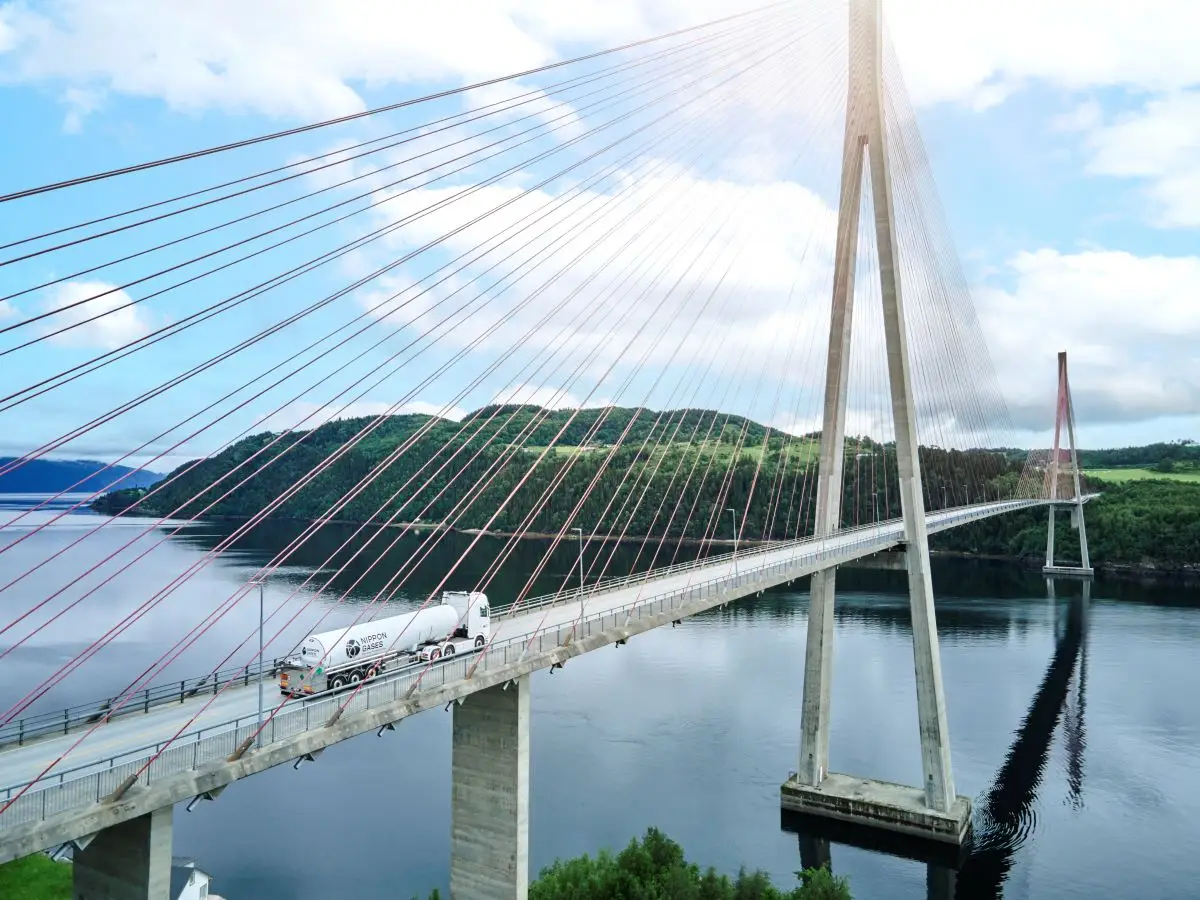
Cover: photo by Nippon Gases Italia