


Carbon farming originated in the fields. That is where, in recent years, an idea that agricultural soil can become an active ally in mitigating climate change has taken root: through targeted agronomic practices, farmers can increase the amount of organic carbon stored in the soil, drawing it out of the atmosphere and, in return for this ecosystem service, receiving financial compensation.
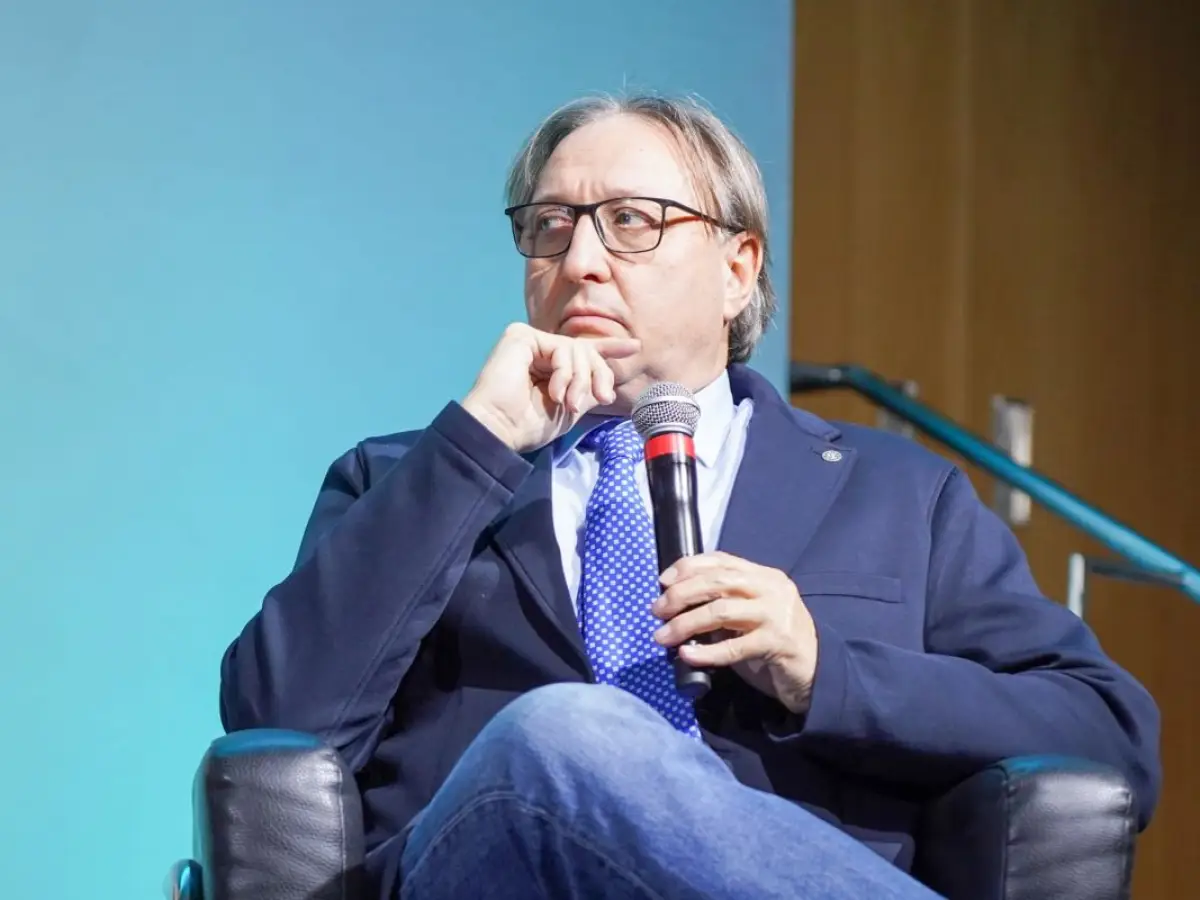
What would happen, however, if the same principle were applied to cities? What if parks, tree-lined avenues, public and private gardens, and urban regeneration areas were also recognised as carbon sinks, and managed and valued accordingly? That is the challenge of urban carbon farming: an urban adaptation of carbon farming that relocates the action from the countryside to the city, where, instead of farmers, local authorities step in as key players in the transition, responsible for managing and harnessing the climate potential of urban green spaces. The idea is still in its infancy, but it has solid scientific foundations and a supply chain – organic waste recycling – already in place and ready to play its part. We discussed this with Massimo Centemero, director of the CIC, the Italian Composting Consortium.
Will urban carbon farming usher in a new era in urban management?
Urban carbon farming is, first of all, a term we have come up with ourselves: an expression which, at present, has not yet found application in established practices. It is an idea, but one based on sound regulatory foundations: the European regulation on carbon farming, approved in 2024, serves as a backdrop in this regard. The underlying principle is easy to grasp: since carbon farming is already regulated at a rural level, why not transfer the same concepts and tools to urban contexts?
Which paradigms would be altered by this approach?
Certain basic assumptions would be redefined. I am not sure whether this would constitute a real revolution, but it could at least serve to give strategic importance and a coherent framework to the range of landscape management activities carried out by municipalities. Compared to traditional carbon farming, the profile of the main actors would change substantially: whereas in rural carbon farming, it is farmers who introduce best practices aimed at decarbonisation; in urban carbon farming, local authorities would become the key players in a new system. Municipalities would find themselves taking on a new role at the heart of a tangible transition as they are called upon to manage the climate potential of urban green spaces and integrate it into a broader emissions mitigation strategy.
Is there currently a sustainable economic model for developing urban carbon farming?
No, and this must be stated clearly: the entire project is still in its infancy. We are looking at an idea, and ideas, before they can be translated into operational models, must be based on rigorous scientific foundations. There are no established principles as of yet; we are currently in the planning phase. It is possible, however, to say that urban carbon farming could guarantee a form of consistency in the actions of various public authorities, serving as the common thread running through all green policies: from species selection to cultivation and maintenance techniques. Plants are living organisms and must be treated as such. Simply choosing which species to use in a tree-lined avenue requires a considered approach. Added to this are choices about location, planting methods and management over time.
Italy is a European leader in organic waste recycling: could it also aspire to be a benchmark in the environmental and economic utilisation of carbon in the soil?
Italy does indeed hold a world record for the recycling of organic waste: it is a leader in separate waste collection and, in particular, in the recovery of organic waste and its conversion into biomethane and compost. It is a very substantial industrial sector. The missing link, however, is consolidating this system through the full exploitation of its products. While biomethane already benefits from incentives that support its economic development, such recognition is lacking in the compost sector. The question arises: why incentivise compost, which does not compete with other fertilisers? My answer is that the operation carried out by the entire Italian system (government, regions, municipalities, citizens) has been of extraordinary significance: we have diverted huge quantities of organic matter from landfill and channelled it into composting and anaerobic digestion plants. The next step is to return that organic matter to our cities in the form of compost, thereby enhancing its environmental role. We have removed carbon from the greenhouse gas emissions of landfill sites, a process that deserves to be rewarded. In addition, once certain political and regulatory challenges have been resolved, a business model could emerge in which the two main products, compost and biomethane, are both properly utilised. This would already represent a transformation of great significance.
Can carbon returned to the soil become an economic driver for local areas, or are the benefits limited to the environmental sphere?
It depends on whether there are people willing to invest in this area. We have put this proposal forward, but someone needs to take it up. If politicians deemed it appropriate, they could turn it into an incentive and funding mechanism for municipalities: if green initiatives are not to be haphazard but must follow a coherent decarbonisation strategy, local authorities that operate according to these principles should be rewarded. Compost is, moreover, a short-supply-chain product: it is used within a radius of twenty or thirty kilometres at most; there is no point in transporting it over long distances, and it does not compete with the fertilisers we import from abroad. It is, in fact, a domestically produced fertiliser. Its price is unaffected by fluctuations in international markets or the dynamics of global policies. Compost producers have no interest in exporting it, nor would it make sense to do so. Its use in Italy should be the subject of a structured domestic policy.
On a regulatory and taxation level, what is currently lacking in order to fully integrate composting and urban climate strategies?
Objective indicators are lacking. In rural carbon farming, following the publication of the European regulation, technical work is underway to introduce parameters that make decarbonisation measurable and verifiable. The same concepts could be applied to urban contexts: when decarbonising an urban area, what indicator allows us to verify whether we are moving in the right direction? Furthermore, there is no EPR scheme for organic waste. The EPR model works effectively for packaging and other dry waste streams, such as plastic and paper: it is based on the generation of a financial stream borne by the packaging producer, designed to remunerate municipal collection services. This system, however, cannot be directly transferred to our sector, as it is a more complex supply chain: it is necessary to develop a different economic model, based on its own dynamics. In our view, urban carbon farming could represent a key element of this new economic framework.
Are there currently any Italian local authorities ready to take practical steps in this direction?
Not yet on a systematic basis, due to the lack of a clear, positive and incentivising mechanism. There are, however, many interesting examples related to urban green space management. For years, we have been involved in the initiative organised by Il Verde Editoriale, a specialised magazine which has been running the La città per il verde (The City for Green Spaces) award for twenty years: each February, the most significant initiatives at a national level are compiled, and a jury selects the most innovative projects carried out by Italian municipalities in the field of green space management and enhancement. What is missing, in relation to the topic of urban carbon farming, is a specific criterion that rewards the most virtuous project from a decarbonisation perspective. The necessary indicators do not yet exist. A virtuous example, however, has already been achieved: the reclamation of the industrial areas of the former Michelin plant in Turin, ahead of the 2006 Winter Olympics. The municipality involved us two years beforehand, requesting that we set up experimental plots to determine the most suitable type of compost. The area was reclaimed by keeping all the demolition materials on site, to which topsoil and compost were then added and grass was sown. Where previously there had been disused industrial warehouses, within two years a green space had developed along the River Dora, on which the athletes’ Olympic village was subsequently built. It was a project of great significance. At its core was a clear political commitment from the City of Turin. And political decision-making, throughout this whole process, is central.
Will organic waste still be considered waste in 2035?
First and foremost, we do not expect any major reform in terms of how waste is classified administratively. It is cultural perceptions that need to change: waste is, and remains, a resource that can be used to produce something else. Once a virtuous cycle is set in motion through urban carbon farming, the entire organic waste fraction – household organic waste, green waste and municipal sludge – could be transformed into a resource destined to be reused in our cities’ public works and major infrastructure projects: highways, railways and construction sites of national importance. This would have the immediate effect of returning organic matter to the soil. Citizens would finally see, with their own eyes, the tangible result of their efforts in separate waste collection: green waste, organic waste and municipal sewage sludge would return to the earth in the form of compost, i.e., organic matter capable of regenerating the soil. We do not expect a nominal revolution in the definition of waste but rather practical campaigns to promote the value of recycled products. This applies, for example, to plastic and paper packaging but, above all, to compost which, unlike other materials, does not face competition from international markets.
What is the most urgent policy decision necessary to transform cities into carbon farming hubs?
Parliament is currently considering a draft decree on urban regeneration, which has already been discussed in previous years and has recently been taken up again. That could serve as a suitable legislative vehicle. Alternatively, ad hoc measures would be necessary: Italy is a world leader in the recycling of organic waste, and the next step is to strengthen this system by fully utilising its products. Consideration must also be given to the entire landscape sector, which revolves around these ideas: agronomists, landscape architects, landscape engineers, naturalist engineers, and businesses in the sector. In a rewarding system such as urban carbon farming, all these professionals would finally see greater professional recognition: activities related to the production and marketing of compost, the maintenance of green spaces according to quality criteria, and the creation of green areas in line with decarbonisation objectives. After all, the desire for nature in cities is growing ever stronger. People are seeking high-quality, well-maintained and accessible greenery, not only in major cities but also in smaller towns. Compost is one piece of this puzzle. When incorporated into a system that offers incentives for the whole range of urban decarbonisation activities, however, it can play a decisive role. It is essential, nonetheless, that someone genuinely believes in this and provides concrete support for this direction. Without it, the idea risks being left on paper.
This content is produced thanks to the support of sponsors
Cover: Massimo Centemero