



Italy’s electricity demand continued its upward trend in April 2026, reaching 23.9 billion kWh, a 1.9% increase compared with the same month in 2025. According to data published by Terna, the rise reflects not only higher temperatures and one additional working day, but also a structural transformation in the country’s industrial and renewable energy systems.
After adjusting for calendar and temperature effects, electricity demand still recorded a 1.5% increase, confirming a broader growth trajectory that has characterised the Italian market since the beginning of the year. Between January and April 2026, national electricity consumption rose by 2.8% compared with the same period last year.
The increase was geographically widespread, although southern Italy and the islands showed the strongest growth at 3.3%, followed by central regions at 1.7% and northern Italy at 1.3%. Analysts associate this trend with stronger economic activity, higher cooling demand and the accelerating electrification of industrial processes.
A particularly significant element emerging from the data concerns the behaviour of energy-intensive industries. During several days in April characterised by low electricity demand and exceptionally high renewable generation, industrial operators adapted their production schedules to support grid flexibility. Through Terna’s Instantaneous Upward Modulation Service, companies maintained operations during holidays and weekends, helping stabilise the system while maximising renewable energy integration.
Industrial flexibility supports renewable integration
The IMCEI index, which monitors electricity consumption among approximately 1,000 energy-intensive industrial companies, rose by 8.8% in April, marking the eighth consecutive month of growth. During periods of strong renewable generation, industrial electricity demand exceeded levels recorded on equivalent days in 2025 by more than 60%.
This flexible consumption model is increasingly viewed as essential for balancing Italy’s electricity system as renewable penetration expands. The ability of industrial facilities to modulate demand in response to solar and wind generation reduces grid instability and lowers the risk of renewable curtailment.
In cumulative terms, the IMCEI index recorded a 5.2% increase during the first four months of 2026. Nearly all industrial sectors showed positive growth, with the exception of the chemical industry, which registered a contraction.
Meanwhile, the services sector remained broadly stable. Terna’s IMSER index, based on consumption data from Italian distribution operators including E-Distribuzione, UNARETI and Edyna, showed a marginal decline of 0.4% in February 2026, while the first two months of the year still recorded an overall increase of 1.4%.
Photovoltaics become Italy’s leading renewable source
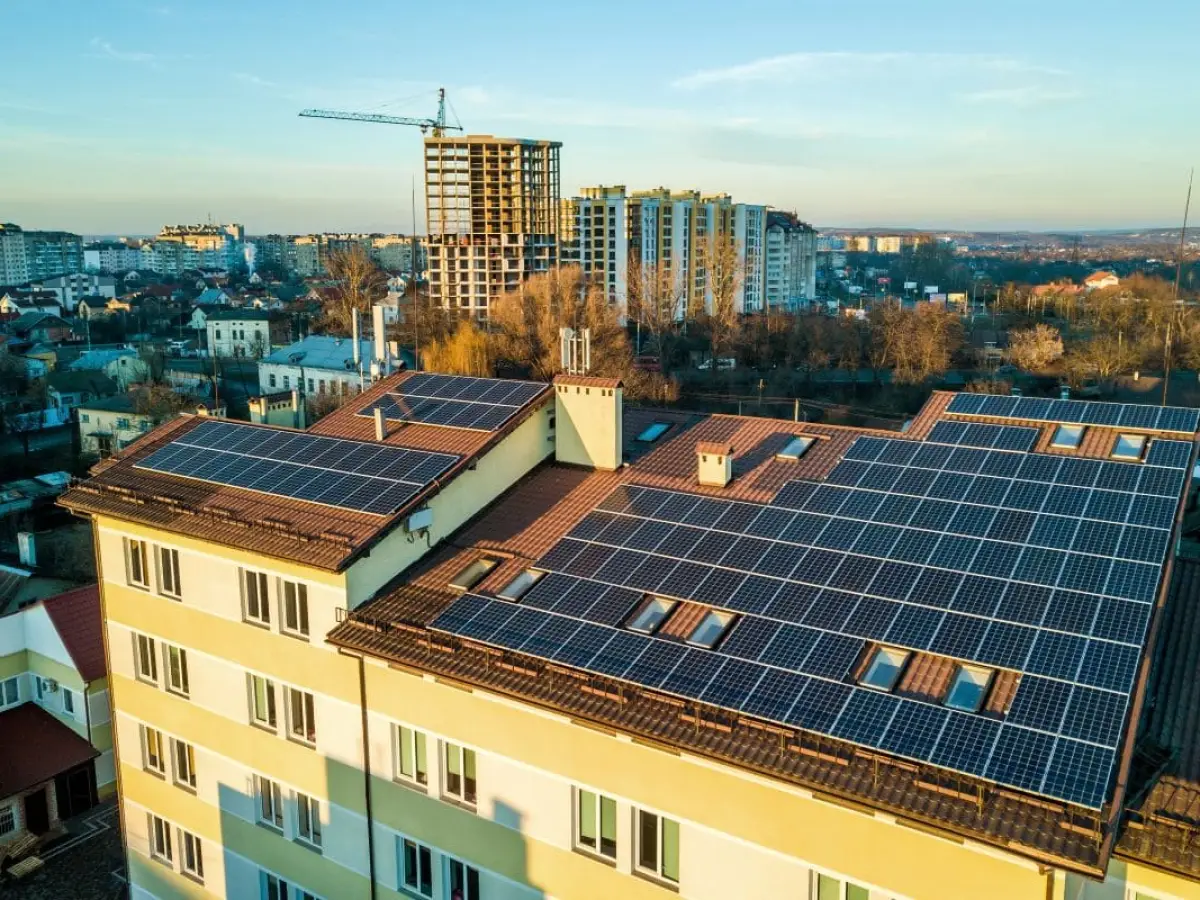
April 2026 marked a milestone for the Italian energy transition as photovoltaic generation became the country’s largest renewable electricity source. Solar production exceeded 5 billion kWh, increasing by 23.7% compared with April 2025.
The growth was driven primarily by new installed capacity, which expanded by 2,161 MW since the beginning of the year. According to Terna, solar energy contributed an additional 1,029 GWh compared with last year, including 747 GWh linked directly to new installations and 282 GWh associated with improved solar irradiation conditions.
Overall, renewable sources covered 49.5% of Italy’s electricity demand in April, remaining broadly aligned with the 50.3% recorded in the same period of 2025. However, while solar generation expanded significantly, other renewable technologies experienced declines. Hydroelectric generation fell by 22.8%, wind power declined by 0.6%, geothermal energy contracted by 2.3% and thermal generation decreased by 8%.
By the end of April, Italy’s total installed renewable capacity had reached 85,928 MW, including 45,674 MW of solar and 13,865 MW of wind power. Storage infrastructure also continued to expand rapidly, with more than 930,000 storage systems installed nationwide, corresponding to 19,015 MWh of storage capacity and 7,840 MW of nominal power.
Domestic electricity production covered 81.2% of total demand, while imports accounted for the remaining 18.8%. Although national generation declined by 2.2%, higher imports and reduced exports led to a 32.4% increase in the foreign electricity balance.
The data confirms that Italy’s energy transition is entering a new phase in which photovoltaic generation, industrial flexibility and storage systems are becoming central pillars of national energy security and decarbonisation strategy.
Cover: image by Envato