


Within days of the removal of four dams on the Klamath River, on the border between California and Oregon, silver salmon began swimming upstream again, and one year later – after nearly a century – they reached the headwaters. At the same time, young activists from the Yurok tribe canoed down the river with indigenous students from around the world. The message was clear: restoring freedom to rivers is possible.
In several other parts of the world, river renaturalisation has made its way onto the political agenda, transforming itself from an environmental battle into a concrete reality more and more often.
The benefits of a functioning river system are obvious: ecological, landscape and cultural, but also for flood risk mitigation and climate change resilience.
While in Europe, with the Nature Restoration Law, river conservation has become a common goal, ambitious international programmes are following suit. However, this drive is coming up against increasing anthropisation and a more hostile political climate, just when, on an ever warmer and more unstable planet, these practices are becoming more urgent.
No return to the garden of Eden
Saying that rivers are the source of life would be a cliché, were it not overwhelmingly true. Yet, only one third of the world’s major rivers flow freely, nearly all of them in remote regions of the Arctic and equatorial Africa. Elsewhere, virtually all rivers are interrupted by almost a million barriers, including around 60,000 large dams. Freshwater ecosystems are the most damaged by human activities, with an estimated 85% decline in wildlife in recent decades.
Within this context, restoring a certain degree of health to rivers is one of the most effective Nature-based Solutions. Working on the morphology of watercourses to restore natural dynamics – free flow, sediment transport, reconnection between different branches and with tributaries – goes hand in hand with improving water quality and safeguarding species, from ecological corridors to fish ladders.
To what extent can renaturalisation be achieved? The answer, explains Andrea Goltara, director of the Italian Centre for River Restoration (CIRF), depends on the context. “Returning to a completely natural situation is impossible in Italy, as in most places. What we do is reconstitute what a river would be like in the absence of human pressure and assess the distance from this reference point. We then set ourselves a pragmatic goal, considering the constraints and evaluating the expected benefits in terms of ecology and ecosystem services, including those for communities, such as flood control.”
A powerful symbol
Tearing down a dam is both a technical and symbolic gesture. Mobilisation against transversal barriers has been the historical matrix of river movements, both in environmental groups and in the most marginalised communities that have always suffered the greatest impacts.
In Europe, one of the key players is Dam Removal Europe (DRE). Established in 2016 by six organisations and now boasting thousands of activists, it brings together communities interested in renaturalisation and equips operators in the sector with the necessary know-how. “We are seeing a significant increase in the number of barriers removed: 9,000 in recent years, mainly in northern countries, while southeastern Europe is still behind,” explains Foivos Mouchlianitis, biologist and DRE representative.
Many interventions concern small and obsolete barriers, but there are also medium and large dams, such as the Sélune in France or the four removed on the Danube. These have allowed the creation of a small “internal delta” just downstream of Bratislava within the past years. Dismantling barriers requires careful assessment: accumulated sediments or stagnating waters can cause temporary impacts; occasionally, the dams themselves have positive functions, such as curbing invasive species. Cases such as the Klamath, where the damage was limited and recovery surprisingly rapid, show that with careful analysis, the path forward is viable.
Connectivity at different scales
The freedom of a river is not just about its length: restoring lateral connectivity by removing or moving embankments further away from the river channel is just as vital. When a river is free to expand, wet forests and habitats typical of floodplains flourish once again. Lateral connectivity, by laminating floods, is also a safety measure, but it is often difficult to implement because it requires space, today often occupied by agriculture, and requires a rethinking of land use.
At the opposite end of the scale, especially in cities, deculverting prevails. The reopening of culverted or covered sections improves ecology and quality of life. The most famous case is Cheonggyecheon in Seoul, brought back to light twenty years ago after decades under a motorway. Despite being closer to urban redevelopment than ecological restoration, the impact on biodiversity and liveability in the area is clear. “Deculverting is also effective in reducing hydraulic risk: it eliminates bottlenecks that cause disasters,” notes Goltara.
System solutions
Restoration projects are being designed more and more often on a basin scale, with an integrated approach to the various dynamics of the territory. This is the case with MERLIN (Mainstreaming Ecological Restoration of freshwater-related ecosystems in a Landscape context: INnovation, upscaling and transformation), a major EU programme operating on representative river stretches and wetlands, among which are eight sites on the Danube between Austria and Romania. The aim is to make renaturalisation more widespread and structural, following examples such as the Netherlands, where lateral reconnection on the Rhine has drastically reduced the risk of flooding.
MERLIN aims to involve traditionally sceptical sectors, such as agriculture and river navigation. “Nature-based solutions are a win-win for everyone: they improve climate resilience and bring direct benefits to water-dependent sectors,” explains ecologist Sebastian Birk, project coordinator. But many players find it difficult to invest in measures whose benefits emerge slowly: “Not after a year, but after five, and often only partially. Furthermore, almost always, project funding does not include post-intervention monitoring, which would give more reliable and encouraging data.”
Everyone agrees, but only on paper
In spite of the difficulties, river restoration is slowly making its way onto the political agenda. In Europe, the Nature Restoration Law aims to remove barriers, reclaim floodplains and restore at least 25,000 kilometres of rivers to good condition by 2030. Globally, the Freshwater Challenge (300,000 kilometres by 2030), supported by 54 countries, is perhaps the largest restoration initiative in history.
The overall picture, however, is far from rosy. Often, the same countries that promote ambitious redevelopment projects are building new barriers and subject to uncontrolled urbanisation, especially in developing countries.
“Initiatives such as the Nature Restoration Law are a historic opportunity, but political resistance is very strong,” warns Goltara. Italy is particularly behind: the only large-scale intervention is that of the Po, financed by the PNRR (National Recovery and Resilience Plan), which is “positive but not very ambitious.” The difficulties also derive from a heavy legacy: in the 1960s and 1970s, the land surrounding rivers was sold off at low prices, making it expensive and complex to buy back today.
Yet, Goltara notes, much could be done: in Italy and around the world, many conflicts are “artificial”, the result of a poor understanding of natural processes. “We need to educate people: explain how rivers really work, so that communities demand solutions other than a return to the past, which some politicians continue to propose”.
DOWLOAD AND READ ISSUE #60 OF RENEWABLE MATTER: RIVERS
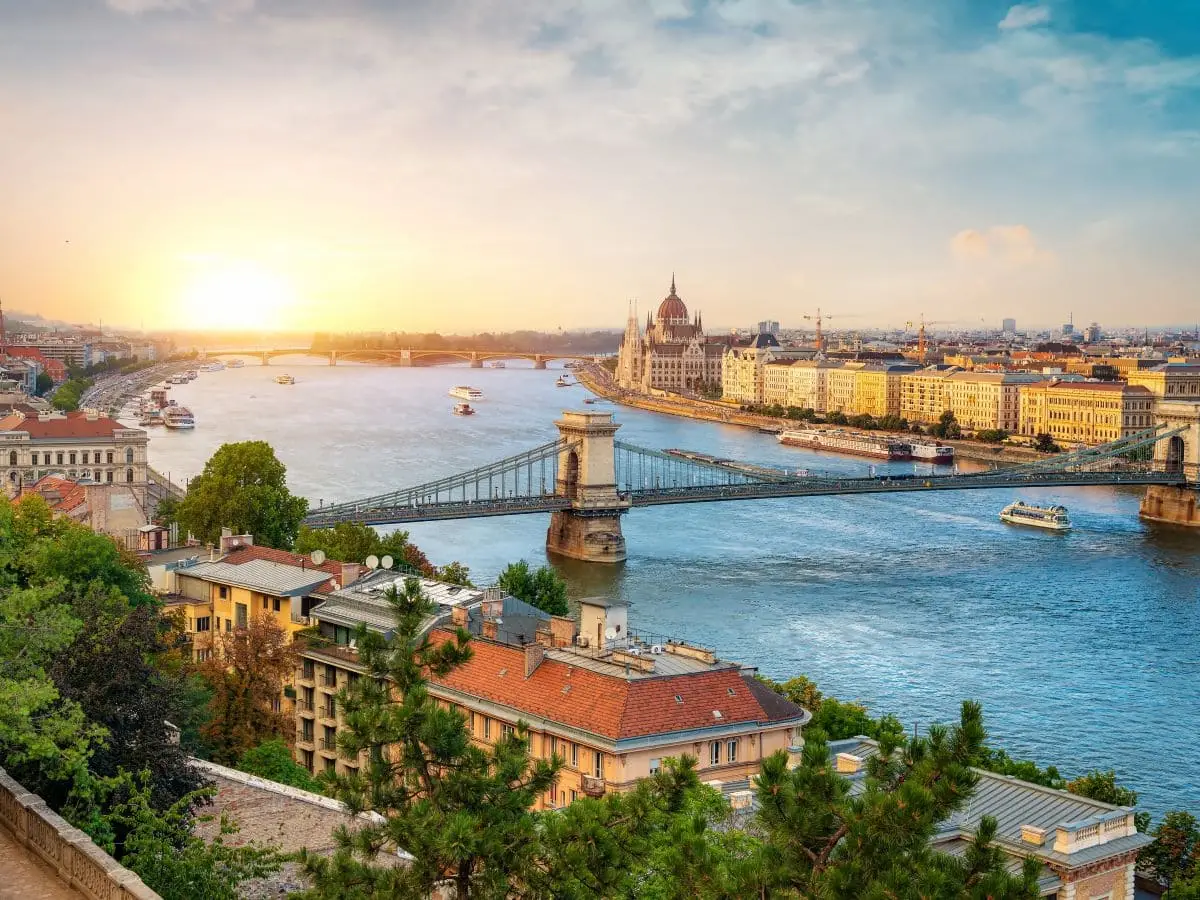
Cover: Danubio river, photo by Envato