

The European Sustainable Energy Week (EUSEW) is the biggest annual event dedicated to renewables and efficient energy use in Europe, bringing together a diverse community dedicated to building a secure and clean energy future for the current and next generations.
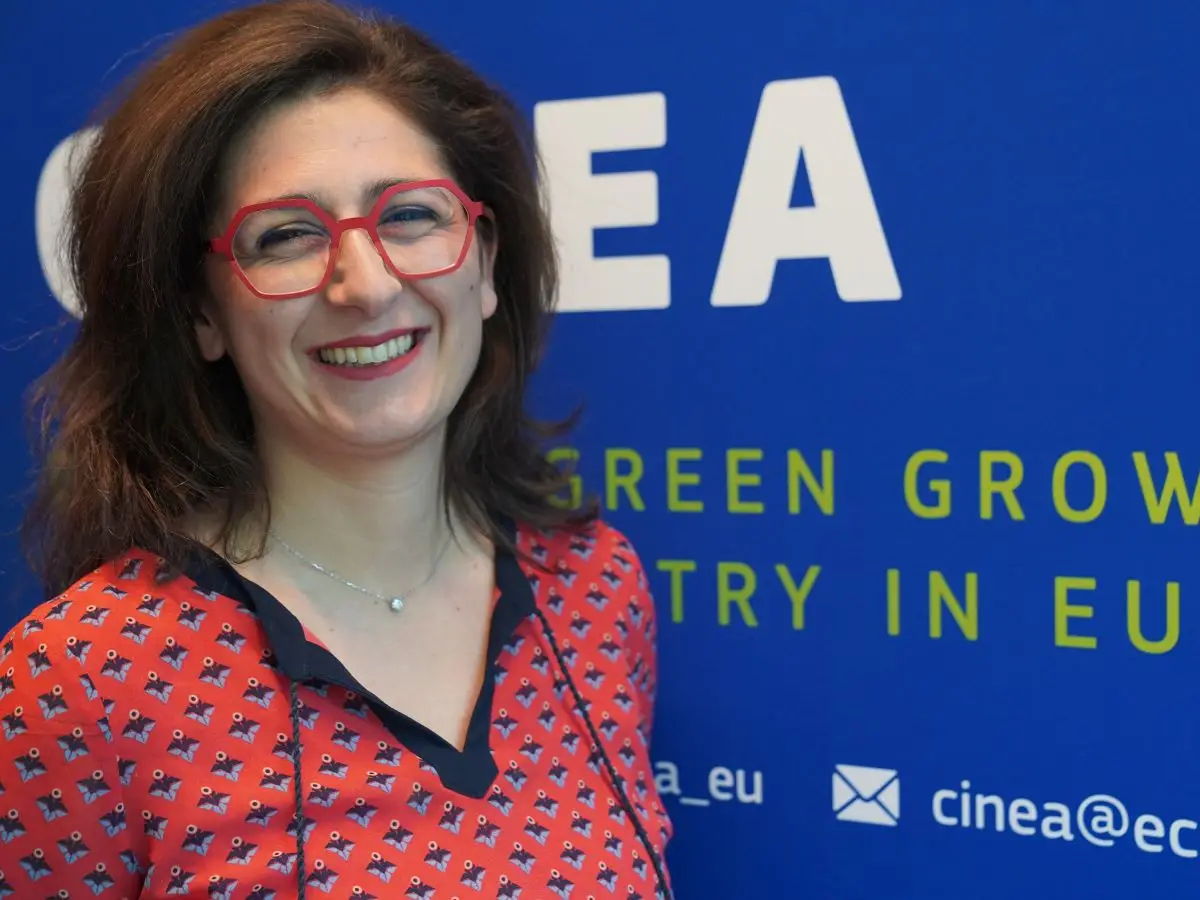
Taking place in a hybrid format in Brussels and online on 9-11 June 2026, this 20th edition, media partnering with Renewable Matter, offers an opportunity to reflect on EUSEW’s evolution. We spoke with Loredana Crucitti, EUSEW Coordinator at the European Climate, Infrastructure and Environment Executive Agency (CINEA), to explore how the event has grown over time and what lies ahead.

EUSEW turns 20. Looking back, what has the event meant for Europe's clean energy community over the past two decades?
Its biggest value lies in connecting EU-level policy discussions and a very broad range of stakeholders involved in clean energy transition – from representatives of cities and regions to business and industry to academia and civil society through a massive community. In 2026, EUSEW marks a special milestone: two decades of bringing Europe's energy community together to shape a cleaner, more secure, resilient and affordable energy system. What began as a sectoral conference has grown into the biggest annual clean energy event in Europe. At its core, EUSEW has always been about community, which is reflected in the very structure of the project: each year, the programme is effectively crowdsourced. We receive hundreds of excellent applications and face difficult choices putting together the final programme. Even if we cannot accommodate everyone’s proposals, we know we can count on them to participate in the discussions and shape the event through sharing their insights and experiences.
And it is worth underlining that EUSEW is not solely a Brussels event.
Yes, from March to June, the EUSEW spirit reaches far beyond the Charlemagne building in Brussels’s European district through the “Sustainable Energy Days”: hundreds of locally organised events that put practical clean energy actions on the map across Europe and worldwide. The call to earn the “Sustainable Energy Day” title is live until 24 May 2026, with submissions reviewed on a rolling basis. It is really a unique opportunity to gain visibility through the EUSEW community. This local engagement is also reinforced through the work of Young Energy Ambassadors. Each year, 30 young people from across Europe are selected for a one-year mandate to represent the clean energy transition as it is lived and experienced in their regions. Essentially, they serve as a bridge: bringing local and regional perspectives into EU-level discussions, while making complex European policies more accessible to their peers and communities back home.
What feels like the biggest change in how Europe talks about and approaches sustainable energy compared to the early days?
I think it can be most vividly traced through the EUSEW themes over the years. When EUSEW was launched in 2007 under the motto “Take a week to change tomorrow”, the invitation to act was essentially a moral and a personal one. Turn off the light, think about your footprint. Twenty years on, the theme for EUSEW 2026 is “A clean, secure and competitive Energy Union”. That is, fundamentally, a whole other kind of conversation. When the European Commission launched the Energy Union in 2015, the EUSEW community responded with an entire programme dedicated to what it means to build that union together – who it is for, what role citizens and consumers play in it. The Clean Energy Package in 2018 gave us “Lead the Clean Energy Transition” – do not follow, do not support, but lead. That shift in register matters. Then came the European Green Deal, the pandemic, and, in 2022, Russia's full-scale invasion of Ukraine. REPowerEU was fully mirrored in the focus of the EUSEW programme: clean energy has become also a security argument. By 2024 and 2025, “net-zero competitiveness” and “a fair and competitive green transition” had entered the frame. In 2026, EU energy policy is at a crucial intersection between security, competitiveness, affordability and sustainability. This will be also reflected in this year’s conference.
The EUSEW Awards have long celebrated outstanding work in energy communities and gender equality in the sector. What does the introduction of the new “SMEs Driving Energy Efficiency” category say about where the energy transition stands today?
The new category reflects something that practitioners in the field have known for some time: small and medium-sized enterprises are not peripheral to the clean energy transition – they are the backbone and very much central to it. Through the “SMEs Driving Energy Efficiency” Award, EUSEW seeks to recognise companies that develop business or financing models to make energy upgrades more accessible, affordable and scalable. We want to shine a light on the creativity happening at that scale, as it often goes unnoticed at the European level. The timing is significant. In September 2025, the European Commission and the European Investment Bank (EIB) Group announced a €17.5 billion financing initiative dedicated entirely to energy efficiency in SMEs – one of the largest commitments of its kind. More than 350 000 companies across Europe are expected to benefit from it. The initiative will nearly double current support between 2025 and 2027, with the EIB working alongside private partners through dedicated investment platforms to attract additional capital into the sector. The new Award category largely echoes this commitment.
The Energy Fair is one of the most anticipated parts of the event week. What can participants expect this year?
As a communicator, I value the opportunity to experience a project or a topic instead of merely talking about it. The Energy Fair is where the ideas discussed in the conference sessions become tangible. This year, the Fair will be hosted exclusively in the Charlemagne building, which means it will be more integrated with the Policy Conference than ever – you can move between a panel discussion and a stand demonstration within the same space, meeting the people behind the projects and seeing technologies in action. While the policy sessions are accessible online, the Energy Fair is designed for in-person participation. That is intentional. Some of the most valuable exchanges at EUSEW happen at the Fair – not just between exhibitors and visitors, but between exhibitors themselves, between policymakers and practitioners, between researchers and the communities trying to put their findings into practice. We strongly encourage all in-person attendees to spend time there. It also helps that the Energy Fair is held literally at the crossroads, where the coffee and lunch breaks also take place.
Anniversaries are also about the future: based on the lessons learned over the past two decades, what do you see as EUSEW’s most important role in shaping Europe’s energy transition in the next few years?
EUSEW will continue to be what it has always been at its best: a space where the community building Europe's energy future can meet, exchange, challenge each other, and find common ground. The policy landscape will keep shifting – new legislative packages, new geopolitical pressures, new technologies – and EUSEW's role is to remain a place where those shifts are worked through collectively, not handed down from above. What I am most looking forward to at this year's edition is a conversation that captures exactly that long-term perspective. Several former European Commissioners who have steered EU energy policy across the past two decades will meet on stage in Brussels on 9 June – the session will be also broadcasted online – to reflect on how Europe's priorities have evolved and what must come next. Twenty years of institutional memory, policy experience, and lessons learned, in one room, with a community that has lived through all of it alongside them. That feels like the right way to mark this milestone.

Cover: Loredana Crucitti, photo by EUSEW