



2025 is proving to be a record-breaking year for Europe’s climate. The latest European State of the Climate (ESOTC) report, published on 29 April by Copernicus Climate Change Service and the World Meteorological Organization (OMM), paints a deeply concerning picture. Average annual sea surface temperatures reached their highest level on record, while wildfires burned more than 1 million hectares, the largest area ever documented. In addition, a three-week heatwave struck Subarctic Fennoscandia, the region encompassing mainland Norway, Sweden and Finland north of the 60th parallel, with unprecedented intensity. Overall, at least 95% of Europe recorded above-average temperatures during the year.
“The ESOTC 2025 paints a stark picture: the pace of climate change demands more urgent action,” highlights Samantha Burgess, Strategic Lead for Climate at ECMWF. “With rising temperatures, and widespread wildfires and drought, the evidence is unequivocal; climate change is not a future threat, it is our present reality. In confronting the impact on biodiversity loss, we need to match the speed of adaptation happening in the clean energy transition and at the same time, ensure robust science continues to underpin our policies and decisions.”
An Increasingly Warm Europe
The Arctic remains the fastest-warming region on the planet, with temperatures increasing by 0.75°C per decade over the past thirty years. Europe ranks second, with a rise of 0.56°C over the same period, more than twice the global average. According to the WMO’s State of the Global Climate report 2025, if warming continues at the current rate observed, global temperatures could approach 1.5°C by the end of 2030.
This trend is also reflected in European minimum temperatures, which remained above average for most of the year, along with a steady decline in the number of consecutive days with sub-zero temperatures. Several factors explain why Europe is warming faster than other regions. Geography is a key driver, as parts of the continent extend into the Arctic, where temperatures are rising three to four times faster than the global average. At the same time, reduced air pollution is also contributing. While cleaner air is essential for public health, lower concentrations of aerosols mean fewer particles are available to form low-level clouds. Because clouds reflect incoming solar radiation, their reduction allows more solar energy to reach the surface.
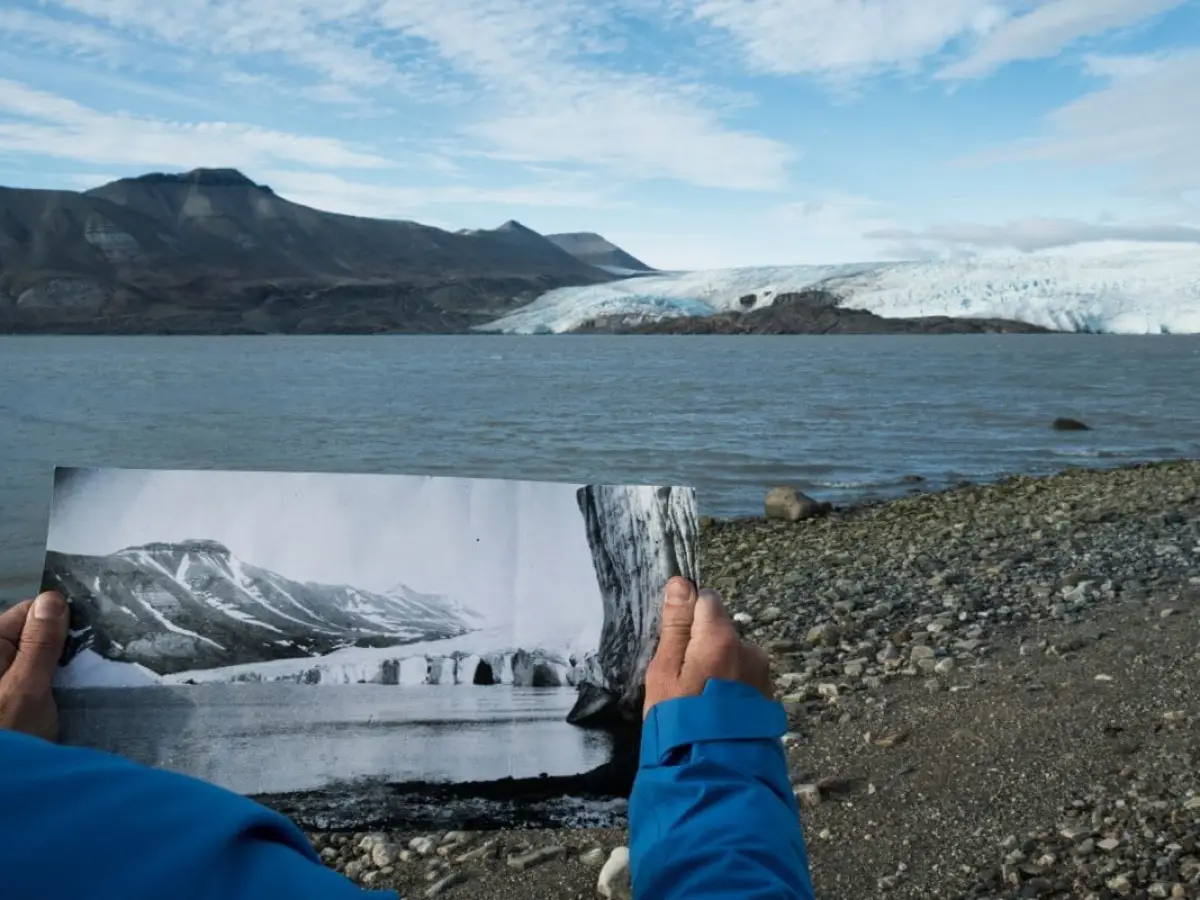
Declining snow cover in European mountain regions, including the Alps, is another contributing factor. “The largest glacial mass loss in 2025 was in Iceland, which experienced its second-largest loss on record,” noted Samantha Burgess. “Snow cover at the end of winter in March 2025 was the third lowest observed, roughly equivalent to the combined area of France, Italy, Germany, Switzerland, and Austria.”
Carlo Buontempo, Director of Copernicus Climate Change Service, also noted that “the loss of ice mass throughout the century will continue regardless of the emission scenario that we choose.” This year’s report also introduced a new section focusing on the Greenland ice sheet, which lost approximately 139 gigatonnes of ice. This is equivalent to the loss of around a hundred Olympic-sized swimming pools every hour.
From seas to rivers, impacts are widespread
Sea surface temperatures in the European ocean region reached record highs for the fourth consecutive year. Marine heatwaves continued to intensify, placing increasing pressure on ecosystems and biodiversity. One clear example is Posidonia oceanica, a seagrass species endemic to the Mediterranean Sea, which has declined by up to 34% over the past fifty years. This species plays a crucial role as a carbon sink, helps protect coastlines from erosion, and provides habitat for a wide range of marine life. Approximately 20% of all Mediterranean species, including fish, molluscs and crustaceans, depend on Posidonia meadows. “The proportion of the region affected by marine heatwaves has increased markedly over recent decades, rising from an average of 40% in the 1980s to 98% in the past three years. In 2025, a record 86% of the region experienced at least strong marine heatwave conditions,” added Samantha Burgess.
Although flooding across Europe declined in 2025 compared with the previous two years, conditions remained uneven. Several countries, including Ireland, the UK, Spain, Portugal, Italy and Albania, experienced significant flood events at different times during the year. At the same time, river systems were generally below normal levels. About 70% of rivers recorded reduced flow, and the overall flood extent was among the lowest observed since 1992. Meanwhile, around one-third of Europe experienced extreme agricultural drought May 2025, placing additional pressure on an already complex production sector.
“There are many risks, and we need to address them. The cost of inaction is significantly higher than the cost of tackling the negative impacts of a warming climate. This will be a central element of our integrated framework for climate resilience, addressing risks across areas such as energy, nature, biodiversity and food,” said Dušan Chrenek, EU Commission Principal Adviser for Digital for Green Transition in the Directorate-General for Climate Action of the European Commission. He added that building climate resilience must become a fundamental principle. “When developing new infrastructure, businesses and policies, we need to take into account a changing climate through forward-looking analysis. Resilience by design should be part of all policies.”
Cover: A Greenpeace campaigner holds an archive image from the Norwegian Polar Institute of the bay of Adolfbukta and glacier Nordenskioldbreen taken in 1921, revealing the terrifying extent to which Arctic glaciers have retreated over the last century. The image is part of a set released by Greenpeace as an update to an iconic photo series published more than twenty years ago by the Swedish photographer Christian Åslund. © Jam Press/Christian Åslund/Norwegian Polar Institute/Greenpeace /Agenzia IPA