


The carbon market is experiencing a crisis of legitimacy. Years of inconsistency in standards, conflicts of interest between developers and certifiers, and inadequate MRV systems have eroded trust in the sector: the problem lies not with carbon credits as such but in the historical absence of shared, verifiable rules that are difficult to get around. The European decision to build a new certification system for carbon removals and carbon farming from the ground up should be seen in this light.
The Carbon Removals and Carbon Farming (CRCF) Regulation 2024/3012, passed on 6 December 2024, is the first voluntary framework at the European level for the certification of permanent carbon removals, carbon farming and carbon storage in products. Its ambition is clear: tackling the problem of greenwashing by establishing shared standards, verifiable methodologies and a public register of certified units. Two European projects launched last year with funding from Horizon Europe are working towards this goal: CAFAMORE – Carbon Farming Monitoring and Registry, and OGCR – Intergenerational Open Geospatial Carbon Registry, both of which aim to equip the system with open data infrastructures and registries capable of providing greater control and transparency over credits. The recent EARA report, the Regen Compass, fits into this framework, providing guidance on models, certifications and declarations in regenerative agriculture from the farmers’ perspective.
What does the CRCF certify?
On 3 February 2026, the Commission adopted the first operational methodologies, covering three types of permanent removal: direct air capture with storage (DACCS), biogenic capture with storage (BioCCS) and carbon removal via biochar. For agricultural carbon farming, a further two delegated regulations are being finalised for 2026, covering methodologies that will include agriculture and agroforestry, peatland rewetting and afforestation (that will help farmers and foresters achieve results-based payments, supplementing their income and supporting them in the transition to a more resilient production system), and methodologies for carbon storage in bio-based construction products (which will help building owners prove the carbon storage performance of their buildings and encourage the construction sector to adopt the principle of the circular bioeconomy).
The CRCF categorises activities into three groups: permanent removals, meaning storage for several centuries; carbon farming, which refers to activities involving soil and biomass lasting at least five years, generating temporary units; and storage in long-lasting products for at least 35 years. The distinction has decisive implications for the credibility of credits and investment decisions. By December 2028, a single EU registry will record every certified unit, ensuring full traceability and preventing double counting.
Risk assessment and allocation
Despite the CRCF’s ambitious framework, there are still concerns about the integrity of the methodologies. One of the prevailing narratives presents permanent removal as inherently more reliable than soil- and biomass-based solutions, considered too temporary and prone to the risk of reversibility.
Some scholars challenge this assumption. Among them is Ichsani Wheeler, founder of the Dutch organisation OpenGeoHub and an expert in carbon accounting, who argues that “these are essentially heavy industry and mining industries. They’re not really known for taking care of their liabilities into the future, and the actual risk of failure is catastrophic failure. It’s not like, oh, we’ve lost a bit of forest. It’s the entire field cracking open and all that liquefied CO₂ escaping as gas.” Wheeler states that she trusts “generations of landowners caring for a place much more than I trust a corporation that could disappear tomorrow”, bringing us back to a deeper question: who bears the risk and who captures the value?
It is a shift in perspective: the supposed “permanence” of industrial solutions carries a risk of catastrophic and concentrated failure, while soil-based solutions, though exposed to reversals spread over time, benefit from a form of social and generational stewardship that no corporate contract can replicate. Although the real risk associated with technological alternatives remains largely underestimated, Wheeler says, “I’m really worried that the soil and the trees – the very things we actually want – have been cast as too risky and temporary, and that doesn’t mean we’re uncertain. That means we can say exactly what it is, and it’s always discounted in favour of the atmosphere.”
Speaking of risk, Julian Kremers, co-founder of Seqana, a company developing MRV solutions, approaches the issue in terms of risk allocation: the aim is not to eliminate risk – which, incidentally, is impossible – but to distribute it fairly amongst all stakeholders in the supply chain, while ensuring that the value generated reaches those who are entitled to it. “Ideally, we would manage to achieve the maximum or optimal value allocation to all stakeholders. So that we can ensure the public has confidence that carbon claims are correct and that the CO₂ sequestered is actually monitored in such a way that we can balance it either within value chains or through offsets against other carbon emissions. And we can also ensure that farmers derive the full value they can from data that is available.” It is a systemic vision that places the issue of credit integrity within a broader framework: not only regarding the actual existence of credits but also concerning who benefits from them and who bears the risk should the credits prove to be unfounded.
The MRV issue
The issue of measurement, reporting and verification (MRV) is, in fact, one of the system’s bottlenecks, but the prospects are encouraging. Satellite-based verification systems are reducing the costs of measuring soil carbon by 40% compared to traditional field sampling methods, and it is estimated that by 2027, 90% of credit transactions will require satellite verification.
In practical terms, according to Kremers, those bearing the greatest risks are not farmers and landowners but project developers. Farmers, Kremers explains, “are key stakeholders but usually they are not the point of failure. Usually they are just getting paid for implementing practices. So they are usually not contingent on the actual outcomes coming to fruition. The ones bearing the highest risk in terms of these projects are usually the project developers because their margins are much narrower. If it doesn’t happen, then they essentially end up getting no money at all”. The CRCF will have to address this incentive structure if it wants projects to be economically sustainable in the long term; if poorly managed, it risks progressively shifting the risk down the chain, to those with the least bargaining power.
The problem, as Kremers further observes, is not uncertainty in itself, but the transparency with which it is managed: “There’s always uncertainty. It’s just a fact of life. And so the important thing is really to be transparent about it and to have a solid shared understanding and databases that we agree on, that can then be used to estimate and report the uncertainty.”
One of the risks is that, while technology lowers barriers to entry, the regulatory complexity of the CRCF risks raising them for smaller players. In order to reduce costs and simplify access to carbon farming, the European Commission has announced the creation of an EU Carbon Farming Database containing models, emission factors, remote sensing products and benchmark datasets to make MRV more efficient and support companies in reporting Scope 3 emissions.
Whether this tool will be sufficient to bring smaller players into the system remains to be seen, and, looking ahead, this also applies to municipalities, agricultural cooperatives and urban greening operators, who could generate high-quality credits but are unlikely to be able to bear the costs of full certification on their own. Demand is undoubtedly focusing on high-integrity projects. The challenge for European carbon farming is to transform this demand into a supply structure that is, at last, transparent and democratic.
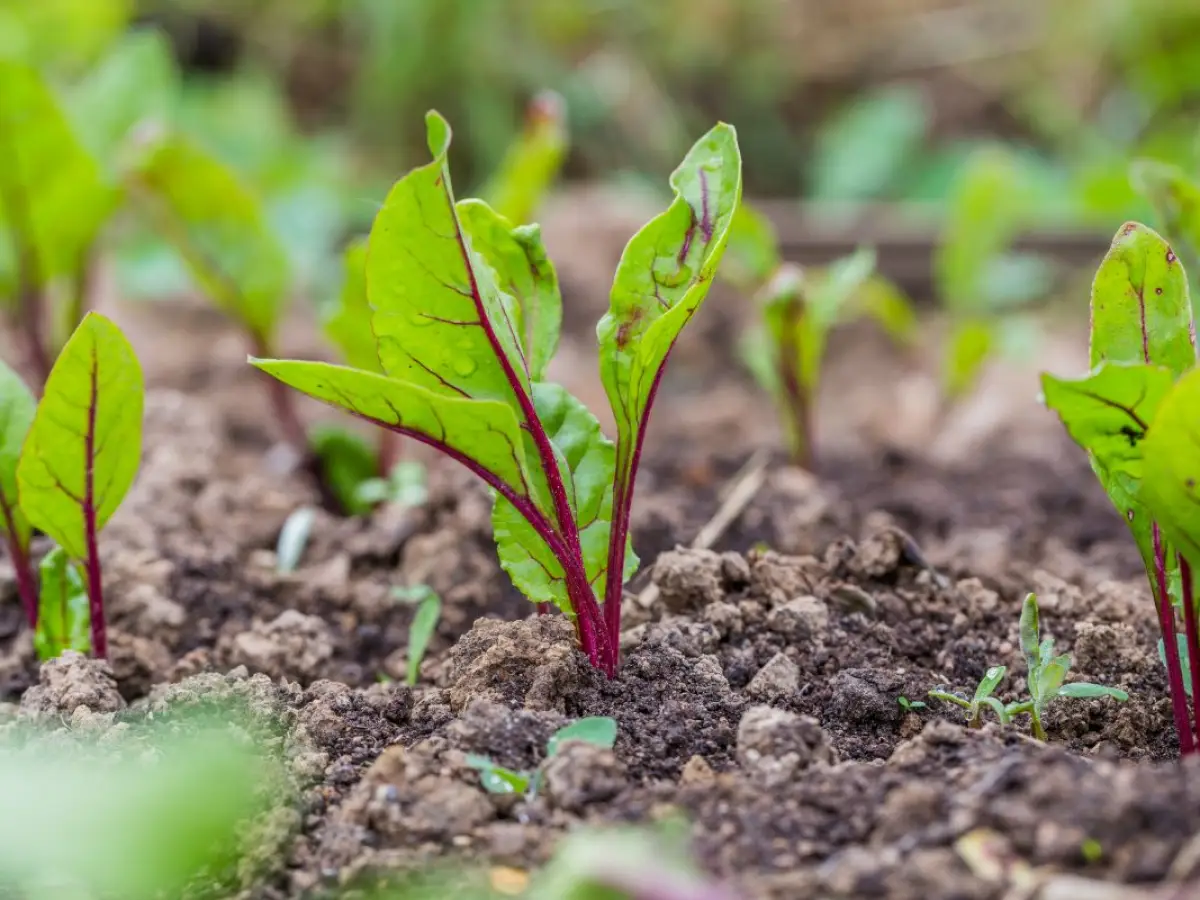
Cover: beet crop, a plant with a high CO₂ absorption capacity, Envato